Juan Preciado and Dorotea: Companions in the Grave
Pedro PáramoJuan Preciado and Dorotea: Companions in the Grave describes a relationship formed after death, when Dorotea challenges Juan’s account of how he died and he explains that Comala’s whispers overwhelmed him. Their conversation is more than an exchange between two buried strangers: Juan’s search for Pedro Páramo has ended in the grave, while Dorotea recounts how an imagined son shaped her life and how, only after death, she learned that she had never had a child. Each becomes a listener to the other’s belated knowledge, and their shared burial gives that exchange its intimate, enclosed setting.
Their Encounter in the Grave
Dorotea first grounds their conversation in the physical circumstances of Juan’s death. She says she found him in the square, far from the house of Donis, where Donis had been with her and said that Juan was pretending to be dead. The two of them dragged Juan into the shade of a portico; his body was already stiff and twisted as though he had died of fright. Dorotea rejects his suggestion that lack of air killed him: if the night had offered no air to breathe, she argues, they could not have carried and buried him. The fact of the burial is the firm evidence she sets against his account.
Juan accepts that she is right about where they found him, then asks whether her name is Doroteo. She replies that it does not matter, whether she is called Doroteo or Dorotea. The small correction establishes the informality of their exchange: Juan addresses her directly, and she does not insist on a distinction that would separate them. He agrees to call her Dorotea and tells her that whispers killed him. Their bond begins not in a remembered life together but in this conversation about what happened to their bodies and what remains of them.
Juan’s Death and His Search
Dorotea asks why Juan left his own land and came to Comala. He answers that he came to see Pedro Páramo, who he had been told was his father; illusions had led him there. The admission links his death to the search that brought him to the village. Dorotea responds from her own experience of illusion, but Juan first explains the immediate cause of his end: he carried too many fears, and when he confronted the whispers, his nerves gave way.
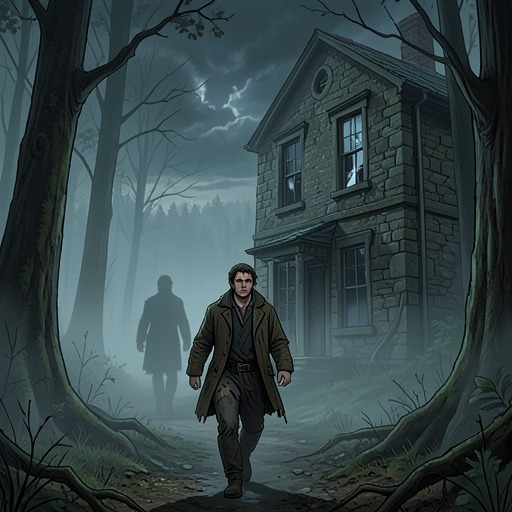
His account begins with a mistaken impression of a crowd. He went toward the square believing that the noise there might disperse his fear. On the way, he leaned against the walls as though walking on his hands, hearing voices seep through cracks and peeling surfaces. Though the voices were muffled, he felt they followed him even when he moved away from the walls and into the street. The cold intensified as he walked; he first thought he might regain warmth by turning back, then realized the cold came from within him. He understood that he was afraid.
At the square, Juan leaned against a portico pillar and saw that no one was there, although the sound of a multitude continued. He describes it as an indistinct murmur, like wind moving through branches that cannot be seen. The sound seemed to gather and circle him; among its nearly voiceless words, he heard a plea for prayer, and his soul froze. Dorotea’s earlier account and his own therefore describe two views of the same death: she testifies to the body found and buried, while he recounts the fear and voices that he experienced as he died.
Dorotea’s Illusion of a Son
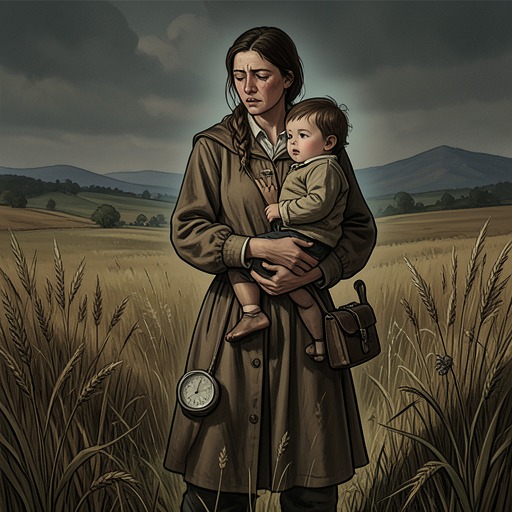
When Juan explains that illusions brought him to Comala, Dorotea tells him that illusions cost dearly. She had spent her life believing she had a son, and only after her death did she understand that he had never existed. She remembers a dream in which she felt a tender infant in her arms, with eyelids and a heartbeat she believed she could still remember through her fingers. For years, that bodily certainty sustained her conviction that she had been a mother. She carried the imagined child wrapped in her shawl until she suddenly lost him.
Dorotea describes a second dream as the one that exposed the first. In heaven, she searched among the angels for her son but found all their faces alike. A saint reached into her belly and drew out something like a nutshell as proof that she had not borne a child. Another saint sent her back to earth to rest and try to be good, so that her stay in Purgatory might be shorter. Dorotea had once explained away the evidence as her stomach, shrunken by hunger and scant food; in retrospect, she recognizes the dream as the revelation that undid the belief on which much of her life had rested.
Shared Burial and Posthumous Companionship
Dorotea’s account ends in the conditions that left her vulnerable and alone. By the time she understood the truth about her son, her body had stooped until her bent back rose above her head, and she could no longer walk. The village had been abandoned as its people left to follow other paths; with them went the charity on which she had lived. She sat waiting for death, believing she troubled no one and took up no space on the earth. Her burial in Juan’s tomb reverses that image of isolation: she says she has settled between his arms, in the corner where he holds her, and adds that she ought to be the one embracing him.
Their companionship remains bounded by the grave. Dorotea hears rain outside and asks Juan whether he can hear it; he imagines that someone is walking over them. She reassures him that he has nothing more to fear and asks him to think of pleasant things, because they will remain buried for a long time. The exchange does not undo either character’s loss: Juan has not found his father in life, and Dorotea cannot recover the son she believed she had. Instead, the shared tomb gives them a place to speak about those failures of hope. Juan’s fear is met by Dorotea’s reassurance, while her story of an illusory child is heard by someone who himself came to Comala guided by illusion.