Juan Preciado's posthumous state
Pedro PáramoJuan Preciado’s posthumous state is a continuation of bodily distress and fearful perception, not an escape from them. After dying in Comala, he can recount the sensations that preceded his death and converse with Dorotea from their shared grave; the voices that overwhelmed him remain the defining explanation of his end.
The Body at the Threshold
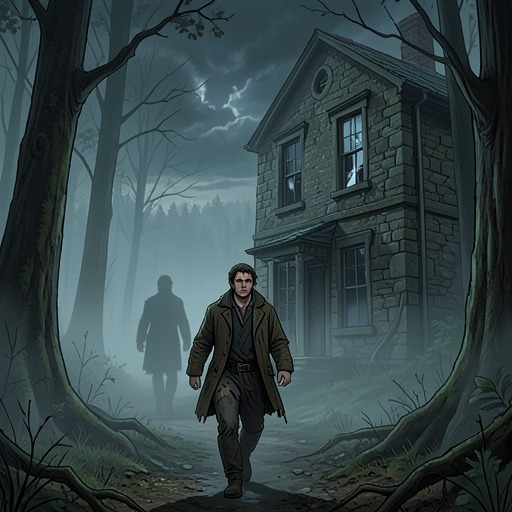
Around midnight, heat and sweat wake Juan while he is lying beside a woman who has lent him her bed. Her body seems made of earth, its crusts breaking apart as it dissolves into mud. He feels surrounded by her sweat, as if swimming in it, and unable to draw enough air. The woman remains asleep, with a bubbling sound rising from her mouth that resembles a death rattle. The scene makes bodily decay seem immediate and material, before Juan has any understanding of his own condition.
He leaves the house seeking air, but the heat follows him into the street. The night is heavy and still, warmed by the August heat; there is no air to find. Juan describes catching the breath escaping from his mouth with his hands and trying to drink it before it vanishes. Its movement becomes fainter until it slips away between his fingers for good. He insists on the finality of that moment, then remembers foaming clouds swirling above him and enveloping him in dark vapors. That is the last thing he sees.
The Death He Recounts
Juan’s account is not left as a simple report of suffocation. Dorotea challenges it: she says that she and Donis found him on the plaza, far from Donis’s house, and that Donis had thought he was pretending to be dead. They dragged him into the shade of a portico, already stiff and curled up like someone who had died of fright, and buried him. Dorotea reasons that if the night had truly lacked breathable air, they could not have carried and buried him. Her recollection supplies the outward facts of his death, while his narrative preserves the inward experience that she disputes.
Juan accepts that she found him on the plaza, but gives a different account of what overwhelmed him there. He had heard what seemed to be a crowd and believed its noise might disperse his fear. He leaned against the walls, where the voices seemed to seep through cracks and peeling surfaces, then heard them accompanying him even after he moved into the middle of the street. The sound was indistinct, human but muffled. As he walked, the cold intensified; he first tried to retrace his steps toward the warmth he had lost, then realized that the cold was rising from within him, from his own blood. He recognizes fear as its source.
At the plaza he finds no crowd. Leaning against a portico pillar, Juan continues to hear a broad, even tumult, like wind moving through branches that cannot be seen. The sound gathers around him like a swarm. Among its nearly voiceless utterances, he makes out a plea for prayer, and his soul freezes. He therefore names the murmurs, rather than lack of air, as the cause of his death. The difference between Dorotea’s practical explanation and Juan’s remembered terror remains unresolved: his body has been carried and buried, but his account gives the death its inward meaning.
A Voice in the Shared Grave
The conversation itself establishes Juan’s posthumous condition. He speaks after burial, answers Dorotea, and revisits his final movements in precise detail. His death has not stopped narration or memory; instead, the grave becomes the place from which he can tell what the living in Comala could not hear. The plaza’s apparent crowd proves to have been a sound without visible people, yet it is powerful enough in Juan’s recollection to drive him into terror. The dead remain able to describe the world of the living, but that description does not restore certainty about what they experienced.
Juan asks whether Donis has returned, recalling that the woman he left behind had been sure she would never see him again. Dorotea says Donis was there when they found Juan, but she does not know where he came from and did not ask. Even after death, Juan’s attention turns back to the fragile connections among the living. His question also preserves the uncertainty surrounding Donis’s movements rather than resolving it.
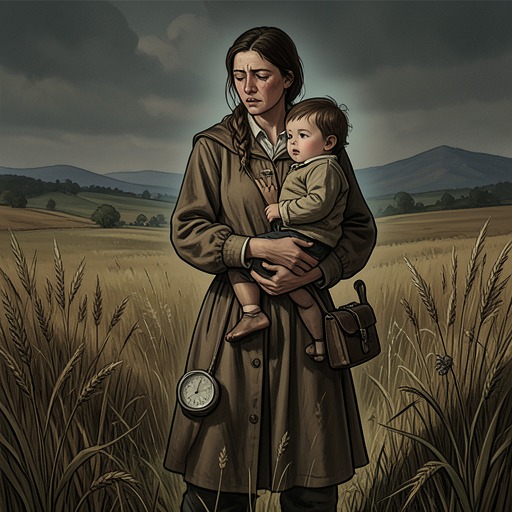
Juan explains that he came to see Pedro Páramo because he had been told that Pedro Páramo was his father, and that illusions had guided him. Dorotea answers from her own history of disappointed belief: she had spent much of her life convinced she had a son, carrying the felt memory of an infant in her arms, only to learn—according to a vision of Heaven she recounts—that she had never borne a child. Her story gives their grave-side exchange a shared structure of expectation overturned by belated knowledge. Juan’s hope of finding his father and Dorotea’s imagined motherhood are different illusions, but both persist in memory after the lives built around them have ended.
Rain, Burial, and Continued Fear
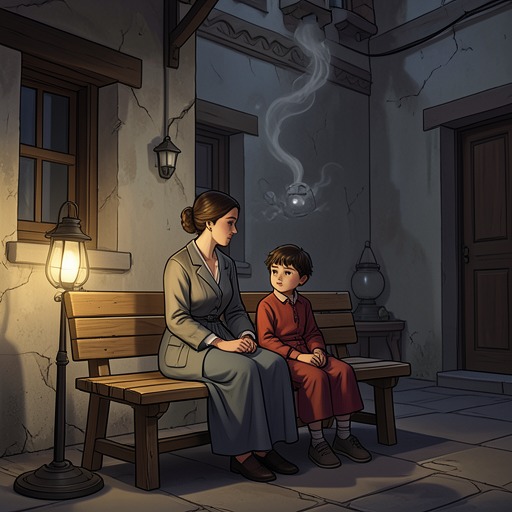
Dorotea says that Comala was abandoned, that the people left, and that with them went the charity on which she had lived. She had sat waiting for death; after meeting Juan, she says, her bones finally found rest. She was buried in his grave and now lies in his arms, although she jokes that she should be the one embracing him. Their closeness is literal as well as conversational: the dead share the space of a tomb, and Dorotea’s account makes Juan’s posthumous existence inseparable from another person’s presence.
The outside world reaches them through the earth. Dorotea asks whether Juan can hear the rain beating overhead. He says it feels as if someone is walking on them. She tells him not to be afraid and to think of pleasant things, because they will remain buried for a very long time. The reassurance does not undo the unease: rain, footsteps, and the weight of burial are the sensations through which the living world registers below ground. Juan’s posthumous state is therefore neither wholly cut off from life nor returned to it. He remains a frightened listener, now enclosed in a grave, speaking with Dorotea while the rain sounds above them.