La mémoire et la présence des morts
Pedro PáramoLa mémoire et la présence des morts is the novel’s interwoven condition of remembering and haunting: in Comala, the past does not stay behind the living but returns through voices, encounters, and images that make absence perceptible. The dead speak from within the village’s walls and stones, while the living and the dead alike organize their experience around remembered losses. These returns do not restore what has disappeared. Instead, they expose the persistence of grief, abandoned obligations, and a community that has lost its people without escaping their traces.
Memory as the Village’s Atmosphere
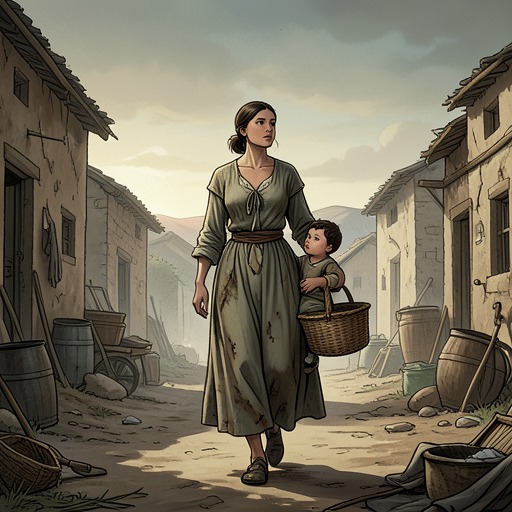
Damiana Cisneros describes Comala as a place where echoes seem lodged in walls or beneath stones and follow a person walking through the village. Their sounds include cracks, laughter worn thin by repetition, and voices exhausted from use. The description makes memory an environment rather than a private act: what has happened remains audible in the spaces where people once lived. Damiana imagines that one day the sounds may cease, but her account also shows how completely the present is inhabited by what came before.
Her recollection of the festivities at Media Luna sharpens that contrast. For many nights she heard a celebration and once approached, expecting to see dancing; instead she found empty streets, as deserted as they are now. The sound of communal joy had already outlasted the gathering that produced it, and eventually it too fell silent. In this account, the echo carries both a remembered abundance and its disappearance. Damiana’s acceptance of barking dogs and windblown leaves, despite there being no trees in the village now, extends the same logic: the present landscape supplies signs of a past that can no longer be seen directly.
The dead are not merely a metaphor for this persistence. Damiana recalls meeting a funeral procession while going to fetch Juan Preciado. As she stopped to pray, a woman left the group and asked Damiana to pray for her; when the woman loosened her shawl, Damiana recognized her own sister. The encounter places a familiar voice and face inside a scene of death, making personal memory inseparable from the village’s uncanny present. The dead remain recognizable, and their requests still reach those who remember them.
Juan Preciado and the Voices That Kill
Juan Preciado’s account gives the village’s echoes a fatal consequence. He recalls reaching the porticoed square and leaning against a pillar. No one was visible, yet he heard the sustained murmur of a multitude, like wind moving through branches that could not be seen. The sound seemed to gather and circle him; within it he distinguished faint words asking for prayer. His soul froze, and the voices became the explanation for his death.
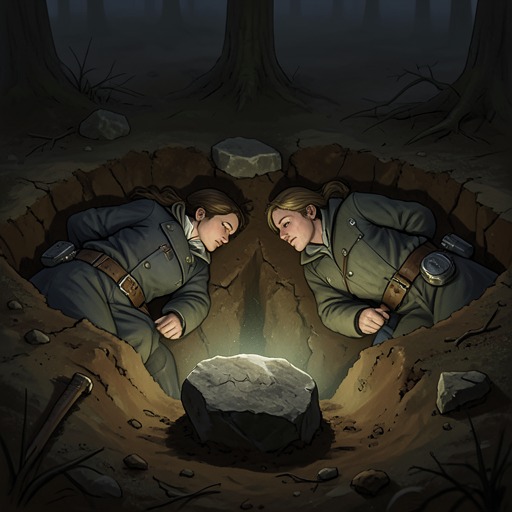
The account is framed by a conversation after his death. Dorotea challenges Juan’s earlier belief that lack of air killed him: she says she and Donis found him in the square, stiff and twisted as if he had died of fright, then carried and buried him. Juan accepts her correction and describes the fear that came from within him as the cold intensified. The exchange distinguishes the body’s observable death from the experience Juan remembers. The voices are not a single external cause that can be settled by explanation; they are part of how he experiences the terror that overtakes him.
The request that Juan hears also links the dead’s presence to unresolved need. He came to Comala seeking Pedro Páramo, whom he had been told was his father, and says that illusions guided him there. In the square, the unseen multitude asks him to pray for them. His search for a father and his encounter with the dead therefore converge in a place where the past calls for recognition but offers no uncomplicated reunion. The dead’s voices survive, but their continued presence does not mean that their needs have been answered.
Pedro Páramo’s Memory of Susana
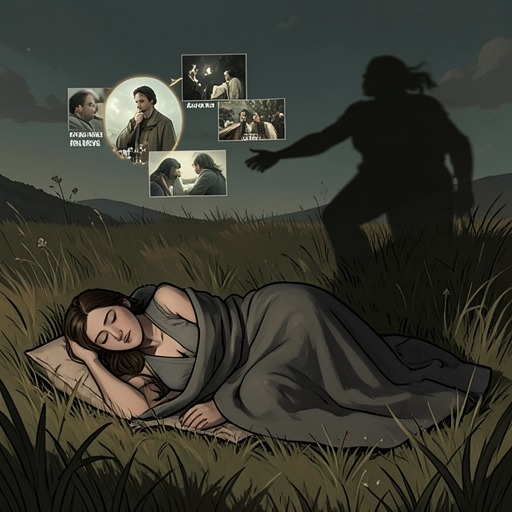
The final memories of Pedro Páramo give the theme a more intimate focus. Seated alone at Media Luna as night gives way to dawn, Pedro remembers the last time he saw Susana San Juan. He recalls watching her depart along the road toward Heaven, fading among the shadows, and passing close to the holy tree in the estate’s avenue as its last leaves fell. The remembered scene returns in the same hour and in a light Pedro recognizes as resembling the light of that earlier departure. Memory makes the present dawn a repetition of the moment of loss.
Pedro continues to address Susana after her death. His recollection shifts from her departure to an image of her beneath a large moon: her face lit by its rays, her body seeming to dissolve into the water of night. The image preserves the force of his longing, but it also makes clear that what remains is a remembered apparition rather than a renewed relationship. He murmurs her name and recalls having asked her to return; the request cannot reverse the separation.
His attachment has consequences beyond this private vigil. The novel’s account of Comala’s decline connects Pedro’s withdrawal to Susana’s death: he abandons his properties, orders their contents burned, and remains seated facing the road by which she was taken to the cemetery. The estate is left to ruin, people disperse, and the population dwindles. The remembered loss thus becomes entangled with the fate of the community. Pedro’s grief is personal, but his power makes its consequences public.
Recollection, Ruin, and the Dead’s Continuing Claim
The people who leave Comala carry the possibility of return with them, entrusting their belongings and families to those who stay. Some later come back for their families but not their possessions; eventually others seem to forget the village, their belongings, and one another. Against that fading human memory, the dead remain insistently present. Those who stay do so from necessity or from the hope that Pedro will die and leave them his property, while years pass with him still alive before the lands of Media Luna like a scarecrow. The contrast is stark: the living’s connections weaken through departure and forgetting, but the voices and losses embedded in Comala continue to intrude.
The persistence of memory is not comforting. Pedro fears the nights because they fill the darkness with ghosts and the prospect of being shut in with them. He also anticipates Abundio arriving with bloodied hands to ask for help that Pedro refused, and imagines having no hands with which to block out the sight. These anticipations bind memory to responsibility: the dead and the dying are not only objects of grief but reminders of actions and refusals that cannot be escaped. At the end, as a procession carries Pedro away, he watches from his chair, sees the holy tree shed its leaves, and thinks that everyone takes the same road and leaves. He then returns to his thoughts of Susana. The movement from the departing procession to the remembered beloved brings the novel’s pattern into focus: people disappear from sight, but the past continues to occupy the mind and the place they leave behind.
Narrative Significance
The theme is built through voices that cross boundaries between present and past, living and dead, narration and remembered scene. Damiana’s account of echoes, Juan’s explanation of the voices around his death, and Pedro’s inward return to Susana are distinct experiences, but together they make Comala a landscape in which absence repeatedly acquires a voice. The shifts between dialogue, recollection, and posthumous conversation keep the reader from treating memory as a stable record. What is remembered can correct an earlier account, reappear as a sensory image, or expose the consequences of a loss long after the event itself.
That structure also connects haunting to social abandonment. The voices and remembered presences persist amid empty streets, ruined land, and a population that has scattered. Their endurance does not repair the community; it makes its damage audible. In Comala, the dead remain present not because the past can be recovered intact, but because its grief, claims, and unfinished relations continue to shape the living world.