Les cloches de Comala
Pedro PáramoLes cloches de Comala are the church bells whose prolonged ringing follows Susanita’s death and transforms a signal of mourning into the soundscape of a crowded festival. Their reach gathers people from near and far, but their meaning fractures: the bells announce a death, while the town they summon behaves as if it were celebrating. The contrast between their public clamor and the grief at Media Luna ends in Pedro Páramo’s vow to let Comala go hungry.
Sound and the morning of December 8
The ringing begins at dawn on December 8, on a gray morning described as neither cold nor warm. The great bell sounds first, then the others join it. At first, some residents take the tolling for the announcement of a solemn Mass. Doors open among the early risers, who have been awake awaiting the Angelus and the end of night. The sound begins within a familiar religious rhythm, but it soon exceeds the expectations that rhythm has set.
The bells of the main church are joined by those of Sangre de Cristo, Cruz Verde, and perhaps even the Santuario. By noon the ringing has not stopped; it continues through the night, all the bells sounding together until their separate voices become a single, powerful lament. The spread of the sound across several churches makes the event more than a signal from one building: it fills the town and draws its inhabitants into a shared acoustic space. Yet the text does not make that shared sound equivalent to shared understanding.
Duration and physical force
The bells continue for three days. By then, people have become deaf, and conversation is nearly impossible amid the vibration filling the air. The ringing itself changes in the course of its persistence: some bells crack and produce a dull sound compared to a jug. What begins as a coordinated peal thus ends in a damaged, blunted clamor. The tolling has lasted beyond the ordinary limits of an announcement or service, with physical consequences for both the bells and the people forced to hear them.
The duration delays comprehension rather than delivering it. People shout to make themselves heard and ask what has happened; the explanation that reaches them is that Susanita, Pedro Páramo’s wife, is dead. The news identifies the occasion, but it does not bring the ringing to an immediate close. Even after the bells stop, the gathering and its noise continue, so that the sound’s end does not restore the town to mourning or silence.
A funeral summons a festival
People arrive from every direction, including Contla and places farther away, as though making a pilgrimage. A circus appears, with tightrope dancers and rides; musicians come as well. Some visitors initially seem to have come only to see what is happening, but they make acquaintances and serenades follow. In this way, the event gradually becomes a festival. Comala fills with people and takes on the crush and commotion of its village celebration, where the streets are difficult to cross.
The transformation is not presented as a deliberate decision by the mourners. Rather, the crowd’s curiosity, sociability, entertainment, and music gather around the continuing sound until the funeral occasion is overtaken. When the bells finally fall silent, no one can make the visitors understand that the town is in mourning or persuade them to leave; more people arrive instead. The bells have assembled a public, but their summons has not secured a common response to the death they mark.
Media Luna and Comala in contrast
While Comala is crowded with revelry, Media Luna is solitary and quiet. People walk barefoot and speak softly there. Susanita is buried, but few in Comala notice: the town’s attention is occupied by cockfights, music, the cries of drunkards, and lottery-ticket sellers. The light of the town reaches Media Luna like a halo in the gray sky, joining the two places visually even as their conduct separates them. The estate observes the days as gray and sad; the village makes them into an occasion for noise and amusement.
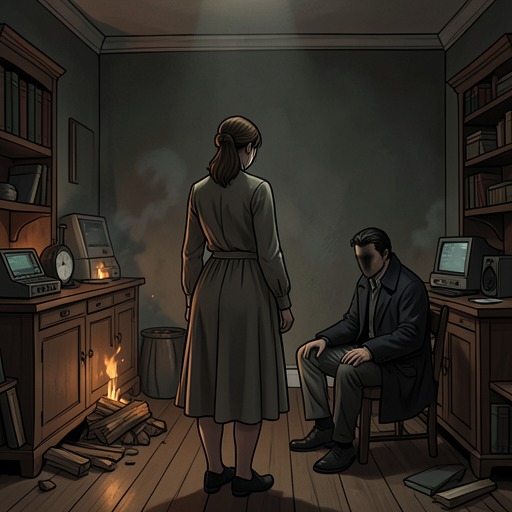
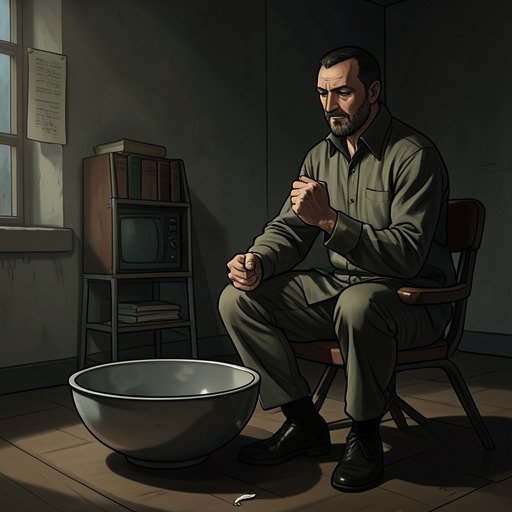
Pedro Páramo says nothing and does not leave his room during these days. His response to the town’s failure to share the mourning is a vow of revenge: he will fold his arms and let Comala die of hunger. He carries out that threat. In this sequence, the bells’ public reach contrasts with the private silence at Media Luna, while the crowd they attract becomes part of the conditions for Pedro’s retaliation. The ringing does not itself cause the later deprivation; it marks the communal occasion against which his grievance takes shape.
Bells, death, and religious authority
Elsewhere, religious rites surrounding death expose a different tension between public ceremony and what it can accomplish. At Miguel Páramo’s funeral, Father Rentería first refuses to bless the body, judging Miguel to have died without absolution; despite his refusal, he eventually sprinkles holy water over the corpse after Pedro Páramo leaves gold for the church. The scene makes religious observance inseparable from authority, money, and moral compromise. The bells at Susanita’s death likewise gather people without ensuring that the intended meaning of the occasion governs their actions.
Father Rentería’s private reflections also connect religious service to material dependence: he recognizes that the powerful sustain him, while the poor cannot fill his stomach, and recalls the dispute over whether Eduviges Dyada’s good works could outweigh her suicide. These episodes do not establish that the bells ring for every funeral or explain their precise liturgical use. They do show a world in which rites of death carry claims of mourning and spiritual judgment, yet those claims are vulnerable to wealth, social power, and the choices of a crowd. In Comala, the bells’ most striking effect is therefore double: they make a death impossible to ignore, then sound over a celebration that refuses to behave as mourning.