Padre Rentería
Pedro PáramoPadre Rentería is Comala’s priest, but his office does not give him freedom from the town’s power structure: dependent on those who sustain him, he knows that his spiritual authority has been compromised. His shame becomes a defining struggle, as he sees the distance between the people’s trust in his intercession and the compromised choices he has made.
Priesthood, Dependence, and Moral Crisis
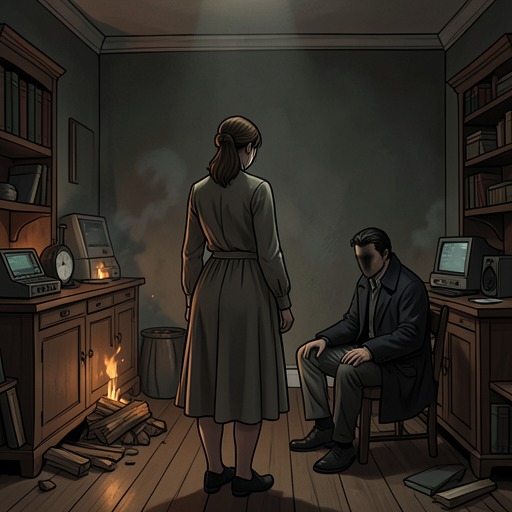
Padre Rentería’s crisis is not simply doubt about doctrine. Awake and unable to sleep, he blames himself for fearing to offend the people who keep him alive. He recognizes the economic bargain embedded in that dependence: the poor have no money to sustain him, and their prayers cannot fill his stomach. Yet those same poor people trust him to intercede with God. He feels that he has betrayed people who love him and rely on his priesthood, and questions what their faith has gained them when he has failed them.
The memory of María Dyada pleading for her sister Eduviges sharpens that guilt. María described Eduviges as someone who relieved others’ suffering and gave away everything she had, yet men rejected the children she bore them. When Eduviges took her own life, Padre Rentería treated suicide as a final sin that could undo her good works. María answered that her sister had suffered terribly and died in agony, appealing to the priest’s own teaching about the significance of suffering. He could offer only the possibility of more prayers and costly high masses requiring a deacon and subdeacon. The exchange exposes the gap between a doctrine of salvation and the material limits of the rituals through which it might be sought.
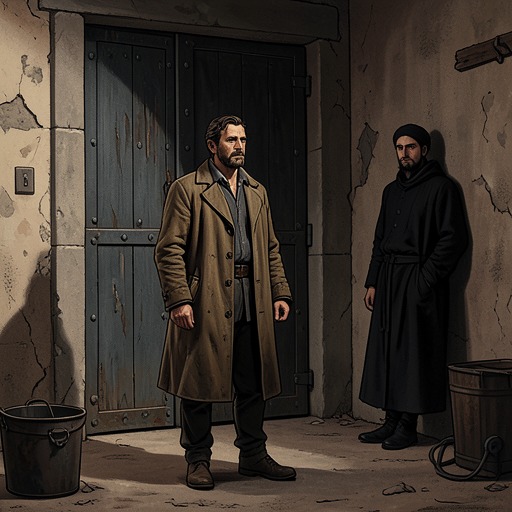
His dependence also compromises his dealings with Pedro Páramo. After visiting Media Luna to offer condolences, Padre Rentería hears Pedro once again make excuses in response to accusations against his son. He lets Pedro speak, then declines the invitation to dinner, saying he must be at the church early because women are waiting to confess. Returning dusty and worn, he goes straight into the church and sits in the confessional. The refusal marks a small boundary, but not an escape from complicity: at Contla, he had made a general confession to another priest, who refused him absolution because he had allowed a powerful man to trample the Church. The rebuke makes clear that good intentions and exhausting daily service cannot, by themselves, repair the harm done when he reserves his ministry for the powerful.
The Funeral of Miguel Páramo
At Miguel Páramo’s funeral, Padre Rentería’s conflict becomes public. He regards the dead man as beyond absolution and beyond grace, turns his back on the body, and hastily ends the Mass without blessing the congregation. When mourners insist that he bless Miguel, he refuses: Miguel was wicked, he says, and should not enter Heaven. His hands tremble as he tries to conceal his distress; despite the refusal, he performs the blessing.
Miguel’s body lies on a catafalque in the middle of the church, surrounded by new candles and flowers. Pedro Páramo waits alone behind it. Kneeling beside the priest, Pedro acknowledges the accusations against his son: Miguel was believed to have murdered Padre Rentería’s brother, was blamed for raping the priest’s niece Ana, and had committed other offenses and acts of disrespect. Pedro asks the priest to set those grievances aside and forgive Miguel as God may have done. He places a handful of gold coins on the prie-dieu, calling them an offering for the church, then leaves with two men and the coffin, carried by four vaqueros from Media Luna.
Padre Rentería takes the coins one by one to the altar and entrusts their meaning to God, asking for justice—or injustice—and ultimately for Miguel’s condemnation. The sequence makes the priest’s compromised authority tangible: the wealthy father can attach money to a plea for his son’s salvation, while the priest, who had refused the blessing, nevertheless performs the rite and accepts the payment. After closing the tabernacle, Padre Rentería retreats to a corner of the sacristy and weeps in pain and grief.
The Bells and the Public Life of Mourning
At dawn on 8 December, the bells began with the largest bell and were soon joined by those of the churches of Sangre de Cristo and Cruz Verde, and perhaps the Santuario. Their ringing continued past noon and through the night. By the third day, people were deafened and ordinary speech had become impossible; some bells had cracked, their sound reduced to a dull, jar-like thud. The passage presents religious sound not as a controlled rite with a clear beginning and end, but as a force that takes over the town’s time and public space.
The tolling draws people to Comala from Contla and farther away. A circus arrives, along with musicians, tightrope dancers, and rides; tentative visitors make acquaintances, serenades begin, and mourning turns into a crowded celebration that continues even after the bells stop. At Media Luna, by contrast, Susana San Juan is buried in a solitary, hushed household, while Pedro Páramo remains in his room and vows revenge on Comala. This divided response places the town’s collective festivity against private grief and shows how little the sound of a religious observance can guarantee a shared understanding of loss. The bells’ public meaning escapes the order of the church: they summon a crowd, but cannot make it mourn.
Absolution and the Limits of His Authority
The refusal at Contla leaves Padre Rentería without the absolution he once sought to administer to others. The priest hearing his general confession tells him that he allowed a powerful man to trample the Church and that his own hands are not clean enough to absolve him; he must seek forgiveness elsewhere. The rebuke also strips away the comfort of believing that his parishioners’ faith validates his ministry: they may still believe, the priest argues, but through superstition and fear rather than because of Padre Rentería. His daily labor in poor villages and his reputation for goodness do not cancel the harm of reserving service for the powerful. The judgment gives institutional form to the crisis visible at Miguel Páramo’s funeral: Padre Rentería can perform the rites, but neither ritual nor office restores the moral authority his compromises have cost him.