Pedro Abandons the Estate After Susana's Death, and Comala Declines
Pedro PáramoPedro Abandons the Estate After Susana's Death, and Comala Declines marks the conversion of private grief into public punishment. After Susana San Juan dies, Pedro Páramo retreats from the estate and turns away from the community whose prosperity his authority once commanded. Comala loses its population, its land becomes neglected, and hunger follows. The episode makes the village’s decline not a sudden catastrophe but the cumulative consequence of a powerful man’s withdrawal and deliberate refusal to sustain the place he once controlled.
Grief and Withdrawal
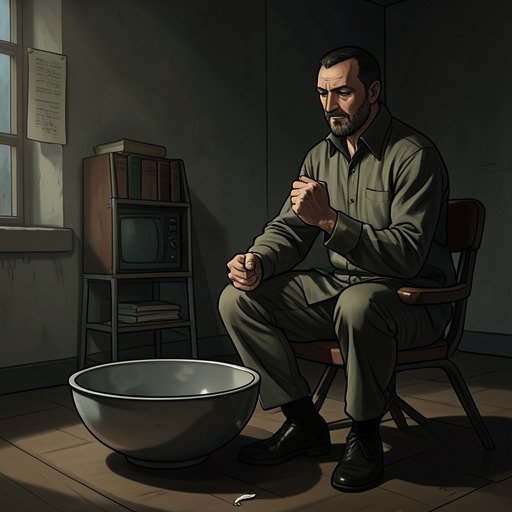
The account identifies Susana San Juan’s death as the decisive cause of Pedro’s retreat. He had loved her more than any other woman, the speaker insists, but she was brought to him ill and perhaps already mad. After she was buried, he spent his remaining days slumped in a chair, watching the road along which she had been taken to the cemetery. He stopped caring about anything else. The image of the seated Pedro fixes his grief in a posture of waiting: his attention remains on the path to the grave, while life on the estate moves beyond his concern.
His withdrawal becomes material and immediate. Pedro abandons his properties and orders everything they contain burned. People offer different explanations for his conduct: some say he has had enough; others that disillusionment has taken hold of him. The account distinguishes those interpretations from what can be observed—he drives everyone away and sits facing the road. The destruction is not simply a change of mood. It empties the estate of people and possessions, turning a private bereavement into a decision with consequences for the whole community.
From Estate to Ruin
Once left unattended, the land deteriorates. It is described as diseased and overrun with pests after being abandoned. The change is gradual but comprehensive: the population dwindles, and men disperse in search of other places where they can find water and sustenance. Comala becomes a place of departures. At first, those leaving expect to return, entrusting their belongings and families to others. Later, some come back for their families but not their property; in time, people appear to forget the village, their possessions, and those left behind.
Not everyone leaves at once. Some remain because they have nowhere else to go. Others stay in the hope that Pedro will soon die and leave them his possessions; that expectation sustains people for years, though Pedro remains alive, standing over the land like a scarecrow before the Media Luna. The hope of inheritance is therefore another form of waiting, shaped by Pedro’s continued presence even as he has withdrawn from active care. The land is abandoned, but its inhabitants remain tied to the prospect of what its owner might someday relinquish.
The later arrival of the Guerre des Cristeros deepens the decline. By then Pedro is already close to death, and the army takes the few men still left in the area. The speaker says that this is when she began to starve, and that afterward she did not take up with anyone again. The estate’s deterioration has thus left the remaining people exposed: as the population thins, armed conflict removes more of those who might have sustained local life. The ruin unfolds through linked losses rather than a single moment of collapse.
Power Before and After the Rupture
The contrast with Pedro’s earlier conduct clarifies what his retreat changes. When the estate was short of money, its last cattle had been sold. Pedro’s response was not to accept the debt totals as given but to ask whom the estate owed and to begin settling accounts, starting with the Preciado women, who were owed the most and had received the least. He then directed Fulgor Sedano to seek Dolores Preciado’s hand, presenting love as the important message while admitting that her money was the reason for the match. He released Fulgor from his steward’s responsibilities and told him to forget the Media Luna. Marriage, debt, land, and management had been parts of one practical system of control.
That system could mobilize people and resources on a large scale. In the rain, the Media Luna’s great gate opened and mounted men rode out in succession until the two hundredth had left. Fulgor Sedano directed the movement of cattle across the countryside, sending herds toward Vilmayo as the rains arrived. Later, when armed rebels confronted Pedro and complained of the government and local banditry, he asked how much money their revolution required and offered to help. These episodes show his capacity to use wealth, land, and armed force as instruments of influence. After Susana’s death, he does not lose that power through an external seizure; he turns it into abandonment and then into a means of punishing Comala.
Revenge and the Empty Village
The funeral makes the separation between the Media Luna and Comala visible. While Susana San Juan is buried in an estate that is solitary and quiet, the village celebrates. The bells have stopped, but the festivities continue; people do not leave, and still more arrive. From the Media Luna, the village light appears as a halo in the gray sky. Pedro says nothing and stays in his room, then swears revenge on Comala. His grief and the villagers’ response occupy opposed spaces: silence at the estate, noise in the village.
Pedro’s revenge takes the form of withholding. He announces that he will fold his arms and let Comala starve, and the account confirms that this is what he does. The threat is an action because his earlier authority had been bound to the estate’s control of land and resources. His refusal to act now reaches beyond his household and makes the community bear the cost of his loss. The people’s celebration at Susana’s funeral may have sharpened the rupture, but the account places the consequences in Pedro’s decision to punish the village by letting it go hungry.
Narrative and Significance
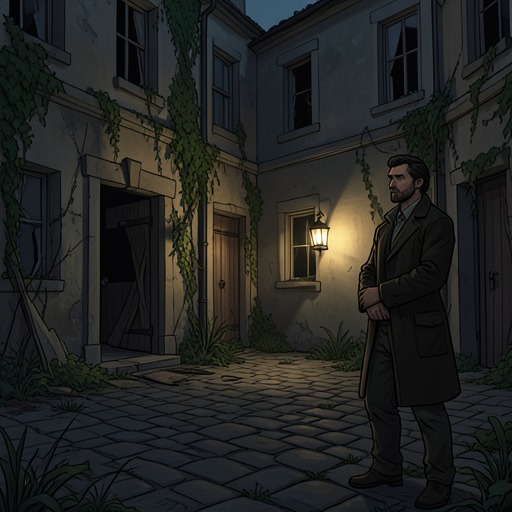
The event is pieced together through recollection and through the village’s changing physical condition. The same Comala that once appeared in the heat as a landscape shimmering toward distant mountains becomes a settlement where footsteps echo along stone streets and empty houses are overtaken by vegetation. Damiana Cisneros describes echoes confined in walls and beneath stones, including the worn sounds of laughter; she remembers that the sounds of a distant celebration eventually ceased. Her account makes the deserted village feel inhabited by remnants even as its living population disappears.
That contrast carries the episode’s force. The decline is measured not only in abandoned land, pests, departing families, and hunger, but also in what remains audible after ordinary communal life has ebbed away. Pedro’s attention stays fixed on the road to the cemetery; the villagers’ lives scatter toward other places; Comala is left with echoes. The account connects a man’s grief to a material order of land and food, showing how the withdrawal of a landholder can become a collective disaster when his private power has shaped the community’s dependence on the estate.