Pedro Páramo and Susana San Juan: Unrequited Devotion
Pedro PáramoPedro Páramo’s relationship with Susana San Juan is a decades-long, unrequited devotion that turns longing into possession. He waits for her return, gathers power and wealth while imagining that nothing will remain desirable except her, and engineers the circumstances that bring her to Media Luna. But proximity does not grant intimacy: Susana’s inner life remains beyond his knowledge, even as he watches over her through nights of distress.
A Love Sustained by Waiting
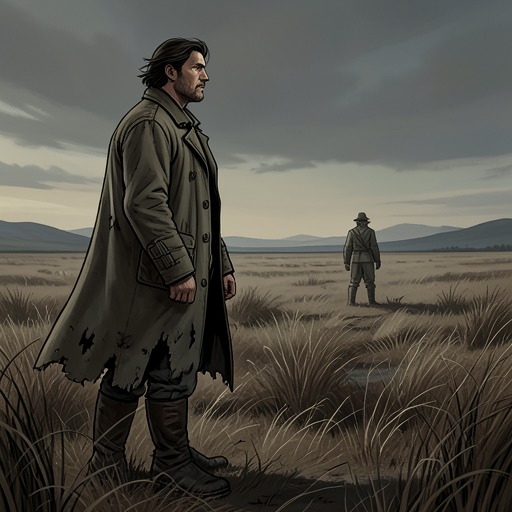
Pedro says he waited thirty years for Susana’s return. During that time, he sought to acquire everything he could, imagining that once every other desire had been exhausted, only the desire for her would remain. His account makes accumulation and longing run on parallel tracks: land and possessions can be obtained, but Susana cannot be made present by wealth alone.
He repeatedly invited Susana’s father, Bartolomé San Juan, to return to Media Luna, offering to make him the estate’s steward. Pedro admits that the invitation was a pretext; what he wanted was to see Susana again. Bartolomé did not answer his letters. The messenger reported that he tore them up, leaving Pedro to learn indirectly that Susana had married and later become a widow.
When the messenger could no longer find Bartolomé and Susana, Pedro ordered him to keep searching, regardless of expense. The search eventually led to Bartolomé in a remote cabin among the abandoned mines of La Andrómeda. This persistence reveals both the duration and the practical force of Pedro’s attachment: his longing is not merely private feeling but a command backed by his resources and authority.
The Return to Media Luna
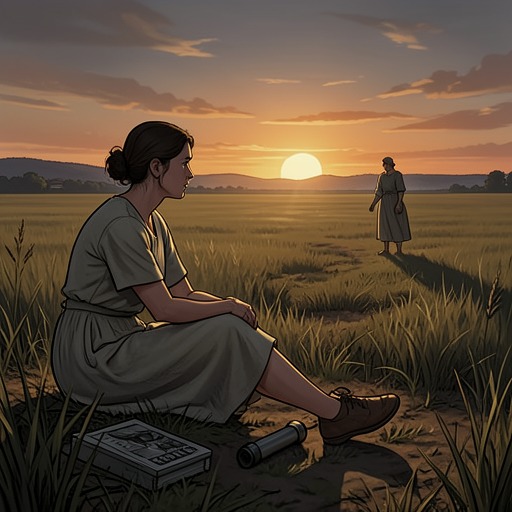
Armed unrest gave Bartolomé a reason to return. He told Susana that he had come not for his own sake but to place her somewhere populated and safer, and he described Pedro as having offered them a house and whatever they needed. Pedro, meanwhile, recalls receiving the news of Susana’s return with such relief that he wept. The reunion is therefore framed through opposing concerns: Bartolomé seeks a refuge for his daughter, while Pedro sees the fulfillment of a long personal desire.
Bartolomé tried to meet Pedro’s offer on practical terms. He gave him a detailed report on La Andrómeda and explained the mines’ possibilities if worked methodically, apparently prepared to repay the household’s support through labor. Pedro told him that the mines did not interest him; he wanted Susana. By making his preference explicit, he exposes the unequal bargain beneath the hospitality. The return is not simply a family’s acceptance of shelter: Pedro has arranged a situation in which Susana is brought within his reach.
Pedro also claims a childhood connection, telling Bartolomé that he and Susana had played together and bathed in the river. Bartolomé says he did not know of this shared past and responds with anger at the possibility, but the recollection belongs to Pedro’s account of why he believes he knows her. It does not establish that Susana shares his present attachment. The gap between Pedro’s remembered closeness and her independent inner life is central to the relationship.
Desire Turned into a Scheme
Pedro’s wish to keep Susana near him leads directly to a plan against her father. He orders Fulgor Sedano to send Bartolomé back to work the mines and suggests that the old man could be made to disappear in that isolated country, where nobody goes. He presents the proposed killing as a way to leave Susana an orphan and then describes her protection as a duty. The language of care thus conceals the coercion of removing the person who might stand between Susana and Pedro.
This contradiction sharpens the difference between devotion and mutual attachment. Pedro’s actions are directed toward securing access to Susana, not toward learning what she wants. His declaration that she is the most beautiful woman the earth has borne and his insistence that he does not want to lose her again turn her into the object of an ideal he has preserved for decades. The evidence shows the intensity of his desire, but not a corresponding declaration from Susana.
Proximity Without Knowledge
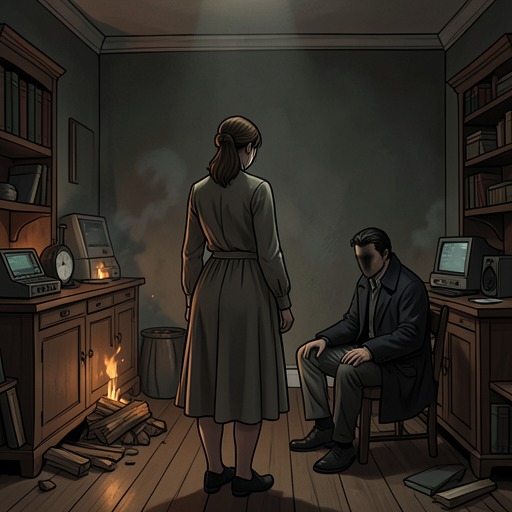
After bringing Susana to live at Media Luna, Pedro remains close to her, yet cannot understand what happens within her. She is confined to her room, sleeping or pretending to sleep. At night he watches her in the pale light of a small lamp: her body moves restlessly, her face is covered with sweat, and she pulls at the sheets and presses the pillow. His vigil registers suffering in physical detail, but observation does not become understanding.
Pedro wonders what torments her and keeps her from sleep. He hopes that this condition will end, reasoning that nothing lasts forever and that even vivid memories fade. He believes he knows Susana, or at least treats his love for her as sufficient knowledge. What matters most to him, he thinks, is that her image will let him leave life dazzled and erase other memories. That imagined consolation belongs to Pedro’s own longing; it does not show that Susana experiences the relationship as he does.
The narration makes the limit explicit: Pedro never discovers Susana’s world. His sustained attention, the decades of waiting, and the nightly vigil cannot cross the distance between his idealized image of her and her private experience. Their relationship is consequently defined not by a shared resolution but by the failure of possession to produce intimacy. Susana returns to Media Luna, and Pedro can remain beside her, but the person he has desired remains unknowable to him.