Revolution and Armed Violence
Pedro PáramoRevolution and Armed Violence in Comala are inseparable from the land system that precedes them. Armed groups challenge Pedro Páramo’s local authority, but he treats their rebellion as a force to negotiate with and redirect: he offers money and men, then urges his agent Damasio to seek resources through attacks on wealthier towns. The result is not a clean opposition between revolutionaries and a landowner. Political revolt, private command, and material survival overlap, while the people of Comala bear the consequences of both armed conflict and the estate’s eventual abandonment.
Land, Debt, and the Conditions of Conflict
The estate’s economic pressures are visible before the revolutionary bands arrive. Pedro’s father’s holdings have been reduced to a precarious position, and the last cattle have been sold. When Fulgor Sedano prepares to discuss the remaining debts, Pedro redirects the conversation from the sums owed to the identities of the creditors. He singles out the Preciados, whose claims have been neglected, and orders Fulgor to pursue marriage to Dolores Preciado. The proposed marriage joins private interest to property: Pedro tells Fulgor to convey his professions of love while making clear that Dolores’s money is the point. His instruction that the land should have no enclaves further signals an ambition to make the estate contiguous and easier to control.
Pedro’s command over land is also exercised through the movement of animals and armed labor. During heavy rain, two hundred mounted men leave the gate of Media Luna. Fulgor directs them to move the cattle from Enmedio beyond the former Estagua and to place Estagua’s cattle on the heights of Vilmayo. The scene presents the estate as an organized territory whose resources can be shifted by order. Such authority provides the material foundation for Pedro’s later ability to bargain with insurgents: he can promise money, recruit men, and offer property because land and labor are concentrated under his control.
The First Revolutionary Challenge
The rebellion reaches the estate through the killing of Fulgor Sedano. A messenger reports that he had accompanied Fulgor to investigate falling water levels near the reservoirs when an armed group confronted them. The newcomers identified Fulgor as Media Luna’s manager, declared themselves revolutionaries, and demanded that he tell Pedro they would meet him. They allowed the messenger to leave, and he waited until night before carrying the news to the estate. The report turns a local inquiry into a direct challenge to Pedro’s authority: the revolutionaries know whom the land serves and make their opposition personal as well as political.
Pedro’s immediate response is defiance and preparation. He tells the messenger to convey that the insurgents can come to him, then sends him to find the Boa, whom he needs urgently. The revolutionary threat is thus met not with a retreat from the estate but with the activation of Pedro’s own armed network. The contrast is central to the book’s treatment of violence: Pedro regards armed force as both a threat to his rule and a resource he can mobilize in its defense.
Negotiation and the Recruitment of Damasio
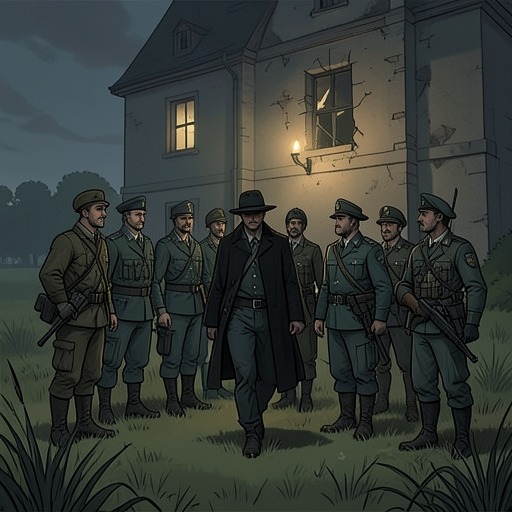
When about twenty armed men later arrive at night, Pedro receives them at dinner. They keep their hats on and eat in silence; after the meal, he asks what service he can provide. One man explains that they have risen against the government and against Pedro because they are tired of enduring both. He condemns the government and accuses Pedro of theft and banditry. The accusation makes plain that the rebellion is directed not only at distant authority but also at the local concentration of wealth and power.
Pedro does not answer the charge by relinquishing control. Instead, he asks what the revolution will cost and offers support. After the visitors discuss an initial sum and then a larger demand, he promises one hundred thousand pesos and three hundred additional men for their contingent. He distinguishes between the money, which he gives, and the men, whom he lends and expects to be returned when no longer needed. The arrangement converts rebellion into a bargain: the insurgents receive resources, but Pedro retains a claim on the armed force he supplies.
Damasio is assigned to carry out that bargain. Pedro tells him to gather three hundred trusted men and join the rebels, while giving him ten pesos per man for immediate expenses and leaving the rest of the promised money in safe keeping at the estate. He also offers Damasio the farm at Puerta de Piedra and instructs him to have Gerardo Trujillo, the lawyer in Comala, put the property in his name. Money, manpower, and land are distributed together; recruitment is rewarded with a property grant, binding military service to Pedro’s patronage.
Expansion, Opportunism, and the Cost of War
The scale of the armed movement grows beyond the initial arrangement. When Damasio returns, Pedro questions reports that he has been defeated. Damasio claims to have brought seven hundred men and explains that some of his companions, restless from inactivity, fired on a force they had mistaken for a small detachment but that proved to be a much larger army. He identifies the newcomers as Villistas from the North, describing them as powerful and as pillaging what they find. His report suggests that local alliances are unstable: the men Pedro sends into the rebellion encounter forces whose scale and reach exceed the conditions of his original bargain.
Pedro’s advice to Damasio is not to withdraw but to attack Contla. He argues that an armed group should not expect charity and directs Damasio toward a town whose wealthy inhabitants can be made to contribute. In this counsel, revolutionary activity becomes a means of extracting resources as well as fighting political opponents. Damasio recognizes the practical usefulness of Pedro’s instructions, but the exchange also exposes their moral ambiguity: Pedro advises a subordinate to take from others while presenting his own wealth and authority as the means to organize the campaign.
Aftermath and Narrative Significance
The wars of the Cristeros mark a later stage in the region’s decline. By then Pedro is near death, and the army takes the few men still left in the area. The loss of remaining manpower compounds the abandonment of the land: the population has already dwindled after Pedro withdraws from his properties, and people have left Comala to seek other sources of livelihood. Armed conflict does not restore the community or settle its grievances; it further reduces the human resources on which local life depends.
The book’s account therefore connects violence to the estate’s political economy at both ends of the story. Pedro’s accumulated land and authority enable him to purchase cooperation and deploy armed men, while his withdrawal and the later wars leave the region without the people and resources needed to sustain it. His response to rebellion is neither simple suppression nor genuine solidarity with its cause. He accommodates the insurgents when doing so serves his interests, directs them toward new targets, and keeps their promised resources under his own control. In Comala, revolutionary force challenges the landowner’s rule, but it also becomes entangled in the same systems of patronage, territorial command, and extraction that have shaped the town.