Susanita
Pedro PáramoSusanita is the last wife of Pedro Páramo, but the fragments of her life do not organize themselves around his devotion to her. They disclose instead a private world shaped by childhood memory, longing for Florencio, and grief that neither Pedro’s attention nor religious consolation can contain. Even after her burial, she remains audible as the woman said to have spoken alone while alive and whose voice continues to trouble the grave.
Identity and Childhood Memory
A remembered kite-flying scene offers an image of Susanita before Pedro’s adult pursuit defines her place in the story. On green hills above the village, she and Pedro play in the windy season. The kite string slips through their hands; when it breaks, the paper bird tumbles down, its rag tail trailing until it disappears into the green land. The scene is intimate but not possessed: the wind makes the children laugh, and their hands meet as they manage the string. Its fragile flight and abrupt fall give the memory a shape of its own, distinct from the later history of Pedro’s desire.
The recollection lingers on Susanita’s lips, damp as if touched by dew. That sensory detail makes the memory tender, but it also belongs to Pedro’s retrospective gaze: he recalls her through an image of youthful closeness that cannot recover the relationship as it was for her. The memory holds a moment of shared play, not evidence that she later returned his adult devotion.
Pedro’s Pursuit and Her Return
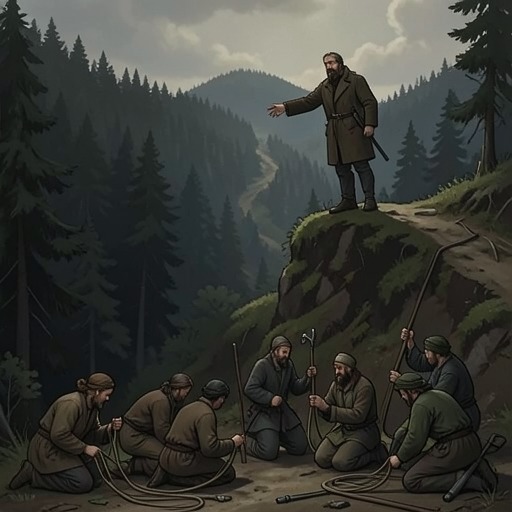
Pedro says that he waited thirty years for Susanita and first sought to possess everything he could obtain, so that she would be the sole desire left to him. His pursuit reaches back through her father. He repeatedly invited Bartolomé San Juan to return, claiming that he needed him, and offered him work as steward as a pretext for seeing Susanita again. The account makes Pedro’s patience inseparable from calculation: his apparent need for Bartolomé serves his desire for his daughter.
Bartolomé explains that he had offered Pedro a detailed report on La Andrómeda and the prospects of working its mines methodically. Pedro was not interested in the mines; he wanted Susanita, whom he described as the finest thing Bartolomé had made. He also invoked their childhood acquaintance, including playing together and bathing in a river. Bartolomé says that, had he known of this past, he would have beaten her with his belt. His response exposes the coercive family conditions surrounding Pedro’s claim: the desire that Pedro presents as long devotion is reported to Susanita by a father who threatens violence against her.
Pedro’s account of the intervening years is marked by refusals and loss of access. Bartolomé tore up the letters delivered to him, and a messenger reported that there would be no reply. Through that messenger Pedro learned that Susanita had married; later, he learned she was widowed and again living with her father. Her return to Pedro’s orbit follows this history of separation, but the available memories do not show her welcoming the devotion he had cultivated in her absence.
Florencio, Dreams, and Grief
Susanita’s inward life is most forcefully disclosed through dreams and remembered speech. In one scene she opens her eyes to what seems to be a blurred figure leaning over her, with a faint, heart-shaped light where its heart should be. She imagines that her father has come to tell her Florencio is dead, though she already knows. The scene does not offer a stable encounter: the figure is indistinct, and her recognition is bound up with the sorrow she is experiencing.
Her grief is not primarily a wish for spiritual reunion. In her dream she rejects the idea that God has protected Florencio and dwells instead on the bodily intimacy she has lost: his mouth, his warmth, and the touch of his hands. The force of the passage lies in the contrast between the care she had asked heaven to provide and what she actually longs for—the living body of the person she loved. Her unanswered desire is intensely physical, and the dream gives it voice without making it a consolation.
When she sees Father Rentería, Susanita rises and drags herself toward him. She tells him that her grief can ease his, turning her own suffering outward in a gesture of care. Yet the exchange does not dissolve her pain; elsewhere, the night’s dreams return her to the announcement of Florencio’s death, and she wonders why memory persists instead of giving way to simple death. The repeated return to this loss makes the past an active, distressing presence rather than a settled recollection.
Illness and Presence After Death
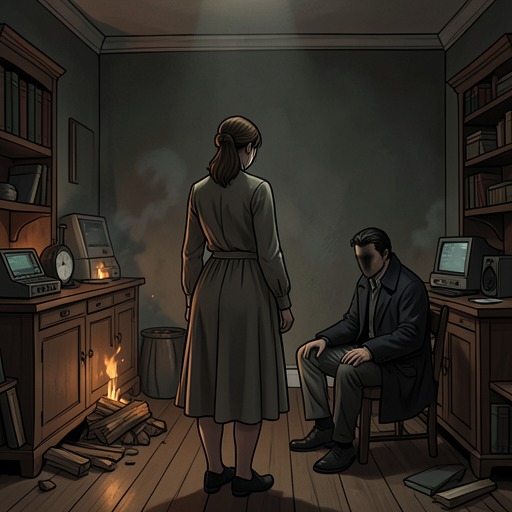
At her bedside, Pedro opens the door so a shaft of sunlight falls across Susanita. Her eyes are tightly shut, her lips are wet and parted, and her hands move over the sheet, unconsciously exposing her naked body as convulsions begin to twist it. Pedro covers her, approaches her ear, and calls her name twice. Father Rentería enters quietly. The scene places Pedro’s long-held desire beside the fact of her suffering: he can cover her body and call to her, but the passage does not show him reaching the inner life disclosed in her dreams.
Susanita is later identified in a conversation among the dead as buried in the great tomb beside the speakers. They describe her as the last woman of Pedro Páramo and say that some considered her mad, while the speaker insists that she had already spoken to herself while alive. Her solitary speech therefore precedes death; the grave does not begin it, but gives it a new setting. The contrast between Pedro’s cherished childhood image and this continuing, private voice leaves Susanita more than the object of his waiting. Her memories and desires persist on their own terms, beyond the story Pedro tells about having waited for her.