The Blurred Boundary Between Life and Death and the Dead’s Lingering
Pedro PáramoThe Blurred Boundary Between Life and Death and the Dead’s Lingering describes a condition woven into Comala’s ordinary life: death is certain, yet the dead remain present in voices, apparitions, sealed rooms, and memory. Don Pedro has been dead for years, but that fact does not settle the town’s relationship with the departed. Instead, the living encounter traces of the dead everywhere, while some of the dead speak from the very ground in which they have been buried.
Death as Comala’s Daily Reality
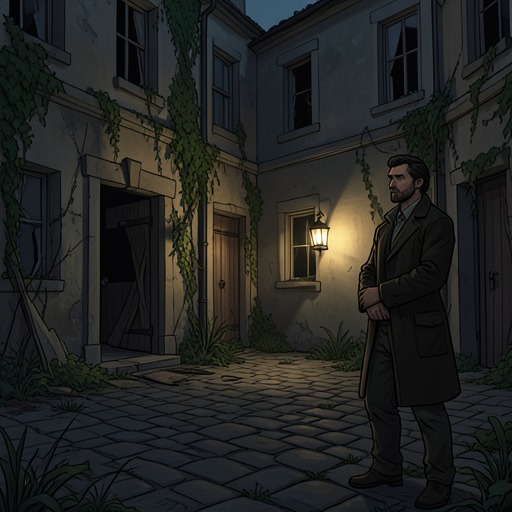
The contrast between the living and the dead is not simply that one group remains above ground and the other does not. In Comala, the dead are said to wander the streets at dusk, while the living are few and keep themselves shut inside their homes, spending the nights within four walls. The imbalance shapes the town’s sense of time: night is when the dead come out, and the living endure the hours in fear. The dead are not distant memories recalled only by survivors; they are a presence moving through the same streets.
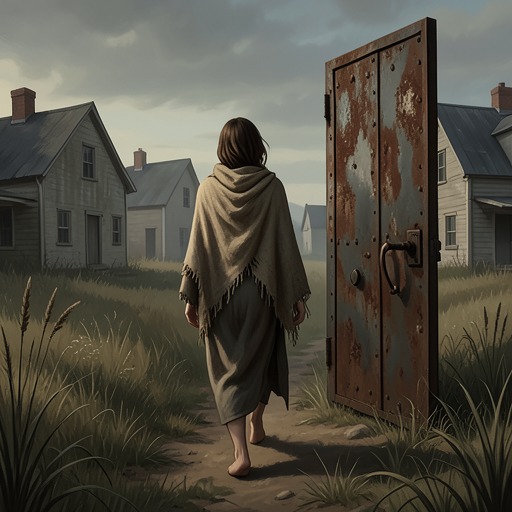
Damiana Cisneros of Media Luna describes voices that sound as if they emerge from cracks in the walls, yet are clear enough for their speakers to be recognized. On the way to fetch Juan Preciado, she encounters a funeral procession and stops to pray. A woman leaves the group, loosens her shawl, and reveals herself as Damiana’s dead sister. The scene collapses the distinction between a funeral for the dead and an encounter with one: the procession is not merely carrying death past the living, but includes a voice that reaches back to ask for prayer.
The dead’s persistence is also attached to the buildings and objects of the town. In the room where Juan stays, the voice of a frightened visitor is explained as perhaps an echo trapped inside. The room is identified as the place where Toribio Aldrete was hanged long ago. Afterward, the door was sealed until his body dried, deliberately preventing it from finding rest. The locked room makes the past physical: a death is not only remembered there but preserved as a condition imposed on a body and a space.
Voices, Souls, and Unfinished Absolution
The town’s apparitions are bound to a larger spiritual crisis. One of its inhabitants names people who are still alive, including Dorotea, and distinguishes them from the many souls wandering outside after dusk. The living are nevertheless far from secure or spiritually at ease. They are conscious of their sins and ashamed, but shame itself cannot absolve them. The scale of the dead’s presence overwhelms the small community: its prayers, the speaker says, could not be divided into meaningful portions for all the souls who need rest.
That failure is linked, in the speaker’s account, to the departure of a bishop. An isolated brother and sister had been driven together by their circumstances and asked him to marry them. He refused, ordered them to separate, and left without returning. The speaker presents his inflexible departure as the image of the place’s perdition and connects it to the multitude of souls who remain without absolution. This is a local explanation rather than a detached account of divine judgment: the dead’s unrest is understood through the community’s isolation, its sins, and the absence of a priestly authority able to relieve them.
Juan Preciado’s Death and the Shared Grave
The boundary between the living and dead becomes especially unstable when Dorotea corrects Juan Preciado’s account of his own death. Juan has remembered clouds swirling above him and a suffocating darkness. Dorotea counters with physical details: she found him in the plaza, far from Donis’s house, where Donis had been saying that Juan was pretending to be dead. Together, she and Donis dragged him into the shade beneath a portico. His body was already stiff, twisted with the terror of someone who has died of fright. They then buried him.
This exchange changes the meaning of Juan’s account. His earlier sensation of dying does not establish the cause of death; Dorotea’s account supplies the body, the place, and the burial that his recollection had not registered. Juan accepts her correction. The dead narrator is therefore not outside the confusion he describes: even his own passage into death reaches him through another person’s testimony. His conversation with Dorotea takes place after burial, in a shared grave where the dead continue speaking to one another.
Above them, rain strikes the earth with a sound Juan compares to someone walking over them. Dorotea tells him that there is nothing left to fear and that they will remain buried for a very long time. The rain makes the ground separating the grave from the living world audible, while the conversation beneath it makes that separation porous. Burial has occurred, but it has not ended consciousness, exchange, or the experience of time.
Memory as a Form of Afterlife
Susanita’s awareness of her own death offers another version of this suspended condition. She recalls the regular movement of a mother’s breathing, its palpitations and sighs, and the grief of that mother’s death; then she recognizes that this remembered scene is false as a present circumstance. She is lying on her back in one of the black boxes used to bury the dead. She is dead, and she thinks of the past to escape her solitude.
Her memory turns toward the season when lemons ripened, the February wind that broke fern stems, and the scent of ripe fruit filling an old courtyard. These recollections do not undo death or restore the past as present life. They show instead how memory persists within the coffin, giving the dead a mental refuge while confirming the solitude from which that refuge offers relief. Across the town, voices, sealed rooms, wandering souls, and remembered sensations all resist a clean division between life and death. Yet the text keeps the cost of that resistance in view: the dead linger, but lingering is not the same as rest.