The Whispers of the Dead
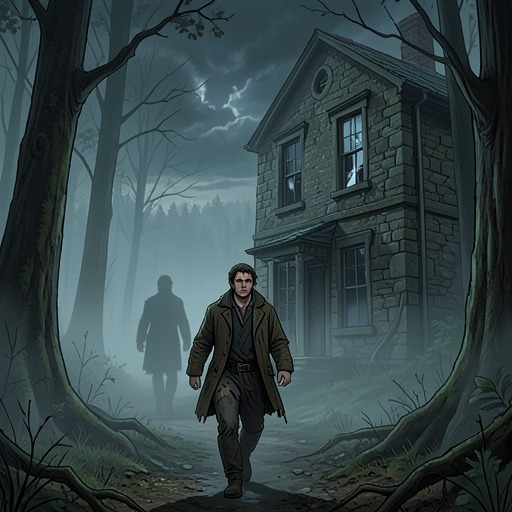
Pedro PáramoThe Whispers of the Dead are not a single voice or isolated haunting but a recurring presence that unsettles the distinction between silence and sound in Comala. Voices seem to persist in walls, stones, and memory; Juan Preciado eventually says that their accumulation overwhelmed him and caused his death. The village can appear deserted while remaining acoustically crowded, so that listening becomes both a way of encountering its past and the danger through which Juan is lost.
Echoes in an Apparently Silent Village
The first contradiction is that Comala seems quiet yet does not feel wholly lifeless. Juan senses that the village lives even though he hears no ordinary signs such as children playing, pigeons, or activity on rooftops. He considers the possibility that silence is unfamiliar to him, while the voices he carries within himself are still too numerous to distinguish. His recollection of his mother’s voice gives that inward sound a personal source: memory makes a voice feel close even when the person who spoke it is absent. The scene leaves open whether what Juan hears belongs to the village, to recollection, or to both.
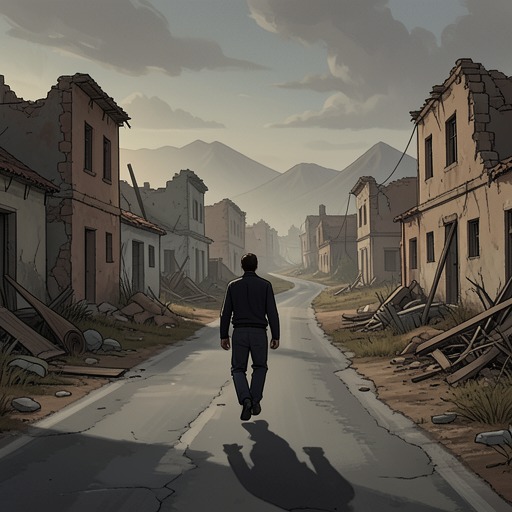
Damiana Cisneros of Media Luna gives the echoes a more material location. As she and Juan walk through the village, she describes them as if confined in the hollow of walls or beneath stones, seeming to follow a person who walks past. Their audible traces include creaks, old laughter, and voices worn down by having been used too much. This account makes the built environment less a barrier against the past than its container: the sounds seem to issue from surfaces that are visibly present, though their speakers are not.
Damiana also recalls hearing the noise of a celebration at Media Luna over many nights. When she went to look, she found deserted streets, not the dancers the sound had led her to expect. Later the noise stopped, and she was not surprised; in her account, even joy can grow tired. The episode joins sound and absence without resolving them. The celebration is heard, but its apparent scene offers no people to confirm it; its eventual silence marks an ending without explaining where the sound came from.
Voices Without a Visible Speaker
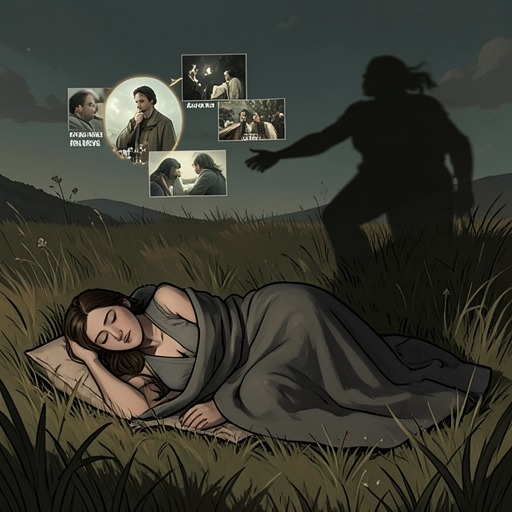
Juan’s early encounter with a drawn-out complaint intensifies the uncertainty. He has been sleeping fitfully when he hears a voice lamenting life and then asking for the right of a hanged person to struggle. It seems close to his ear, though he allows that it may have sounded in the street and merely reverberated in his room. When the voice pauses, silence follows so complete that even his breathing and heartbeat seem absent to him. The complaint returns just as he is about to sleep again. Repetition, rather than a clear identification of the speaker, makes the sound memorable and unsettling.
The episode also connects the whispers to bodies without making a visible body necessary. Juan has earlier attended to the signs that a woman’s voice comes from human breath and a speaking mouth. Yet the later complaint is hard to place: it may be outside, inside the room, or carried there by its walls. Damiana’s description of echoes trapped in stone offers one possible way to understand such uncertainty, but it does not settle whether any particular voice has a living speaker. The voices’ force lies partly in that gap between audible presence and unseen origin.
The Murmurs and Juan’s Death
In his conversation with Dorotea, Juan identifies the murmurs as what killed him. He explains that he had been carrying too many fears to bear, and that encountering the voices finally broke his nerves. The account gives the sound a physical course. After leaving a woman’s house, where he had borrowed a bed and seen her overcome by sweat, he feels increasingly cold. At first he hopes that turning back might restore the warmth he has lost; then he recognizes that the cold is coming from within him, from his own blood, and understands that he is afraid.
Juan goes toward the plaza because he hears a great commotion and believes a crowd might make his fear dissipate. There he leans against a pillar beneath the porticoes and sees that nobody is present, although the noise still resembles the hubbub of a market day. He compares its even, unreasoned quality to wind moving through branches that cannot be seen. The sound seems to gather and circle him; voices emerge from the surrounding walls and their cracks, following him even when he moves away from them. The empty plaza thus repeats the contradiction Damiana described at Media Luna: a heard multitude without a visible gathering.
The final murmur addresses the living as a request for prayer. Juan says that his soul froze at its sound, and that this is why others found him dead in the plaza. His death does not turn the whispers into a neatly explained supernatural phenomenon; instead, it confirms how real their effects are within his experience. He came to Comala seeking Pedro Páramo, guided by hope, but the voices he encounters become more immediate than the person he sought.
Narrative and Thematic Significance
The whispers bind distinct forms of absence together without making them identical. A remembered maternal voice, Damiana’s account of sounds that outlast their apparent occasion, the unexplained complaint in Juan’s room, and the crowd-noise on the plaza each have different circumstances. Their recurrence nevertheless makes Comala seem inhabited by what cannot be plainly seen. The village’s silence is not a reliable proof that nothing is there; it can be the interval in which other sounds become perceptible.
Juan recounts the approach of death retrospectively to Dorotea, so the reader receives the plaza scene through the testimony of the person who experienced its terror. His belief that a crowd is present is overturned by the empty square, while the noises remain audible to him. That imbalance between sight and hearing shapes the episode’s uncertainty without erasing its outcome. The whispers are at once traces of presence and evidence of isolation: they surround Juan, but they do not provide the human company he hopes to find. In this way, they make the village’s past acoustically persistent and turn listening itself into the route by which Juan understands, too late, that he is alone among the voices.