Alex Nilsen and Mr. Nilsen
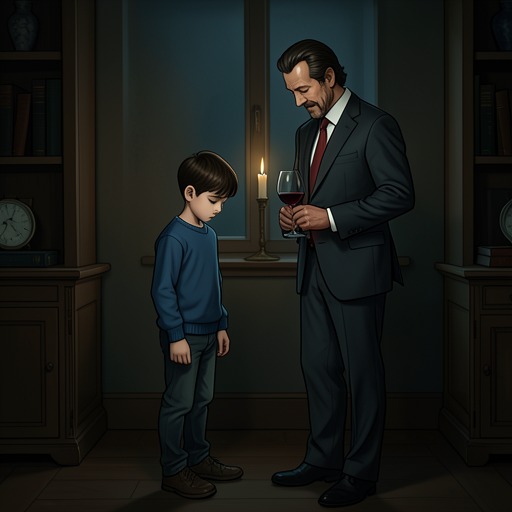
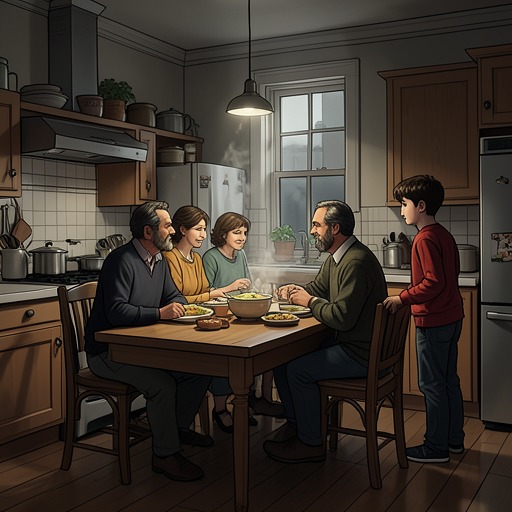
People We Meet on VacationAlex Nilsen and Mr. Nilsen share a relationship shaped by loss, practical responsibility, and Alex’s effort to keep the family steady. After Alex’s mother died from complications during David Nilsen’s birth, Mr. Nilsen and his four sons were left without a wife and mother. Alex’s role in the family extends beyond being a son: he supports his father through grief and is someone his brothers turn to when things go wrong. The closeness is real, but it also places Alex in the position of caring for the people whose care he might otherwise have expected to receive.
Loss and Family Roles
The family’s history begins with a death that affected both generations at once. Alex’s mother died while giving birth to David Nilsen, leaving Mr. Nilsen and the four boys motherless. The narration presents the loss not as a distant fact but as part of the emotional arrangement that follows: Alex remembers wanting everyone to be okay, and specifically trying to be what his father and younger brothers needed.
That responsibility is not confined to childhood or to a single crisis. The brothers call Alex when something goes wrong, and he is described as their emotional rock. The phrase captures the dependable role he occupies, but also its demand: in a family where their father has been devastated by loss, Alex is expected to remain composed enough for others to lean on. His steadiness becomes a pattern of action, not merely a quality others admire.
Mr. Nilsen’s Grief and Alex’s Care
Mr. Nilsen’s later relationship with a woman from his church shows that his life after bereavement includes an attempt at companionship, but not a lasting one. He began dating her the previous year; after three months, he ended the relationship. Although he made the decision, he was so distressed by the breakup that Alex drove home from school in the middle of the week to help him through it. The detail makes their bond concrete: Alex leaves the ordinary demands of school to respond to his father’s emotional need.
The episode also complicates any simple picture of Mr. Nilsen as the parent who provides stability while Alex receives it. In this instance, the father’s grief makes him vulnerable, and Alex becomes the one who travels home and offers support. The account does not suggest that Mr. Nilsen asks Alex to take on this role deliberately, or that their relationship consists only of caretaking. It does show, however, how readily Alex assumes responsibility when his father is hurting.
Intimacy, Silence, and Inherited Expectations
Their family’s difficulty speaking openly about sex is another small but telling feature of their relationship. The closest Mr. Nilsen came to giving his sons a sex talk was leaving a book about purity on each boy’s bed around the time they turned thirteen. Alex later recalls believing that masturbation caused cancer until he was about sixteen. The episode indicates how indirect and limited the family’s guidance could be on an intimate subject; it does not establish a broader account of Mr. Nilsen’s parenting, but it gives a specific example of what communication between father and sons lacked.
Against that background, Alex’s later longing for marriage, children, grandchildren, and a shared home carries particular weight. He says that he wants the settled life his brothers have, including choosing furniture and paint colors and growing old with his wife in a house that has come to smell like them. He also says that he does not want to wait, because nobody knows how much time they have. His vision is not presented as a rejection of his father or of the family he already has; rather, it makes visible the future Alex wants to build for himself, one organized around enduring intimacy and ordinary domestic choices.
Alex’s Self-Understanding
When Alex explains his loneliness to Poppy Wright, he connects it directly to the roles he adopted at home and at school. After his mother died and his father fell apart, he wanted to make everyone okay. He tried to be exactly what Mr. Nilsen and his younger brothers needed; at school, he also tried to be calm, responsible, and steady for everyone. He says that he was nineteen before he began to consider that he might exist as someone beyond the person he tried to be for others.
That reflection gives the father-son relationship an inward consequence. Alex’s care for Mr. Nilsen is part of a wider habit of defining himself through other people’s needs. Meeting Poppy Wright unsettles that habit: he says he did not know he was lonely until he met her, and recalls that she asked who he was. His account does not erase his loyalty to his family. Instead, it distinguishes being needed from being known, and identifies a relationship in which Alex can begin to feel like a person beyond his usefulness to his father, brothers, or classmates.
Significance of the Relationship
Mr. Nilsen’s place in Alex’s life is therefore both intimate and formative. Bereavement establishes the family’s vulnerability; the breakup years later shows that Alex remains an active source of support; and Alex’s own account reveals how being needed helped shape his calm, responsible manner. The relationship is loving in the evidence available, but its emotional pattern is uneven: Alex often steadies his father and brothers, while the text gives less detail about what Mr. Nilsen can offer Alex in return.
Alex’s hopes for a wife, children, and a long-lived home sharpen that pattern without turning it into a judgment on his father. The family he wants is defined by shared time and ordinary domestic life, while his fear that time may run out reflects the losses already present in his history. His relationship with Mr. Nilsen thus connects the original family bereavement to Alex’s later understanding of loneliness, responsibility, and the future he wants to choose for himself.