Alex cuts short his Norway trip to care for Poppy with pneumonia
People We Meet on VacationAlex Nilsen cuts short his Norway trip to care for Poppy Wright after she develops pneumonia, transforming the vacation they had planned into a night of fever, medical care, and closeness in her New York apartment. The episode makes his choice unmistakable: when Poppy cannot travel, he chooses to come to her, and his attentive care gives physical form to an intimacy neither has fully explained.
Anticipation and the illness
In the days before their departure, Poppy is already physically unwell, coughing through the work she needs to finish for the trip. The illness first seems uncertain: she has a badly stuffed or dripping nose, a scratchy, sour-tasting throat, pressure in her head, and mornings when she feels exhausted before the day begins. She has no fever at first, and an urgent-care visit rules out strep throat. She tries not to slow down, with the journey still ahead of her.
Her anxiety about the trip is emotional as well as practical. Three days before they are due to leave, Poppy dreams that Alex has reunited with Sarah Torval and can no longer go with her. She wakes nauseated and spends the day trying to put the dream aside. When Alex sends her a picture of his cat, Poppy asks whether he ever misses Sarah. Their exchange does not resolve the worry through a discussion of Sarah; instead, Poppy tells Alex she cannot wait to see him, a sentence that feels unexpectedly bold to her, and he replies that it is all he can think about. She lies awake replaying his words. The dream is not a prediction of what happens, but it places the possibility of losing the trip—and of Alex’s attention—close to the surface just as their plans are about to collapse for a different reason.
By the next day, the symptoms have become unmistakably serious. Poppy wakes with a swollen, raw throat, a pounding head, chest heaviness, aching legs, and chills that persist under blankets. She calls in sick, hoping to recover before her flight the following afternoon, but by late night she knows she cannot board. Her fever reaches 102 degrees. Because many of the reservations are now too close to the departure date to be refunded, the cancellation threatens more than an anticipated visit: much of the trip has already been paid for.
Cancellation and Alex’s arrival
Wrapped in blankets and shivering, Poppy drafts an email to her editor, Swapna Bakshi-Highsmith. She worries that canceling might cost her job, and the apology she prepares reflects how readily she treats an illness beyond her control as a personal failure. At five in the morning, Swapna tells her not to blame herself, explains that Poppy can let Alex use the booked accommodations, and arranges for Trey to go shoot in her place. She also assures Poppy that she is a fantastic writer and that the magazine is lucky to have her. The response gives Poppy permission to recover without making her absence a professional catastrophe, though the haze and discomfort of being ill keep her from feeling uncomplicated relief.
Poppy sends Alex a screenshot of Swapna’s message and encourages him to go have fun, adding that she will try to join him for the second half. But her worsening condition changes the practical meaning of that plan. Alex sends dozens of messages and, in his last, tells her he is there and asks to be let in. Confused and cold, Poppy initially struggles to understand why he is calling and pounding at her door. The fog of fever lifts enough for her to connect the messages with the sound outside. When she manages the lock, Alex is standing there with one hand on the doorknob and his battered suitcase behind him.
At first Poppy assumes he must still be in Norway, or that his appearance belongs to a dream. Alex examines her, presses the cool back of his hand to her clammy forehead, and tells her she is burning up. Her raspy reminder that he is supposed to be in Norway meets a plain correction: he is not. He brings his bag inside and asks when she last took ibuprofen. The scene’s reversal is quiet but decisive. The trip does not proceed as they planned, yet Alex’s arrival makes clear that Poppy will not face the illness alone.
Care through the night
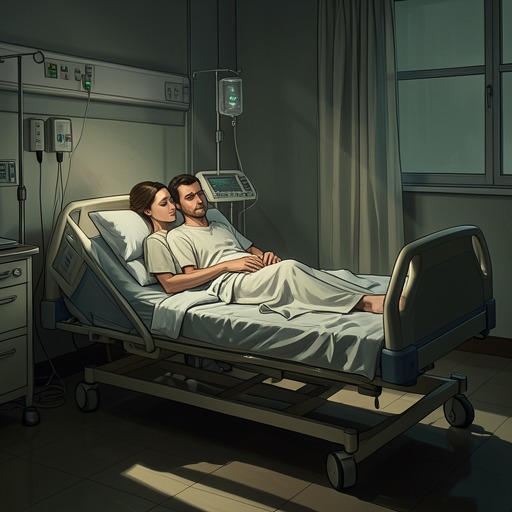
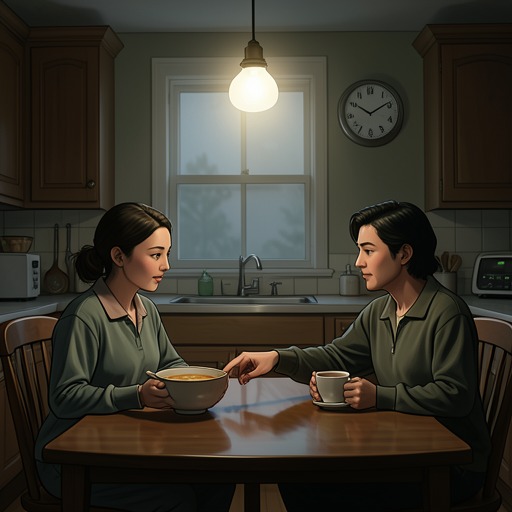
Alex’s care is sustained and practical. He brings Poppy chicken noodle soup, water, and tea; sets timers so she can take more medicine at the appropriate intervals; and checks her temperature every couple of hours through the night. When she sleeps, he rests beside her, half asleep himself, and wakes whenever she stirs to ask how she is doing. Poppy can manage only a word or two at a time. She answers that she feels better, while recognizing that the improvement is at least emotional: his presence makes her feel better even when she cannot explain it.
In the morning, Alex helps her down the stairs and into a cab so they can see a doctor. The diagnosis is pneumonia, serious enough to require antibiotics and attention but not so severe that she needs to be hospitalized. The doctor addresses Alex when explaining that Poppy should be fine if he keeps an eye on her and she takes the antibiotics. That instruction formalizes the role he has already taken on: he is not simply visiting, but monitoring her condition and helping her follow treatment while she is too foggy to process much for herself.
The small domestic details extend his caretaking beyond the immediate consultation. Alex brings her vitamins and red Jell-O, passing along Betty’s recommendation of zinc and her suggestion to put cinnamon in the soup. Poppy asks how he got there. His first flight toward Norway went through New York, but he did not merely happen to be passing through: he tells her he came to be with her. The distinction matters. The route explains how he could reach her; it does not diminish the decision to redirect his journey toward her bedside.
The meaning of the interrupted trip
Poppy immediately thinks of what his decision has cost their plans: she had meant to take him to an ice hotel. Her apology and tears show how strongly she feels the trip’s cancellation, even after Swapna has freed her from professional blame. Alex does not treat the lost excursion as a debt she must repay. He tells her he does not care about the hotel and only cares about spending time with her; he is content to be where he is. The journey’s most anticipated destination becomes secondary to the company the trip was meant to provide.
The encounter’s intimacy is conveyed through touch as much as explanation. Alex brushes Poppy’s hair from her face and gently diverts a tear before it reaches her lip. Having lost any remaining sense of dignity after he changed bedding soaked with her urine, Poppy reaches for his neck and pulls him toward her. He shifts onto the bed beside her, wraps an arm around her back, and draws her against his chest. She puts an arm around his waist, and they lie tangled together, each naming the other’s heartbeat. The scene does not turn the illness into a cure for their uncertainty, nor does it make the canceled trip disappear. Instead, the fever strips the moment of travel’s planned activities and leaves them with the care, bodily proximity, and freely chosen time that Poppy had wanted from the journey in the first place.