Betty
People We Meet on VacationBetty, Alex Nilsen’s grandmother, remains a vivid presence in the lives of Alex and Poppy Wright even after her death. Remembered as fiercely individual, funny, and attentive to others, she gives Alex a connection to family history that grief had left difficult to approach; her house, meanwhile, becomes part of the couple’s imagined future together.
Identity and Background
Poppy Wright met Betty only a few times, but came to love her. She recalls a tiny, fierce woman with interests that ranged from murder mysteries and crocheting to spicy food and modern art. Betty’s life story had its own comic flourish: she fell in love with a priest, who left the priesthood to marry her, and the couple became Protestants. Eight months later, Betty’s daughter was born with a thick head of dark hair like her mother’s and a strong nose like her grandfather’s.
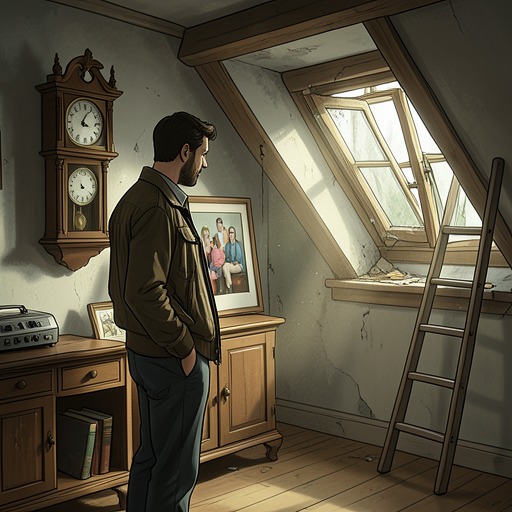
The house associated with Betty was as distinctive as the memories attached to it. A funky quad-level built in the early 1960s, it retained its original orange-and-yellow floral living-room wallpaper. After Betty slipped and broke her hip, she covered the hardwood and tile with brown carpet, even in the bathroom. The practical change records an injury and its consequences, but also preserves the texture of a home Poppy knew through visits: idiosyncratic, lived-in, and unmistakably Betty’s.
Family Memory and Loss
Betty was among Alex’s favorite family members, perhaps tied with David Nilsen. Her death occurred during the two years when Alex and Poppy Wright were estranged, and Poppy did not know about it until they had begun speaking again. Learning that she had missed Betty’s death hurts Poppy alongside the other losses and changes she had not been present for. Alex explains that he had not been sure Poppy wanted to hear from him, making Betty’s absence part of the larger history their silence kept from one another.
Alex describes Betty’s death as peaceful and says she was very old. As he speaks, he folds their straw wrappers precisely into small squares and shows little outward emotion. Poppy recognizes how much Betty mattered to him, even as his composure makes that grief difficult to read. Later, Ed Nilsen calls Betty a rock to the family, as her daughter had been, and becomes tearful when Poppy expresses sympathy. He removes his glasses and wipes his eyes, acknowledging that the family does not know how it will manage without Betty that weekend. His response confirms that her place in the family was not merely private or sentimental: she had been a support others counted on.
A Keeper of Stories
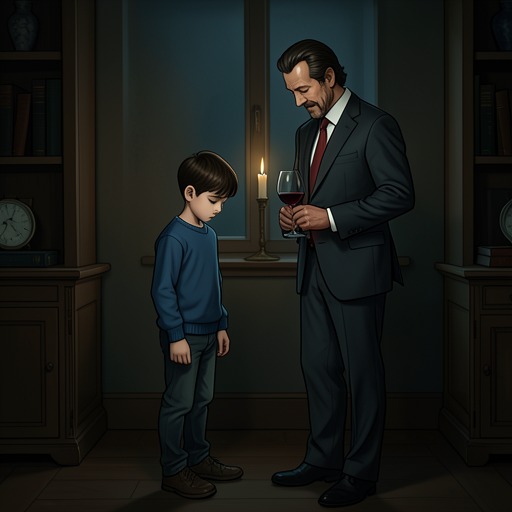
Betty helped Alex approach the memory of his mother. Alex was six when his mother died, and his father could not talk about her without breaking down. As a result, Alex and his brothers rarely spoke about her while growing up. When Alex was around fourteen or fifteen, he went to Betty’s house to clean her gutters and mow her lawn. There, he watched old home movies of his mother with Betty.
One video showed Alex’s mother holding him as a baby and singing an Amy Grant song. Alex had remembered neither her voice nor the scene; his expectation that she had been a singer gave way to the discovery that she sang badly. Betty laughed so hard behind the camera that she had to turn it off, while Alex’s mother continued singing and grinned back at her. The footage gave Alex a memory of his mother that was not defined only by his father’s devastation. Betty’s willingness to watch it with him made room for humor and affection alongside the family’s grief.
Betty and Poppy Wright
Betty also met Poppy Wright with a lively openness that could surprise. Poppy remembers that Betty could be sarcastic, but was not simply dismissive: she had unexpected opinions, liked Trey’s tattoos, and asked questions as though she did not already possess all the answers. That curiosity made her judgments feel provisional and personal rather than automatic.
When Poppy Wright admitted that she loved Trey, Betty did not look directly at her. Poppy understood the gesture as a way of giving her privacy and the option to lie, if she needed it. Instead, Betty asked whether Poppy loved Trey as she loved Alex Nilsen. The question lands with particular force because Poppy cannot answer it dishonestly; her heart seems to stumble before she responds. Betty’s perceptiveness brings Poppy’s unresolved feelings into focus without turning the moment into an accusation. Her attentiveness is gentle, but it does not shy away from what Poppy herself finds complicated.
Care and Continuing Presence
Betty’s care persists in practical advice as well as memory. When Alex nurses the sick Poppy Wright, he returns with food, vitamins, and supplies, including red Jell-O, and passes on Betty’s recommendation of zinc. He also says she had advised putting cinnamon in Poppy’s soup. The details make Betty present in an act of care she can no longer perform herself: Alex looks after Poppy by drawing on the ordinary remedies he associates with his grandmother.
After Betty’s death, her house passes to her son, Ed Nilsen, who had wanted to sell it but lacked the time and money to undertake the repairs it needed. Alex moves in and works on the property. In the future Poppy Wright imagines with him, they will stay there after traveling in Norway and Sweden, pull down the old wallpaper, choose new paint colors, and share dinners with Ed Nilsen, Alex’s brothers, and the younger generation of the family. The house becomes more than a place Alex is fixing: it connects inherited family life with the life he and Poppy Wright are considering building together. Betty’s material surroundings remain, but they are to be altered through shared work and new choices. In the closing vision, Poppy Wright understands that the place she most wants to be is wherever Alex Nilsen is.