Poppy's career burnout
People We Meet on VacationPoppy Wright’s career burnout is not simply dissatisfaction with a job: it is a crisis in which work, daily self-care, and travel all lose their ability to give her direction or connection. Although her position at R+R had been rewarding for much of her four and a half years there, it has lately left her as tired as bartending did in Ohio. The burnout forces Poppy to ask what comes next, while gradually revealing that a change of scenery cannot substitute for belonging.
Identity and Signs of Burnout
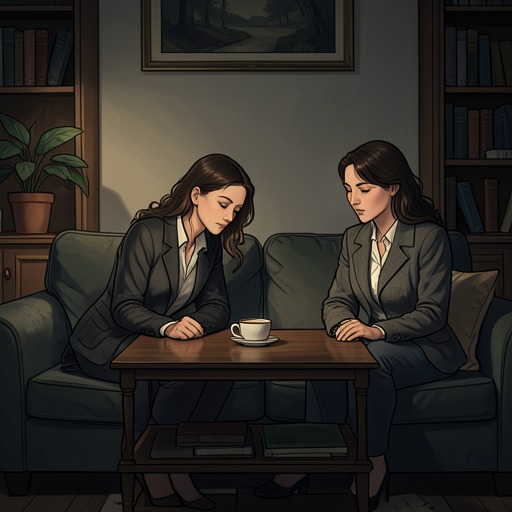
Two weeks after returning from Palm Springs, Poppy is still struggling, though she has tried to hide it at work. On an unexpectedly cool New York day, her boss and mentor, Swapna Bakshi-Highsmith, notices her low mood and asks her to walk to a nearby coffee shop. Poppy initially treats the concern as a work-performance issue, apologizing and promising to do better. Swapna makes clear that her concern is broader: she has invested in mentoring Poppy, but is not demanding a personal disclosure. She suggests speaking with someone and names professional burnout as a challenge she has experienced herself.
The effort to appear functional sits against a much more severe private experience. Poppy exercises for roughly four hours each night in an attempt to exhaust herself into sleep, yet wakes tired and moves through the day with little mental energy. At the office, seeing other people manage their tasks makes her feel worse about how difficult ordinary life has become for her. Even feeding herself can seem like an endless obligation: a frozen meal in the microwave becomes a reminder that she will have to repeat the task tomorrow and every day after, even when sick or in pain. She does not initially explain this to Swapna, partly because Swapna is her boss and partly because the thoughts are difficult and humiliating to say aloud.
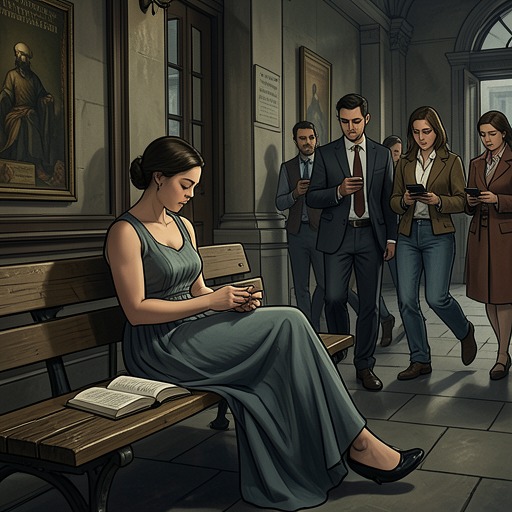
Poppy’s repeated, inward recognition that she is having a hard time broadens into the feeling that everything is hard. She describes living and being responsible for herself as an almost insurmountable challenge, rather than identifying one discrete workplace grievance. Her exhaustion also strains her sense of competence: she compares herself with colleagues who are typing, taking calls, booking, and editing, and concludes that her own difficulty must reflect a failure to cope. The contrast between outward work routines and inward overwhelm makes the burnout both practical and isolating.
Work, Direction, and Connection
The job’s change in meaning is central to Poppy’s uncertainty. R+R had been amazing for a substantial portion of her four and a half years there, but lately it has become tiring without offering an obvious alternative path. No other job is calling to her as a clear answer to her unhappiness. Because she cannot see where to go next, she has also stopped trying to reach Alex for the time being: she feels she has no real right to call him while she has no idea what to do with her own life. Work-related depletion thus intersects with the uncertainty and distance in one of her most important relationships.
Swapna’s advice gives Poppy a name for what may be happening, but not an instant solution. Poppy asks whether professional burnout passes; Swapna answers from her own experience that, so far, it has always passed for her, and hands Poppy a business card. She also suggests taking time alone and changing the scenery for perspective. Poppy recognizes that this kind of change once helped, but the recognition carries doubt: travel used to restore her, and that restorative effect has become unreliable.
Therapy and the Decision to Stay
Poppy follows up by beginning therapy with Rachel Krohn. At their first session, Poppy wants help figuring out what comes next, but Rachel proposes starting with the past. Poppy expects little to say and then talks for fifty-six minutes about her parents, school, and her first trip home with Guillermo. She has previously shared this material only with Alex. Talking brings relief, although she is unsure how it addresses the immediate crisis in her life. Rachel asks her to commit to at least a couple of months and cautions her against running from what is difficult.
That counsel becomes a practical pattern of remaining in places Poppy might once have tried to escape. She continues weekly therapy, stays in her job at R+R, and stays in her mostly empty apartment. Her blog remains unused, but she begins journaling. Work travel contracts to regional weekend getaways, and during downtime she searches online for self-help books and articles that might speak to her. She also looks at jobs in New York and near Linfield, testing possible futures without yet choosing one.
Her attempts to cultivate new interests are similarly tentative. Poppy buys a plant, a book about plants, and a small loom, then tries to learn weaving from YouTube videos. Within three hours she realizes she is bored by it as well as bad at it. The failed experiment does not resolve her career question; instead, it makes visible how difficult it is to manufacture a new direction simply by acquiring the tools associated with one. Therapy and journaling, by contrast, keep her in contact with uncertainty rather than requiring an immediate reinvention.
Reinterpreting Travel and Burnout
When Poppy later explains herself to Alex, she connects her work dissatisfaction to the larger change in how travel feels. She had loved running her blog and believed that love was mainly a love of travel. In retrospect, she recognizes that she was unhappy in recent years and that traveling had changed. She concedes that she may have approached Alex as though he could act as a quick fix, or as a destination capable of giving her a rush and a new perspective. Starting therapy helps her examine not only his absence from their trips but also what else had changed.
Poppy identifies human connection as what made earlier journeys restorative. Growing up in Linfield, she felt lonely and believed something was wrong with her. Leaving for Chicago did not fix everything, and she continued to hope that going elsewhere would make belonging easier. Away from the history and anticipated judgment attached to home, chance encounters helped her open up, make friends, and feel lovable. The emotional value of those trips lay not only in movement but in meeting people and feeling connected.
The R+R trips offered a sharp contrast. They could be impressive journeys, but Poppy increasingly met chefs and hotel managers seeking coverage rather than people with whom she could form the spontaneous connections she valued. She returned from those trips feeling empty because she had not connected with anyone. This distinction complicates any simple account of burnout as a problem that quitting or traveling more would solve: even if she left her job and revived her blog, Poppy concludes, she would not automatically be happy. Travel had once helped her meet a need she could not name, but its earlier form could not provide lasting relief from loneliness or replace a sense of belonging.
Poppy’s burnout therefore marks a shift from escape toward recognition. She had treated distance, new destinations, and brief encounters as safer ways to feel accepted, while fearing that someone who came too close and saw too much would reject her. In speaking to Alex, she links that fear to the emotional distance she maintained even from him. The career crisis does not end with a new job or a restored blog; its significance is that Poppy begins to identify the limits of work and travel as solutions, and to articulate the loneliness and fear that had shaped her search for them.