Vancouver Island
People We Meet on VacationVancouver Island is the destination Alex Nilsen and Poppy Wright choose when they imagine an affordable trip to a hot spring in a Canadian rainforest. It becomes more than a place named in passing: the island anchors a plan they make together and, later, a journey shaped by thrift, curiosity, and their easy willingness to turn an idea into a shared adventure. The hot spring itself, however, lies on a smaller island nearby, a distinction the narrative preserves.
The imagined destination
The idea emerges while Alex and Poppy are considering travel they can actually afford. Alex recalls a hot spring he has read about, set in a rainforest somewhere in Canada. Poppy identifies Vancouver Island, then qualifies her answer: the spring is on a smaller island near it, rather than necessarily on Vancouver Island itself. That small correction makes the destination a route and an excursion, not simply a single named attraction.
Alex presents the island as the place he would choose if his travel companion were less disagreeable. Poppy answers by agreeing to go with him, especially when the alternative is watching him do more homework. The exchange turns a hypothetical destination into a promise: they will go the following summer. Paris remains a possibility for another time, but its expense makes Vancouver Island the practical choice. The plan’s appeal lies partly in its modest scale: a particular spring, a forest trail, and a journey they can afford together.
The trip and its route
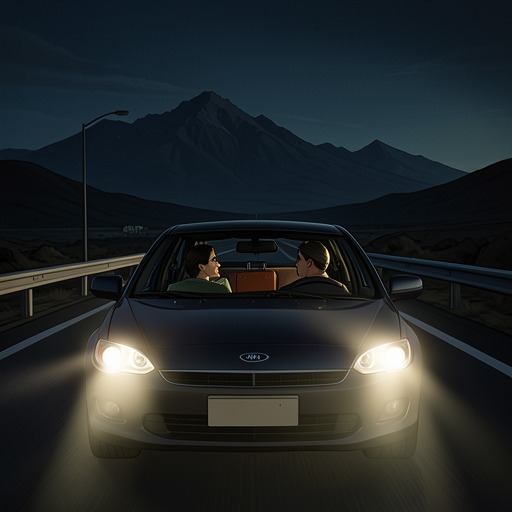
When the journey eventually reaches its final full day, Alex and Poppy drive across Vancouver Island to Tofino. They would have stayed on the peninsula if they had not been trying to save every possible penny, so the route records the budget-conscious decisions that have shaped the trip. Rather than treating cost as a reason to abandon the destination, they adjust where they stay and how they get to the experience they want.
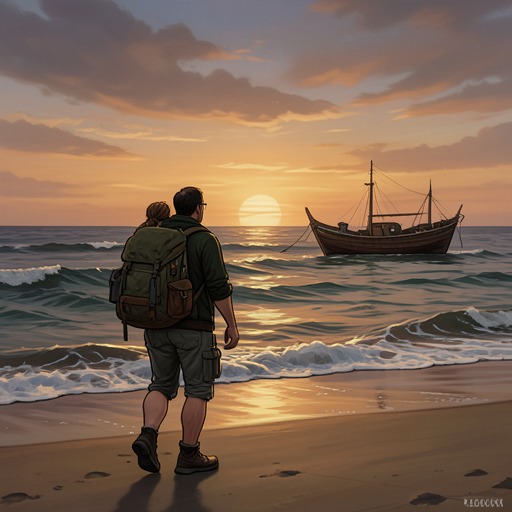
Poppy surprises Alex with inexpensive tickets for a water taxi to the smaller island she had read about, where a trail through rainforest leads to the hot spring. The sequence distinguishes the island they have crossed from the nearby island that holds the spring. The boat ride is loud and rough: its motor makes conversation difficult, and the small vessel repeatedly strikes the dark, choppy water. Poppy has to shout to Alex over the noise and wind. The practical transfer becomes an adventure in itself, carrying them from a plan discussed at a distance toward the landscape they had imagined.
The crossing belongs to a larger itinerary. On the second-to-last day, Alex and Poppy hike through Cathedral Grove at sunrise, then drive to Coombs, where goats graze on the grass roofs of cottages. They take photographs, pose in goat-themed cutouts, and spend two hours wandering a market filled with samples of cookies, candies, and jams. These stops place the hot-spring excursion within a trip made up not only of headline attractions but also of playful diversions and unhurried local discoveries.
Affordability and the experience of travel
Vancouver Island represents a version of travel organized around making limited money go further. Paris is postponed because they cannot afford it; Tofino is passed over as an overnight base for the same reason; and the water-taxi tickets are described as perhaps worryingly cheap. Yet the trip does not treat low cost as a diminished substitute for an ideal vacation. Poppy finds a way to reach the place she had read about, and the effort of getting there supplies its own vivid experience.
That approach contrasts with Poppy’s later work trips, which she says are unlike the trips she and Alex used to take. She admits that she may have understated this difference when proposing to combine their summer travel with a work assignment: she wants to see Alex’s reaction when their ratty T.J. Maxx luggage meets a resort welcome of champagne. The contrast clarifies what Vancouver Island represents in their travel history. Their earlier journeys are associated with improvisation and budget-minded choices; professional travel brings a more polished, aspirational setting. The island trip’s character is not defined by luxury, but by the pair deciding together what they can manage and then making the journey theirs.
A place made meaningful through companionship
Vancouver Island’s significance is relational as much as geographical. The destination first takes shape through conversation: Alex proposes the kind of place he wants to see, Poppy supplies its name and corrects the details, and they settle on a future trip together. Later, she turns that shared intention into a surprise for Alex, arranging the inexpensive tickets that carry them toward the spring. The island thus links an imagined plan with practical acts of attention and cooperation.
The narrative also keeps the scale of the place in perspective. Vancouver Island is not presented as an exhaustive portrait of a region, and the account does not claim that the couple reaches or bathes in the hot spring. What it establishes is their route to Tofino and the water crossing toward the nearby island, alongside earlier stops among forest, cottages, goats, and a market. In that measured geography, the destination matters less as a perfected postcard than as a place they approach together—through detours, savings, noisy water, and a promise kept.