Ludlow
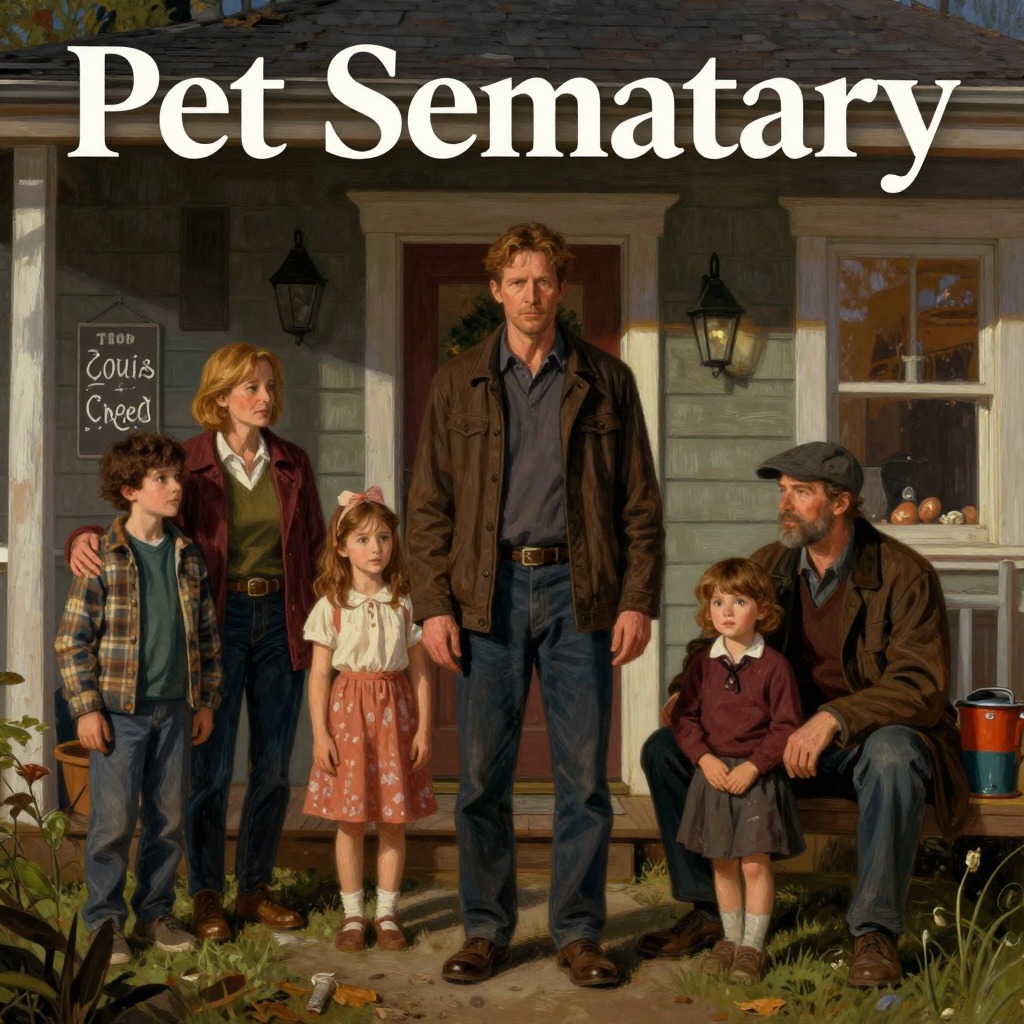
Pet SemataryLudlow is a small, unincorporated town in central Maine, situated on Route 15 between Bangor and Bucksport. It is the setting for the entire novel, the place where Louis Creed, his wife Rachel, and their two children, Ellie and Gage, move from Chicago at the beginning of the story. The town is defined by its proximity to the University of Maine in Orono, where Louis takes a job as director of the university infirmary, and by the dangerous highway that runs through it, a road that Jud Crandall warns is "a bad road for kids and pets."
Geography and Setting
Ludlow is described as a rural community, with the Creed house situated on a large property that includes a field and woods that "went on damn near forever." The property abuts state lands, and the remains of the Micmac Indian tribe have laid claim to nearly eight thousand acres in Ludlow and the towns east of it, a legal dispute that may stretch into the next century. The house itself is a big old New England colonial, newly sided and insulated, surrounded by a luxuriant lawn. Beyond the house is a large field for the children to play in, and beyond that, the woods that lead to the Pet Sematary and, further on, to the ancient Micmac burying ground. The town is bisected by Route 15, a busy highway used by Orinco tanker trucks and other traffic, which Jud Crandall describes as "the one thing about Ludlow I don't like anymore. That frigging road."
Events and Significance
Ludlow is the location of nearly every major event in the novel. It is where the Creed family first arrives, where Louis meets Jud Crandall, and where the family first visits the Pet Sematary. It is where Victor Pascow dies in the university infirmary and where his ghost later appears to Louis. It is where Church is killed and then resurrected, and where Gage is killed by an Orinco truck. The town is also the site of the final, catastrophic events: Gage's resurrection and subsequent murders of Jud Crandall and Rachel Creed, Louis's killing of the resurrected Gage, and his final journey to the Micmac burying ground with Rachel's body. The town's very ordinariness—its quiet roads, its woods, its small-town life—serves as a stark contrast to the ancient, malevolent power that lurks just beyond its borders.
Associated People and Groups
The most significant resident of Ludlow is Judson Crandall, the Creeds' elderly neighbor who has lived in the town his entire life. Jud is the keeper of the town's dark secrets, the one who knows about the Pet Sematary and the Micmac burying ground beyond it. He is the one who leads Louis to the burying ground to bury Church, an act that sets the entire tragedy in motion. Other residents include Norma Crandall, Jud's wife, and various townspeople who appear in the background, such as the children who maintain the Pet Sematary path and the adults who know about the burying ground but keep it secret. The town is also home to the university where Louis works, a place that brings him into contact with the dying Victor Pascow and his colleagues Steve Masterton and Joan Charlton.
Changes and Narrative Significance
Ludlow itself does not change over the course of the novel, but the Creed family's perception of it does. What initially seems like a peaceful, beautiful place to raise a family gradually reveals itself to be a place of ancient, terrible power. The town's very name becomes synonymous with loss and horror. The narrative significance of Ludlow is that it is the place where the boundary between the ordinary world and the supernatural world is thinnest. The Pet Sematary and the Micmac burying ground are physical locations within the town, but they are also portals to a realm of death and resurrection that defies the laws of nature. Ludlow is not just a setting; it is an active participant in the story, a place that seems to draw tragedy and horror to itself. The novel's epilogue, in which the resurrected Rachel returns to Louis, confirms that the town's power is not broken, and that the cycle of death and return will continue.