
The Inheritance of Powerlessness
PiercingThis flow traces how childhood helplessness becomes a theory of violence, then resurfaces when Kawashima must choose whether to repeat the harm he once endured.
increasing Bearing strength in each event
 decreasing
Bearing strength in each eventdecreasingThe Beatings Begin
A Child Made Powerless
Violence Without Explanation
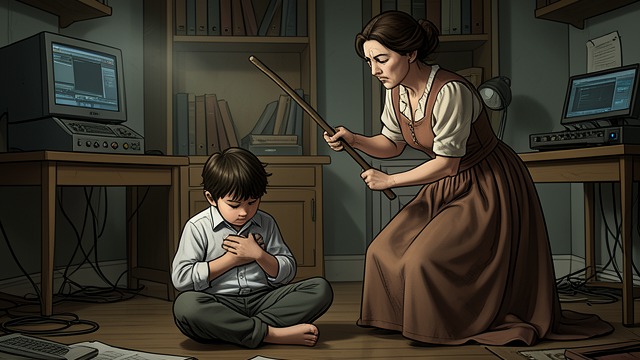
After his father’s death, Kawashima Masayuki’s mother beats him while sparing his younger brother. The child cannot understand what makes him the target, so he turns the violence inward, deciding that he must be bad.
The unpredictability matters as much as the blows. He tries to remain prepared for the next attack, but no amount of vigilance gives him control over when it comes.
Escape by Separation
Kawashima learns to imagine that the person being beaten is not really him. This mental distance allows him to endure pain that he cannot stop, while also teaching him to divide experience from feeling.
His strategy is a child’s improvised refuge, not a cure. It protects him at the cost of making his own body and identity feel less secure.
The Narrow Road
A Memory of Abandonment
Locked Out of Childhood
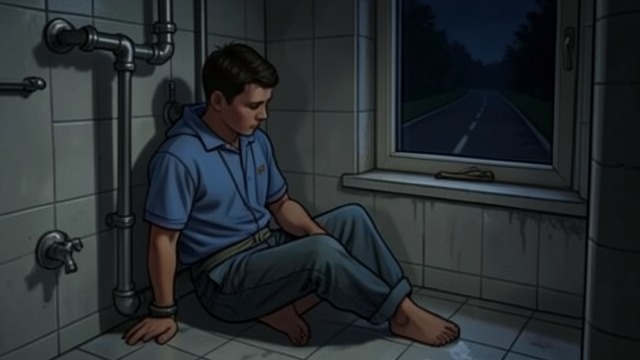
When Kawashima’s mother takes his younger brother to the department-store play area but leaves him behind, he runs after them. She drags him home and ties him to pipes in the bathroom, turning an ordinary outing into a lesson in exclusion and helplessness.
He falls asleep on the cold tile and wakes in darkness. Through the window he sees an empty, narrow road, an image that gives his isolation a lasting visual form.
A Private Language
After he is placed in a home for abused children, Kawashima begins drawing narrow roads at night. The drawings give shape to an experience he cannot readily explain in words.
The road becomes more than a remembered setting: it is the distance between him and the people who should have protected him. Art preserves the memory while keeping it at a remove.
Mercy Turns Violent
Forgiveness Under Pressure
The Apology
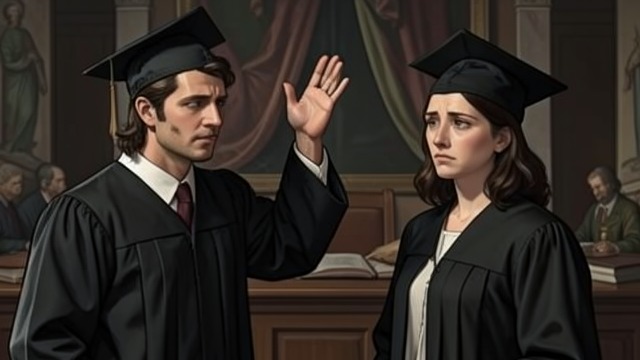
At Kawashima’s high-school graduation, his mother apologizes for the abuse and explains that she treated him cruelly because he reminded her of his father. The apology offers recognition, but it also places the burden of reconciliation back on the son.
When she asks whether he forgives her, Kawashima nods almost automatically. The response comes before he can determine whether forgiveness is truly possible.
A Refusal of the Expected Ending
Something in Kawashima breaks through the reflexive answer, and he slaps his mother. It is the only time he hits her, but the gesture reveals how little the apology can undo.
His violence does not repair the past or establish justice. Instead, it exposes the trap in which a victim is asked to comfort the person who harmed him.
The Reversal of Roles
The Victim Becomes the Threat
A Lesson Repeated
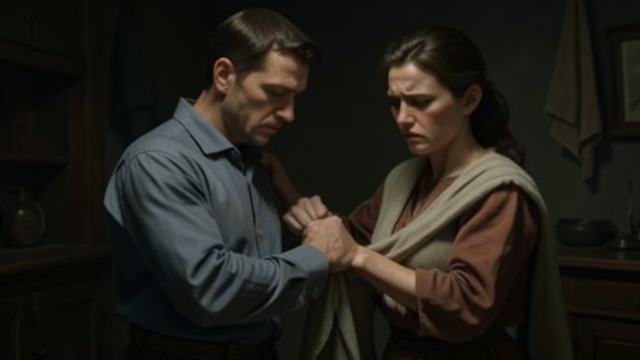
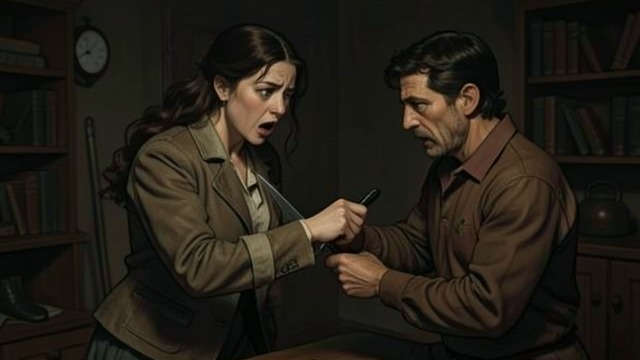
Bleeding and disoriented, Kawashima interprets Chiaki’s fear as an opportunity to teach her that no one will rescue her. The helplessness he once suffered becomes, in his mind, a rule he can impose on someone else.
He binds Chiaki and urges her to believe that pain can be mastered through will. His advice echoes the survival method he developed under abuse, but now it serves coercion rather than protection.
Recognition Without Release
Kawashima remembers that the comforting voice he relied on as a child was his own creation. The discovery briefly gives him a sense of adult agency, but he uses that agency to justify control over another person.
The moment makes the cycle visible without making it inevitable. His past explains the language of his violence, yet the scene also shows the further choice he makes to reenact it.
A Cycle Interrupted
Survival Is Not Redemption
The Violence Stops
Kawashima loses consciousness before he can stab Chiaki. She cuts herself free, reads his plans, and sees that his attention has never meant the rescue or devotion she imagined.
The immediate attack ends, but the revelation does not resolve either person’s history. Chiaki must face the difference between being cared for in a crisis and being treated as a person beyond it.
The Cycle Remains Open
Kawashima survives, and the evidence of his violence remains beside him: the weapons, the notebook, and the injuries. The story offers no simple transformation that would make those acts harmless or erase their causes.
The ending leaves open whether recognition can become change. It insists instead that understanding the origins of violence is not the same as stopping its repetition.
During the early years of Kawashima’s childhood abuse
Around age five or six, after his mother excludes him from an outing
At Kawashima’s high-school graduation, after years apart from his mother
Late in the apartment confrontation, after Kawashima’s altered state intensifies
Near the ending, when Kawashima loses consciousness and Chiaki reads his notebook
