
The Divided Self as Shelter and Danger
PiercingThis flow follows dissociation from a childhood defense against unbearable pain into an adult perception that can both interrupt violence and intensify it.
increasing Bearing strength in each event
 decreasing
Bearing strength in each eventdecreasingDistance from the Beating
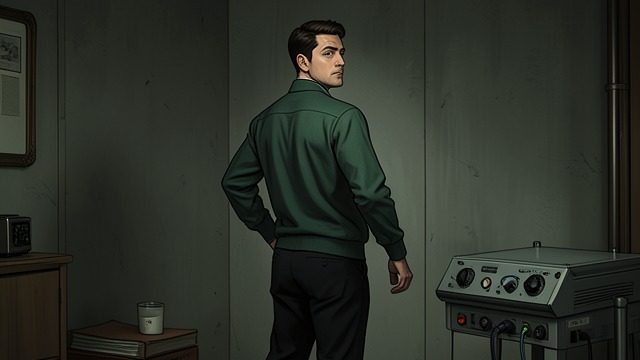
Leaving the Body Behind
A Deliberate Distance
Kawashima learns to think that the person being hit is not him. By concentrating on this idea, he creates distance between pain and identity, a private method that lets a powerless child endure what he cannot prevent.
The method is systematic: he trains himself to separate rather than protest. His mother responds by hitting him harder, but the increased violence also deepens his dependence on mental escape.
The Cost of Survival
Dissociation gives Kawashima a way to remain alive inside an intolerable situation. It also makes it harder to trust the ordinary sense that his body, feelings, and actions belong together.
The childhood adaptation persists into adulthood. What once reduced immediate pain can later blur the line between an intrusive possibility and an action he might actually take.
The Fear at the Crib
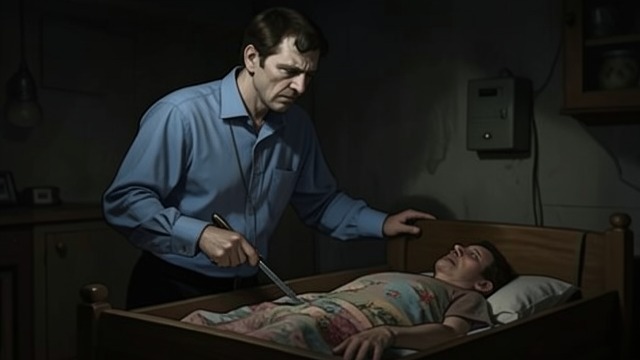
Watching the Baby
An Intrusive Image
After an ordinary bath with Rie, Kawashima suddenly wonders whether he might stab the baby with an ice pick. The thought feels alien and frightening, but it persists precisely because he cannot prove that it will never become an action.
He begins standing over Rie’s crib at night with the ice pick in hand. He tells himself he is confirming that he will not hurt her, yet the ritual repeatedly brings him close to the image he fears.
A Self Divided
Kawashima’s fear is not presented as a settled desire. Rather, his mind answers reassurance with uncertainty, making the distinction between thought and intention feel unstable.
The nightly vigil shows how a strategy of checking can deepen the disturbance it is meant to control. His dissociative history turns the question of who he is into another source of alarm.
The Other Self Appears
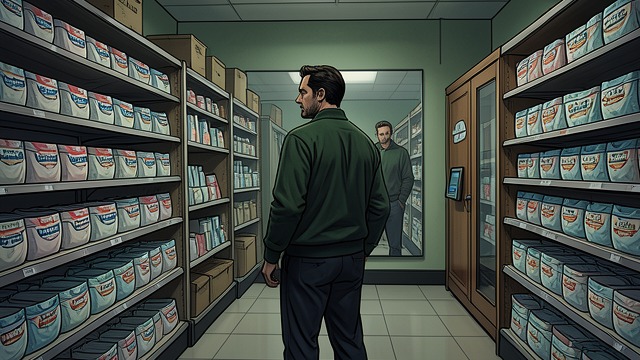
A Thought Takes Shape
Separation Made Visible
In the convenience store, Kawashima feels that he has separated from his body and can see another version of himself by the diaper shelves. The imagined double speaks with the authority of a revelation, turning private panic into apparent instruction.
It tells him that he must stab someone else to overcome his fear. The advice transforms an unwanted thought into a proposed solution and gives violence the false appearance of necessity.
From Anxiety to Mission
Kawashima accepts the message and begins planning an attack. His attention shifts from the frightened father at the crib to a detached planner who treats a victim as a means of testing himself.
The episode demonstrates the danger in his divided experience: the voice feels separate, but its consequence is carried out by Kawashima. What seems like an external command becomes a framework through which he organizes his own actions.
A Voice from Childhood
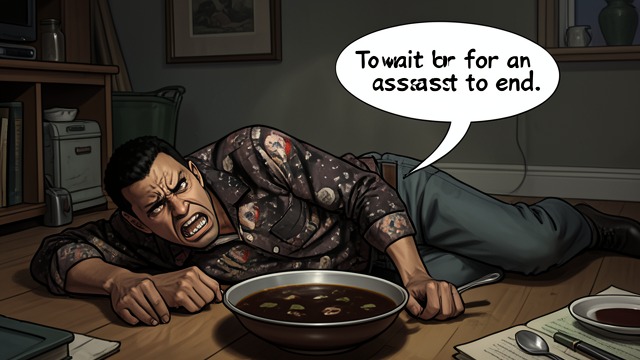
Returning to an Old Protection
The Child’s Voice
After taking Halcion in Chiaki’s soup, Kawashima collapses into a terrifying altered state. As his mind fills with images of confinement and his mother’s warnings, he hears a matter-of-fact voice telling him not to apologize and to wait for the assault to end.
The voice recalls the practical reassurance once offered in the home for abused children. It does not explain the past or promise rescue; it gives him a way to endure the next moment.
Protection Becomes Authority
When Chiaki strikes him, the physical pain jolts Kawashima out of the drugged vision. He recognizes the voice as one he created in childhood, an adult-sounding protector built from his own mind.
That recognition initially steadies him, but he then interprets the voice’s return as permission to act without help. A coping mechanism that once preserved a vulnerable child becomes entangled with an adult’s dangerous belief in his own power.
Two Selves in the Aftermath
The Self Who Remains
Memory After the Attack
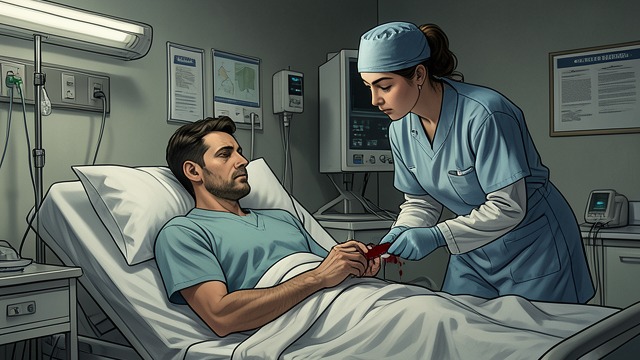
Kawashima wakes with severe injuries and gradually remembers that he did not stab Chiaki. The weapons and his written plans remain close by, so survival has not erased his intention or the consequences of the night.
Chiaki’s presence forces the aftermath into the same room as his fantasies. He must encounter her not as an imagined victim in a plan but as a person who has suffered and fought back.
No Easy Integration
Kawashima does not emerge with a simple, reconciled identity. He can remember the tenderness of his earlier actions and the violence of his later ones without knowing how to make them cohere.
The unresolved self is central to the ending’s unease. The protective voice, the frightened child, the planner, and the injured man are all parts of one life, and the novel leaves their relationship unsettled.
During Kawashima’s childhood, as his mother’s abuse continues
Ten nights before Kawashima leaves for the hotel
During Kawashima’s late-night visit to the convenience store
During the apartment crisis, after Kawashima collapses under Halcion
The morning after the apartment confrontation, as Kawashima wakes
