
Pain Chosen and Pain Imposed
PiercingThis flow contrasts the imposed suffering that shapes both lives with Chiaki’s search for chosen pain, while revealing how that distinction can fail under trauma.
increasing Bearing strength in each event
 decreasing
Bearing strength in each eventdecreasingPain Without Choice
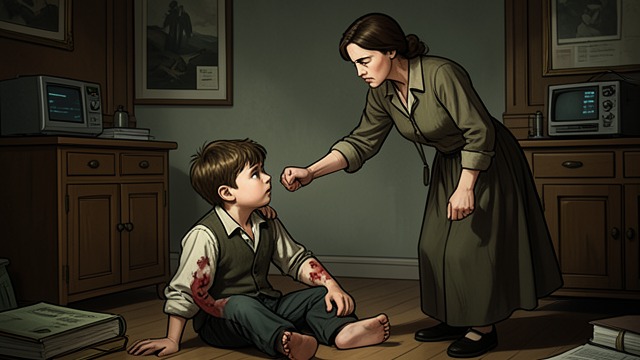
Suffering Imposed
The Body as a Target
Kawashima’s mother inflicts pain without warning, leaving him with little ability to anticipate or resist it. His response is not heroic mastery but a child’s attempt to survive by persuading himself that the suffering belongs to someone else.
The body becomes a place where another person exercises power. Even when Kawashima learns to blunt sensation, the original imbalance remains: he cannot choose when pain begins or ends.
A Survival Rule
His private rule is to focus until the pain seems distant. It helps him endure beatings, yet it also teaches him to treat disconnection as the main available form of control.
That history later shapes his understanding of pain. He knows that perception can change, but he risks confusing endurance with safety and bodily control with genuine freedom.
The Piercing as Agency

Choosing a Wound
A Deliberate Act
Chiaki pierces her own nipple with a needle and later takes pride in the result. She describes the experience as frightening but valuable: the pain is one she selected, and the mark left behind belongs to a decision she made about her body.
The piercing gives her a limited sense of authorship amid a life shaped by exploitation and memories she cannot reliably control. It becomes a physical reminder that not all pain arrives from someone else’s command.
Control with Limits
Chiaki’s belief that chosen pain can make her stronger does not mean she is free of danger. She also experiences episodes in which self-harm and suicidal thoughts take over, leaving her unable to choose the pain that follows.
The distinction is therefore fragile rather than triumphant. The ring represents agency, but it cannot by itself heal the history that makes control so precious to her.
Pain as Self-Punishment
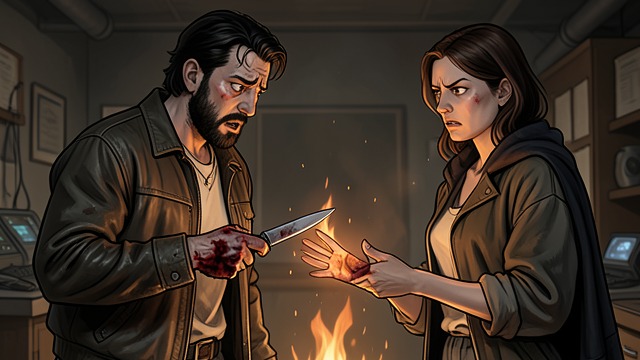
A Wound Meant to Keep Someone
The Scalded Hand
After the woman rejects his attempt to embrace her, Kawashima interprets her anger as a threat of abandonment. Believing that he must be punished, he puts his hand into boiling water and shows her the scalded skin.
The act is not a freely chosen experiment in bodily autonomy. It is an appeal to a volatile relationship, an attempt to provoke punishment or reassurance before she can leave.
Violence Escalates
When his self-injury does not restore security, fear and confusion overtake him. During the episode that follows, he takes an ice pick and stabs her in the stomach.
The sequence shows how imposed histories can distort the meaning of pain: Kawashima uses injury as a plea for connection, then turns toward violence when the plea fails. The woman survives, but the event remains a buried source of fear and shame.
Pain as a Threat
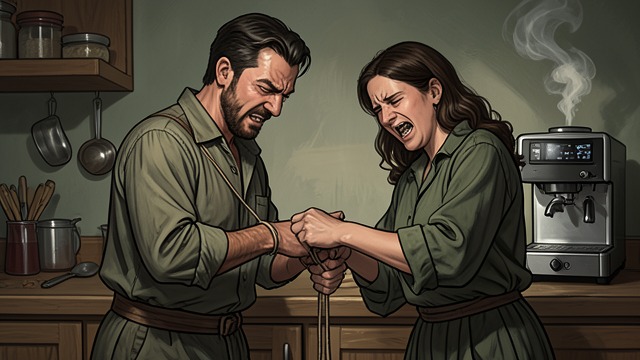
Agency Taken Away
The Inverted Lesson
In the apartment, Kawashima binds Chiaki and tells her to believe that pain will disappear if she refuses to doubt. The instruction borrows from his own survival technique, but he delivers it while restricting her movement and threatening to cut her tendons.
What once helped him withstand abuse becomes a tool for coercion. His words about mastering pain cannot make Chiaki safe, because he is the person creating the danger.
The Body Resists
Chiaki tries to drag the espresso machine toward the door despite the cords cutting into her wrists. Her effort is practical and desperate, not a calm exercise in choosing pain.
The scene overturns the comforting idea that endurance alone grants control. A person may concentrate, adapt, and keep moving, yet still be trapped by someone else’s power.
A Needle After Violence
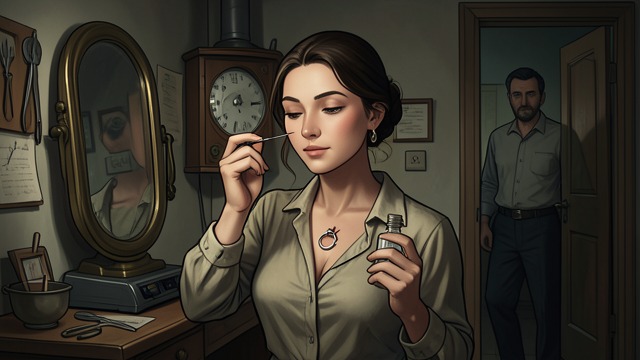
Reclaiming the Choice
A Second Piercing
After reading Kawashima’s notes and recognizing that he never was the rescuing figure she had imagined, Chiaki decides to pierce her other nipple. She sterilizes the needle and ring, prepares her skin, and carries out the act while he watches.
Her choice does not erase the injuries from the night before. It is an effort to meet the coming loneliness with a deliberate act rather than waiting passively for Kawashima to decide whether he will stay.
Beauty Without Cure
Chiaki believes that choosing pain and leaving something beautiful behind can make her stronger. The piercing expresses that belief, but its calm procedure also sits beside her recurring self-harm and distress.
The ending preserves the ambiguity of her strategy. Chosen pain may offer a moment of ownership, yet it cannot guarantee protection from abandonment or transform a traumatic bond into a safe one.
During Kawashima’s childhood abuse
Seventy-one days before Chiaki’s morning after the hotel encounter
During Kawashima’s teenage relationship with the older stripper
During Kawashima and Chiaki’s apartment confrontation
The morning after the confrontation, while Kawashima is still recovering
