
Words Against the Unnameable
PiercingThis flow traces how speech, silence, and sensory attention alternately intensify trauma or help the characters remain connected to the present.
increasing Bearing strength in each event
 decreasing
Bearing strength in each eventdecreasingA Story Used as Threat

Words That Predict Confinement
A Mother’s Warning
Kawashima’s mother tells him that he will grow up to be a madman who hears voices in a windowless cell. The story is presented as a prediction of his future, turning his distress into another reason to fear himself.
Rather than helping him understand what he experiences, her words make difference sound like a sentence. She uses language to dominate the child’s sense of what can happen to him.
Fear Becomes a Frame
As an adult, Kawashima remembers the story when he feels manipulated by outside forces. The old warning supplies a terrifying image for experiences he still cannot comfortably explain.
The memory shows that words can outlast the moment in which they were spoken. A threat repeated by a parent becomes a lens through which later distress appears inevitable.
Words Fall Away
Language Under Collapse
Ordinary Words Recede
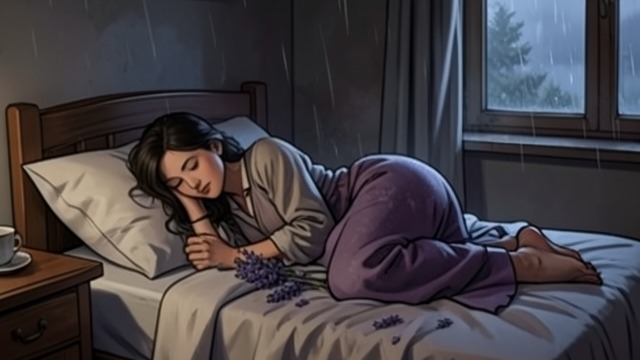
When Chiaki’s Nightmare state takes hold, words slip away from her awareness: the immediate details of the room and encounter lose their organizing power. She describes them as though they are falling into hidden corners of her body, leaving memory to rise in their place.
The loss is not a poetic choice in the moment. It is part of a frightening change in consciousness, as familiar language gives way to sensations and images associated with her abuse.
Memory Takes the Surface
Chiaki experiences memories as physical, invasive presences that gather into images. Her father’s face and voice return with an intensity that overwhelms the present, even though she is now in a different place with a different man.
The episode makes clear why speech alone cannot simply reason trauma away. When the past floods her senses, the ordinary vocabulary that might name danger or ask for help becomes difficult to reach.
The Name Through the Phone
An Indirect Conversation
A Voice Without a Listener
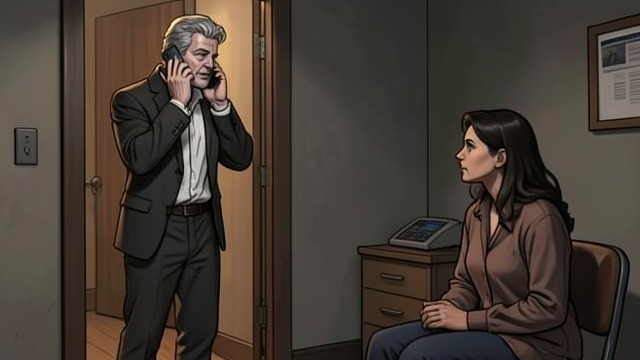
Kawashima realizes that direct questions and reassurances are not reaching Chiaki. Rather than insist on an ordinary exchange, he pretends to speak by telephone and says her name as though reporting her condition to someone else.
The performance gives Chiaki a small distance from the man holding the room’s power. She can listen without being asked immediately to trust him or explain herself.
Recognition Through Speech
Hearing her name helps Chiaki believe that Kawashima may be the person she has imagined as the one who takes her to the hospital. That belief is mistaken in important ways, but the spoken name briefly organizes her fear around the possibility of help.
Language here is neither wholly truthful nor wholly deceptive. The improvised conversation interrupts the crisis long enough for Kawashima to take the knife from her, while also laying the groundwork for Chiaki’s idealized reading of him.
A Voice Anchors the Present

The Power of an Outside Voice
A Familiar Rhythm
As Kawashima’s drugged perception collapses into memories of abuse and confinement, Chiaki talks about making soup. Her practical, unhurried descriptions offer sounds and details from the room rather than arguments about whether his visions are real.
Kawashima remembers that an ordinary voice once helped him return from childhood episodes. In the present, Chiaki’s speech again gives his attention something external to follow.
Contact Without Cure
The conversation helps interrupt his mounting panic, but it does not resolve his intentions or make the apartment safe. Kawashima’s imagined threat and the weapons he brought remain part of the scene.
The episode distinguishes grounding from healing. A voice can reconnect someone briefly to immediate surroundings without undoing the history that produced the crisis or guaranteeing what that person will do next.
The Photograph and the Silence
Knowledge Without Confession
A Family Made Visible
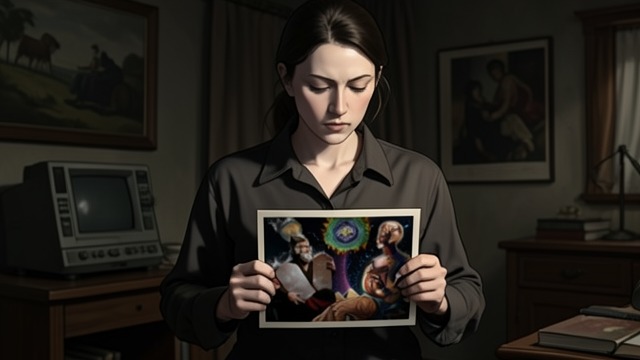
While Kawashima sleeps, Chiaki finds a photograph of him with Yoko and their newborn Rie. The image confirms that he has a family life beyond the role she had assigned him, but it does not give her an account of his motives or history.
The photograph changes the meaning of his apparent devotion. Chiaki understands that the man who waited for her and helped her is also someone who planned to kill her.
What Remains Unsaid
Chiaki reads the notebook, yet the written plans do not settle whether Kawashima is a murderer in action or a man who has planned a crime without completing it. The writing offers evidence, not a reliable confession of his whole self.
Their connection remains shaped by what neither can safely make simple in words. The novel ends with Chiaki working on her own body and Kawashima awake nearby, leaving understanding partial and uneasy.
During Kawashima’s early childhood, after episodes of abuse
During Chiaki’s Nightmare episode in the hotel bathroom
During the hotel bathroom crisis, as Kawashima tries to reach Chiaki
During the apartment confrontation, after Kawashima’s hallucinations build
The morning after the confrontation, when Chiaki finds Kawashima’s wallet
