
The Home’s Fragile Community
PiercingThis thread follows the violence and vulnerability Kawashima witnesses among children in the Home, especially the episode with the rabbits and the art through which one boy gives form to his own suffering.
increasing Bearing strength in each event
 decreasing
Bearing strength in each eventdecreasingArrival at the Home
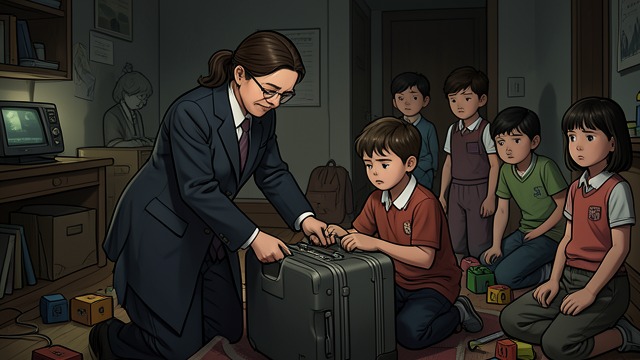
Arrival at the Home
Removal from Home
A middle-school teacher helps arrange for Kawashima to be placed in the Home after years of abuse by his mother. He remains there for a little over two years, separated from the household where he was repeatedly hurt.
The move offers a measure of physical distance from his mother, but it does not erase the effects of what happened. Kawashima’s early experience has already taught him to fear sudden violence and to distrust the intentions of adults.
A Shared Institution
The Home brings together children with their own histories of abuse and instability. Its playroom contains ordinary toys and supplies, but the children’s behavior reveals how difficult it is for them to feel safe with one another or with the adults responsible for them.
For Kawashima, this setting becomes both refuge and a new field of observation. He encounters other children whose ways of coping make visible forms of pain he has learned to hide.
A Roommate and Friend
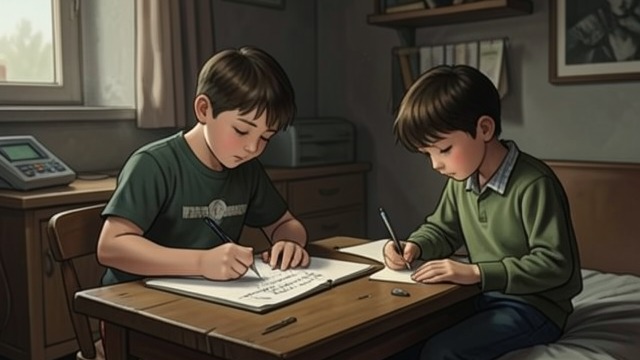
A Roommate and Friend
Quiet Companionship
Kawashima shares a room with a boy his age for two years. The children rarely speak at first, and their closeness is not expressed through long conversations or easy declarations of friendship.
They sometimes draw together. Art provides a shared activity that does not require either child to explain his personal history or describe what he is feeling.
A Partial Connection
Only shortly before Kawashima leaves the Home do the boys have conversations of any length. Even then, they do not discuss much that is deeply personal.
Their limited communication reflects the emotional isolation surrounding the children. Companionship is possible, but it remains tentative: they can occupy the same room and share an activity without being able to name the experiences that have shaped them.
The Rabbit’s Death
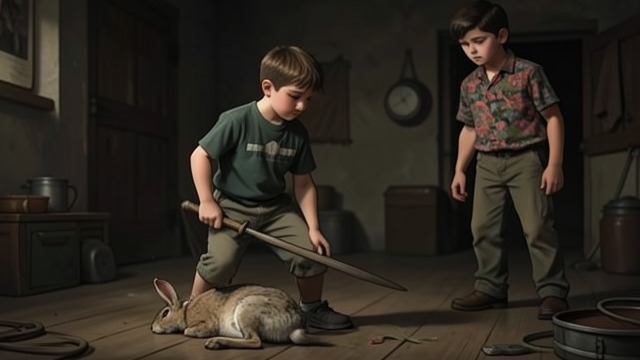
The Rabbit’s Death
A Sudden Act
The Home acquires two pet Rabbits, and one of their offspring is placed in the care of Kawashima’s roommate. The boy loves the animal and even insists on sleeping with it in his arms.
One day, in front of Kawashima and without an apparent reason, the boy grabs the young rabbit by its undeveloped ears and slams it against the concrete floor. When it tries to crawl away, he stamps on its head until it dies.
Affection Turned Violent
The brutality is startling partly because the boy had seemed devoted to the rabbit. After killing it, he ignores the body and goes to find another animal to take its place.
Kawashima sees how affection and violence can coexist in a child who has been shaped by suffering. The episode does not explain the boy’s act, but it becomes an unforgettable instance of violence emerging where tenderness had seemed secure.
Arrows on Black Paper
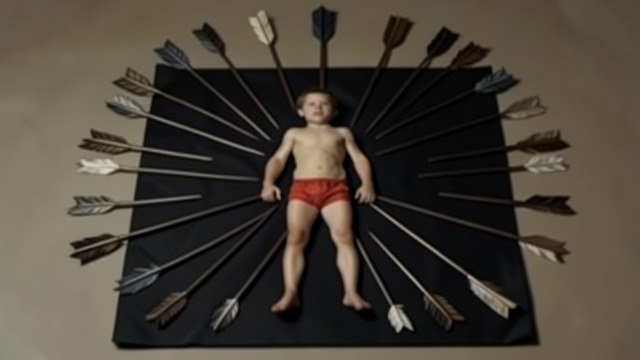
Arrows on Black Paper
A Repeated Image
The boy repeatedly covers paper in dark colors and paints a naked child in the center, pierced from head to foot by dozens of arrows. When a counselor asks who the figure is, the boy says that it is himself.
The drawing turns an inward condition into an image that can be seen. Its small central figure is surrounded and penetrated by violence, with little suggestion that escape or rescue is possible.
A Stark Answer
The counselor asks who the figure would be if it were not the boy. He replies that if it is not him, he does not care who it is.
The answer gives the picture a disturbing double meaning. The boy identifies himself as the target, yet his detachment also suggests how suffering can weaken the distinction between one person’s pain and another’s.
Adults Judge the Children
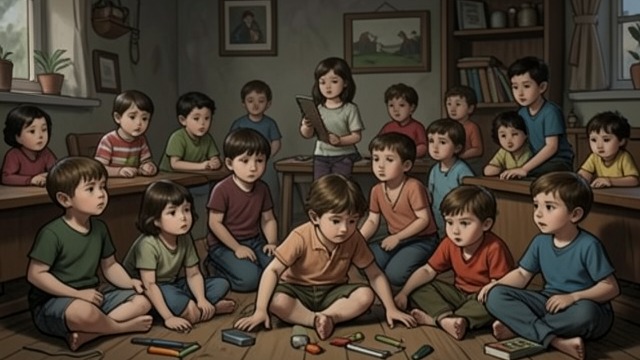
Adults Judge the Children
Behavior Seen from Outside
As an adult, Kawashima pictures the Home’s children in its crowded playroom. Some refuse to answer, some lash out, some withdraw into corners, and others approach adults with desperate obedience or inappropriate intimacy.
Seen without knowledge of their histories, the children can appear cruel, repellent, or impossible to manage. Kawashima recognizes how easily an observer might mistake the consequences of abuse for the reasons that adults inflicted it.
Powerlessness Remembered
He understands that the children’s behavior is not proof that they deserved punishment. They are powerless to leave or protect themselves, and their attempts to preserve attachment can bind love to fear and violence.
The memory becomes especially painful as Kawashima contemplates violence of his own. The children’s suffering reminds him that a victimized child may grow into an adult carrying damaged ideas of intimacy, safety, and control.
After a middle-school teacher intervenes in Kawashima’s childhood
During Kawashima’s first two years in the Home
During Kawashima’s stay in the Home
During Kawashima’s friendship with the boy
Years later, as Kawashima recalls the Home
