
A Murder Plan Becomes a Mission
PiercingKawashima turns the supposed cure for his fear into an elaborate plan, then finds that preparation deepens his identification with violence rather than containing it.
increasing Bearing strength in each event
 decreasing
Bearing strength in each eventdecreasingA Leave with a Cover Story

The Plan Takes Shape
A credible explanation
Kawashima tells Yoko that his firm requires employees to take periodic leave and says he wants to study salarymen for an advertising campaign. The explanation is plausible, and Yoko accepts it without suspicion, allowing him to leave the home without having to confront her questions.
A hidden purpose
His actual goal is to create time and distance for an attack. He has decided that the danger he fears at home can be relieved by stabbing someone else, but he presents the trip as a harmless professional exercise.
The lie is significant because it gives the plan the outward shape of ordinary work. Kawashima can treat the violence as a separate project, even while the apparent normality of his marriage and family makes the moral break more stark.
Hotel-Room Calculations
Violence as Logistics
Choosing a setting
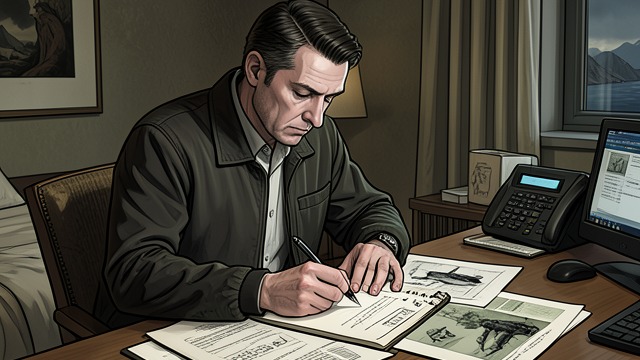
At the Akasaka Prince Hotel, Kawashima fills pages with calculations about a victim, a location, and how to avoid detection. He weighs the risks of streets, love hotels, and regular hotels, treating each setting as a problem of access and control.
Conscience narrowed to method
His concern is not whether the plan should proceed but how to make it succeed. He considers disguises, registration details, luggage, clothing, and the disposal of weapons, converting the prospect of murder into a sequence of manageable decisions.
The methodical tone temporarily resembles his professional design work. That resemblance is part of the danger: planning gives him a sense of creative calm and competence while distancing him from the human consequence of the act.
The Victim as a Design Problem
A Person Reduced to Criteria
Inventing constraints
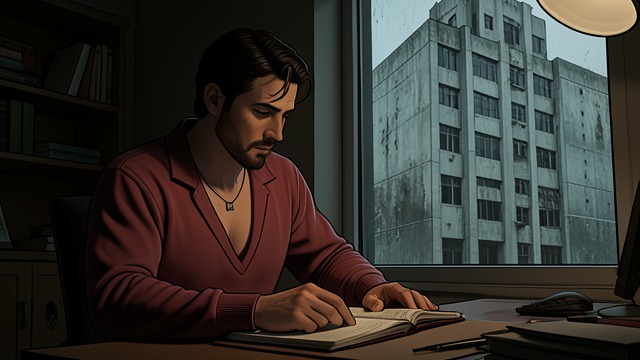
Kawashima reasons that his intended victim should be a sex worker who can be isolated and whose disappearance will not prompt an effective search. He rejects possible victims not because of their individual lives but because they do not fit his assumptions about risk and control.
Violence aestheticized
He imagines the victim’s skin, her expressions, and the physical effects of an attack. His attention to appearance and sensation gives the plan a disturbing aesthetic dimension, even as he tries to label such thoughts irrelevant to practical preparation.
His decision to strike out those reflections from the Murder-planning notebook does not remove them from his thinking. Instead, the act reveals a conflict between the procedural identity he is constructing and the fascination that keeps pulling the plan toward spectacle.
The Ritual Gains Momentum
Planning Becomes Commitment
An expanding design
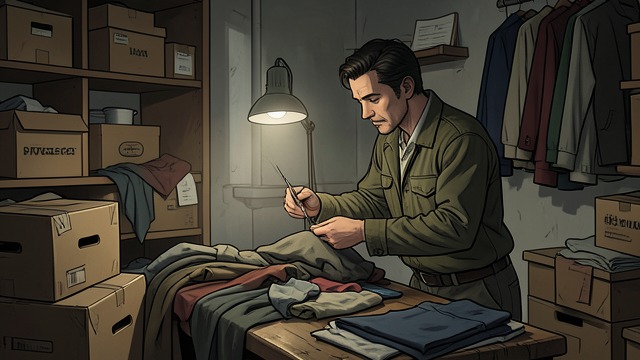
Kawashima continues to add contingencies: a disguise, spare clothes, gloves, bags, and ways to misdirect investigators. Each new detail makes the imagined assault feel more executable, even though the plan remains a private construction and no victim has yet been chosen.
A sense of destiny
As the hours pass, he feels that the events of his life may have prepared him for this mission. The original motive—to quiet his fear of harming Rie—recedes behind the satisfaction of planning and the belief that the work itself has significance.
This shift is a crucial escalation. Kawashima is no longer merely responding to one frightening thought; he is cultivating a larger story in which violence confirms his identity and gives his past an apparent purpose.
The Target Reaches the Door
The Plan Meets a Person
Preparations in place
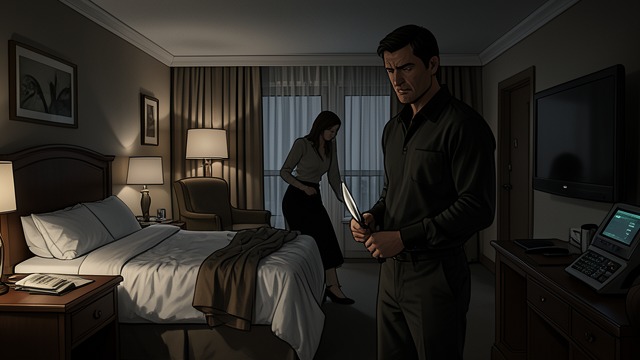
At the Keio Plaza Hotel, Kawashima arrives disguised and waits in a room with the Ice pick, knife, and change of clothes. He has secured a crowded lobby, a false identity, and a prospective victim whose arrival is meant to begin the ritual he has rehearsed.
Uncertainty breaks the script
As he waits, the room’s ordinary details cannot shield him from memories of his childhood or the fear that his plan may be exposed. When Sanada Chiaki finally arrives, her unsettled behavior does not match the controlled encounter he had designed.
The moment exposes the limit of his preparations: the intended victim is not a passive element in a scheme. Her fear and choices begin to redirect the encounter, and Kawashima’s carefully structured plan starts to lose control of its conditions.
The morning Kawashima arranges his leave
The first evening at the Akasaka Prince Hotel
The first evening at the Akasaka Prince, as Kawashima refines his criteria
Late on the first evening at the Akasaka Prince Hotel
Friday evening, shortly after six, at the Keio Plaza Hotel
