Assassins Attack and Hang Pinocchio
Pinocchio (Tania Zamorsky Edition)Assassins Attack and Hang Pinocchio is the violent consequence of Pinocchio’s decision to disregard the Talking Cricket’s warning. The episode turns his bravado into a desperate struggle to protect his four gold coins, then carries the pursuit to the Great Oak, where his apparent death prompts the Blue-Haired Fairy to intervene.
The Warning and the Ambush
After the Talking Cricket warns him to beware of the night’s dangers, Pinocchio continues on alone. He dismisses the idea of assassins as a story parents invent to frighten children who go out at night, and imagines that, if confronted, he could frighten them away with a bold speech. Even his private boast gives way to a practical escape plan: if the attackers refused to run, he would run instead. Before he can finish the thought, he hears a faint rustle behind him.
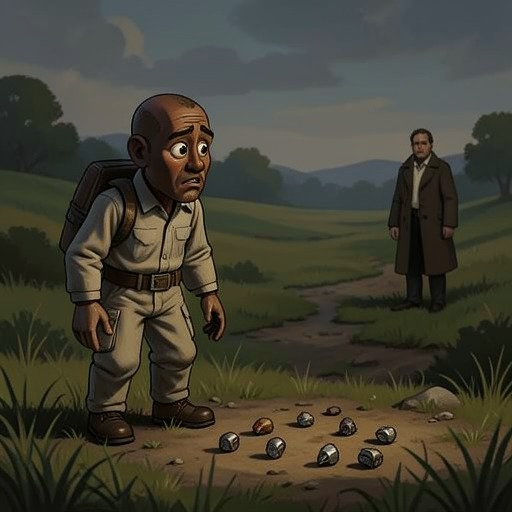
In the darkness, Pinocchio sees two black figures wrapped in coal sacks, moving after him in leaps and on tiptoe like ghosts. Recognizing them as the very threat he had denied, he conceals his four gold coins beneath his tongue. The pair seize him by the arms and demand his purse or his life. Unable to answer with the coins in his mouth, Pinocchio gestures that he is only a poor puppet and has no money—not even a counterfeit coin. Their disguise hides their faces except for their eyes, while his attempt to protect the coins leaves him unable to speak.
The Coins and the Counterattack
The assassins threaten to kill Pinocchio and then his father. At the mention of Geppetto, Pinocchio cries out in alarm; the four coins clink in his mouth, betraying where he has hidden them. The attackers seize his nose and chin and pull in opposite directions to force his mouth open, but it remains shut. When the shorter assassin tries to pry his lips apart with a large knife, Pinocchio bites down and tears off the assailant’s hand. His triumph turns to astonishment when he spits out not a hand but a cat’s paw, revealing that the pursuers are not what their disguise first suggested.
That first resistance gives Pinocchio a chance to wrench himself free. He vaults the roadside hedge and runs through the countryside, with both assassins in pursuit; the one who has lost a paw manages to run on one leg. After fifteen kilometres, exhausted and seeing no other refuge, Pinocchio climbs a very tall pine and sits among its upper branches. The assassins try to follow, but slip halfway up and fall, scraping their hands and feet. They then gather dry wood at the foot of the tree and set it alight. As the flames rise, Pinocchio leaps from the top rather than be roasted like a pigeon and resumes his flight across fields and vineyards, while the assassins continue after him without tiring.
The Chase to the Great Oak
As dawn begins to break, the pursuit drives Pinocchio across fields and vineyards to a broad, very deep ditch filled with filthy water the color of coffee mixed with milk. He clears it with a running leap. The assassins misjudge the distance and plunge into the ditch, but the fall does not stop them: Pinocchio turns, hears the splash, and sees them still racing after him, their coal sacks dripping like broken baskets. The chase has become less a contest of speed than a test of how long he can keep moving before they close in.
The pursuers catch him at the Great Oak. They strike him twice in the middle of the back with long, sharp knives, but the blades break into splinters against his exceptionally hard wooden body, leaving the assassins holding only the handles. Unable to wound him that way, they choose hanging instead. They bind his hands behind his back, loop a noose around his neck, and suspend him from a branch of the large tree.
The assassins sit on the grass beneath him and wait for his last kick. Three hours pass, yet Pinocchio keeps his eyes open, his mouth shut, and his legs moving. Their attack has failed to kill him quickly, but the hanging leaves him suspended and increasingly close to death. When his vision clouds and no one comes to help, his thoughts turn to his father; he manages only a final, faltering appeal before closing his eyes, opening his mouth, stretching out his legs, and falling still as if frozen.
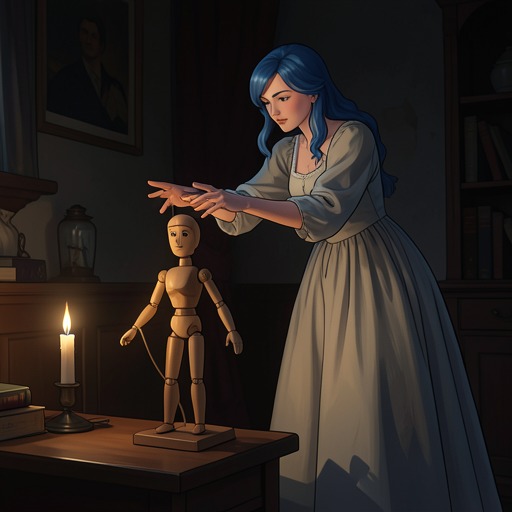
His apparent death brings the pursuit to a sudden interruption. The Blue-Haired Fairy sees the puppet hanging in the cold wind and takes pity on him. She has him brought inside and put to bed, then summons three doctors to determine whether he is alive or dead. The chase that began with Pinocchio’s refusal to heed a warning thus ends at the threshold of rescue: his flight has left him helpless at the Great Oak, while the Fairy’s intervention opens the next stage of his ordeal.
Vulnerability and Reversal
Pinocchio’s wooden body changes the terms of the danger without abolishing it: knives shatter against him, but his attackers can still bind and suspend him. The episode therefore turns apparent invulnerability into a narrower, precarious protection. Its ending sustains that uncertainty rather than confirming death outright. Pinocchio falls still “as if frozen,” and the Fairy’s decision to call three doctors to establish whether he is alive or dead carries the chase from physical peril into a question the next episode must resolve.