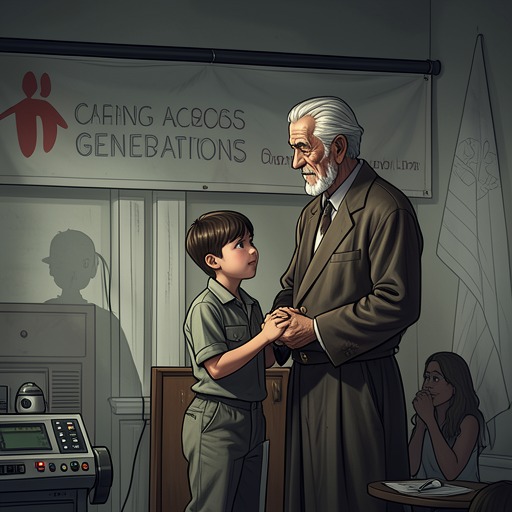
Children Should Care for Parents in Need
Pinocchio (Tania Zamorsky Edition)Children Should Care for Parents in Need is a moral principle made concrete through Pinocchio’s care for Geppetto and, later, his decision to help the Blue Fairy. The story measures change not by a spotless record of obedience but by sustained, practical acts of love: earning food for an ailing father, making his days easier, and surrendering money intended for a new outfit to aid another figure he calls his good mother.
The Rule and Its Moral Context
The principle reaches its fullest expression near the end of the story, when Pinocchio’s actions embody the narrator’s praise of children who lovingly assist their parents through poverty and illness. Its emphasis falls on care that costs time, effort, and personal comfort—not merely on a child’s good intentions. The narrator’s concluding moral also makes room for moral growth: such care merits affection even when the child cannot be held up as a model of obedience and good conduct.
That qualification matters in Pinocchio’s case. Earlier, the Talking Cricket warns that children who rebel against their parents and capriciously leave home will suffer and eventually regret it. Pinocchio dismisses the warning, preferring play to school, and later reflects that his troubles are deserved because he has stubbornly done things his own way instead of listening to those who love him. His return toward Geppetto and the Fairy brings a renewed intention to change, but the promised transformation into a real boy is interrupted when he secretly leaves with Lucignolo for Toyland. The story therefore distinguishes a declaration of reform from the harder work of becoming dependable.
Geppetto: Care as Daily Labor
Pinocchio’s care for Geppetto is shown through a routine maintained for more than five months. Each morning, before dawn, he goes to turn a waterwheel and earns a glass of milk for his father, whose health is frail. He does not stop at securing that daily nourishment: in his spare time he learns to make reed baskets, and uses the money from their sale to meet the household’s everyday expenses. The care is practical and recurring, measured in hours worked and needs supplied.
He also attends to Geppetto’s comfort and companionship. Pinocchio makes a small cart himself so that, on fine days, he can take his father out for a breath of air. In the evenings, after his work, he practices reading and writing with a second-hand book missing its title page and index. He writes with a sharpened stalk used as a pen and blackberry and cherry juice in place of ink. These details place study alongside labor: the boy who once resisted schooling now makes room for it while supporting his father.
The work brings a modest personal reward. Pinocchio has managed not only to keep Geppetto supplied but to save forty coins for a new outfit. When he hears that the Blue Fairy is ill and in difficulty, he immediately gives the money to her messenger instead. He says he would sell even the rags he is wearing to help her, and promises to work five additional hours so that he can provide for her as well as for his father. Care here means choosing another’s need over a long-awaited possession, then extending the commitment through further labor.
Care, Gratitude, and Change
The Blue Fairy is not presented as Pinocchio’s literal parent, but he calls her his good mother, connecting his response to her hardship with the story’s broader ethic of familial care. His decision also answers an earlier recognition of what he owes her: while hurrying to return, he recalls her loving attention and care, and acknowledges that he is alive because of her. The final act turns that remembered debt into assistance he can actually give.
That night Pinocchio works later than usual and makes twice as many reed baskets as before. In a dream, the Fairy praises his good heart, forgives his past mischief, and explicitly commends children who lovingly help their parents in poverty and illness, even if they have not been exemplary in obedience. When Pinocchio wakes, he has become a real boy. The sequence places the transformation after his sustained care and self-sacrifice, giving the moral principle its decisive narrative force: love becomes visible through what the child willingly does for someone vulnerable.