La metamorfosi asinina dei ragazzi oziosi
Pinocchio (Tania Zamorsky Edition)La metamorfosi asinina dei ragazzi oziosi is the transformation of children who abandon study for uninterrupted play into donkeys. The change gives the story’s warning about idleness a material consequence: the boys who are lured away from books become animals that can be sold, while Pinocchio’s later account connects his own transformation to disobedience and bad companions.
The Little Man’s System
The Little Man gathers idle boys through promises and coaxing, collecting those who have grown tired of books and schools. He loads them onto his cart and takes them to Toyland, where they spend their time playing, making a noise, and enjoying themselves instead of studying. The transformation follows prolonged indulgence: after playing constantly and never studying, the deceived boys become donkeys.
The change is also the basis of a business. Once the boys have been transformed, the Little Man takes possession of them and sells them at fairs and markets. The narrator explains that this trade has made him rich within a few years. The metamorphosis therefore operates as more than a bodily punishment: it enables the exploitation that the boys’ heedlessness has made possible.
Pinocchio’s Transformation and Sale
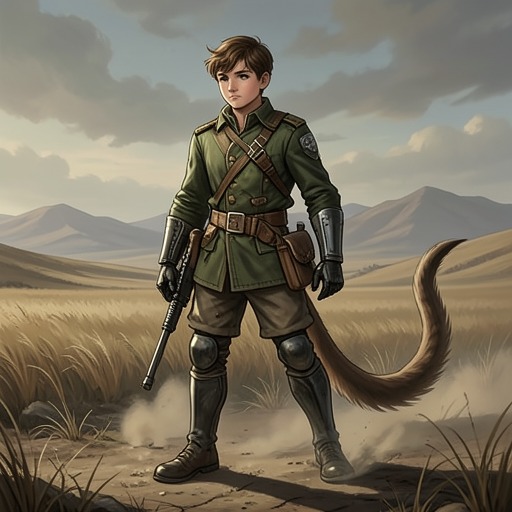
Pinocchio’s experience gives the general pattern a particular history. Looking back, he says that he had been a wooden puppet and was close to becoming a boy, but ran away because he did not want to study and listened to bad companions. One morning he woke to find himself changed into a donkey, with long ears and a tail. His account presents the transformation as a sharp reversal of his hoped-for progress toward becoming a boy.
Sold at a donkey market, Pinocchio is bought by the director of an equestrian company, who intends to train him as a dancer and jumper. During a performance he falls badly and is left lame in both legs. Unable to use him as planned, the director resells him. Pinocchio’s metamorphosis thus leads from the Little Man’s trade in transformed boys to a second sale, in which his new animal body is valued for performance and then discarded when injury makes it less useful.
Punishment, Labor, and Unequal Outcomes
After the resale, Pinocchio’s new owner puts straw in his manger, but Pinocchio tastes it and spits it out. His hardship continues when the owner makes clear that he bought the donkey to work and earn money, not merely to feed it. Pinocchio must learn circus tricks, including jumping through hoops, breaking paper barrels with his head, and dancing upright on his hind legs. Learning them takes three months of lessons and many lashes. The transformation is therefore followed by enforced labor, not simply by a change in appearance.
Lucignolo’s fate illustrates the wider pattern while remaining partly unknown. A farmer buys him because his own donkey died the previous day. The narrator later says that Lucignolo’s subsequent fate is unknown, contrasting that uncertainty with the detailed account of Pinocchio’s difficult life. The boys’ transformation places them in a market where others determine their work and use; Pinocchio’s repeated sale makes that loss of agency especially visible.
Narrative and Moral Function
The narrator frames the metamorphosis as an explicit caution to young readers: the Little Man’s victims are described as deceived children whose aversion to school and surrender to constant amusement leave them vulnerable to becoming commodities. Pinocchio’s retrospective explanation reinforces the connection between his own choices and his changed body, naming both his reluctance to study and his attention to bad companions.
Yet the episode also shows that the punishment does not end when the boys become donkeys. Pinocchio’s transformation exposes him to buying and selling, forced training, physical punishment, and injury. The fable’s moral warning is thus carried through a sequence of concrete consequences: neglected study and disobedience lead to animal transformation, and that transformation makes the children available for other people’s profit.