Pinocchio Returns to the Fairy and Completes a Year of Study
Pinocchio (Tania Zamorsky Edition)Pinocchio’s return to the Blue-Haired Fairy leads to a rare sustained period of good conduct: he studies, excels at his school examinations, and is promised that he will become a real boy. The achievement makes his transformation seem imminent, but the celebration prepared to mark it is overtaken by another act of disobedience. The episode therefore turns on both a genuine change in behavior and the fragility of that change when temptation returns.
Return and Forgiveness
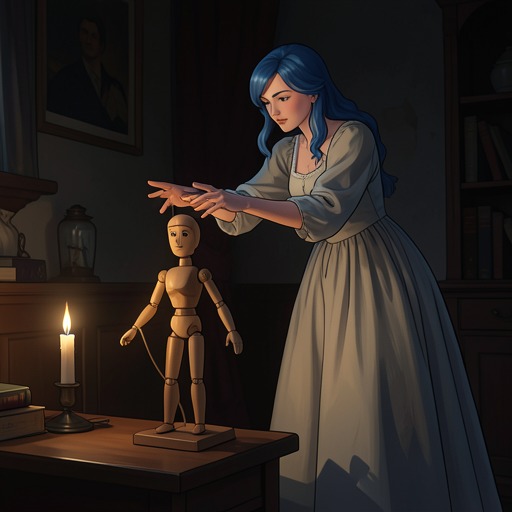
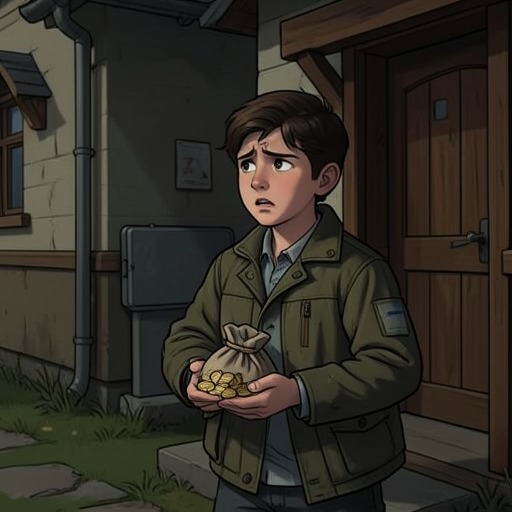
The return is marked by Pinocchio’s uneasiness about facing the Blue-Haired Fairy again. On the road toward the village, he moves restlessly, taking a step forward and then one back, and worries that she will not forgive his latest mischief. He recognizes a pattern in himself: he repeatedly promises to improve but does not keep his word. His anxiety gives the return a moral dimension. He is not simply seeking shelter or resuming his place in the Fairy’s care; he knows that his own repeated failures have made forgiveness uncertain.
His circumstances are visibly poor. A man gives him an empty lupin sack, which Pinocchio cuts into a makeshift shirt, making holes for his head and arms before continuing toward the village. This improvised clothing underscores how exposed and dependent he is as he approaches the person whose trust he fears losing. Later, after being deceived by a meal whose bread, chicken, and apricots are all artificial, Pinocchio faints. When he comes to, he is lying on a sofa with the Blue-Haired Fairy beside him. She forgives him once more, while warning that another similar offense will have serious consequences. Her forgiveness renews their relationship, but it does not erase the history that makes a warning necessary.
A Year of Study and Changed Conduct
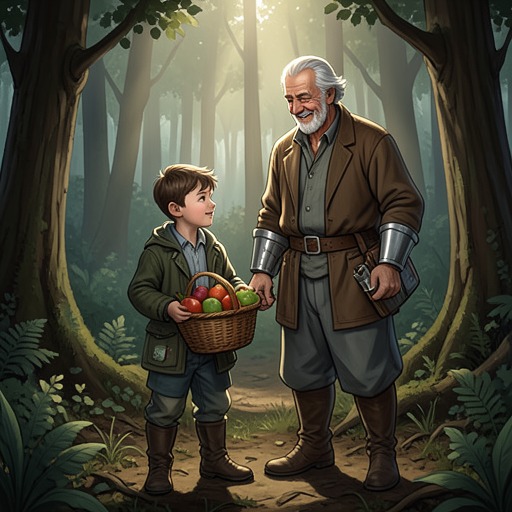
This time Pinocchio’s promise is followed by a sustained result. He vows to study and behave well, and keeps his word for the rest of the school year. At the vacation examinations, he is the best pupil in the school. His conduct is generally judged so praiseworthy and satisfactory that the Blue-Haired Fairy tells him his long-awaited wish will be fulfilled the following day.
The importance of the year lies in its duration as well as its outcome. Pinocchio has often announced an intention to reform; here, unlike those short-lived resolutions, his promise holds through the remainder of the school year and is confirmed by both academic achievement and conduct. The episode presents his hoped-for change from wooden puppet to real boy as something connected to repeated effort, not merely a reward for wanting it. At the same time, the success is not yet the transformation itself. The Fairy announces that it is about to happen, placing Pinocchio on the threshold of the change rather than showing him already across it.
The Promised Transformation
The Fairy’s announcement gives the school year a clear destination: Pinocchio is told that he will cease to be a wooden puppet and become a proper boy. His joy at hearing this news is described as beyond the ability of anyone who has not witnessed it to imagine. The response reflects how long he has desired the change and how much significance he attaches to it. A year of study and good conduct appears to have brought that desire within reach.
The promise also changes the immediate stakes. The Blue-Haired Fairy arranges a celebration at her house for the following day, inviting Pinocchio’s friends and schoolmates to a large breakfast in honor of the event. The preparations are strikingly specific: two hundred cups of coffee and milk and four hundred rolls buttered on both sides. The scale of the planned meal turns Pinocchio’s anticipated transformation into a communal occasion, not simply a private reward. His success is to be recognized among the companions and schoolmates whose company has formed part of his life.
The Interrupted Celebration
The prospect of the breakfast and transformation does not bring the episode to its expected conclusion. The narration signals that an unforeseen qualification can spoil even a happy day, and Pinocchio secretly leaves with his friend Lucignolo for the Land of Toys instead of becoming a real boy. The contrast is sharp: a carefully prepared gathering, earned through a year of study, stands against a clandestine departure with a companion who leads him away from the promised reward.
That reversal does not cancel the year’s achievement. Pinocchio has, in fact, studied well and maintained good conduct for a meaningful stretch of time. But the unfinished transformation shows that his progress remains vulnerable: at the point when the result is finally within reach, he chooses to abandon the occasion. The episode thus makes the promise of becoming a real boy both a culmination of his sustained effort and a test he has not yet passed. Its ending turns a scene of impending celebration into the start of another diversion, leaving the change postponed by Pinocchio’s own decision.