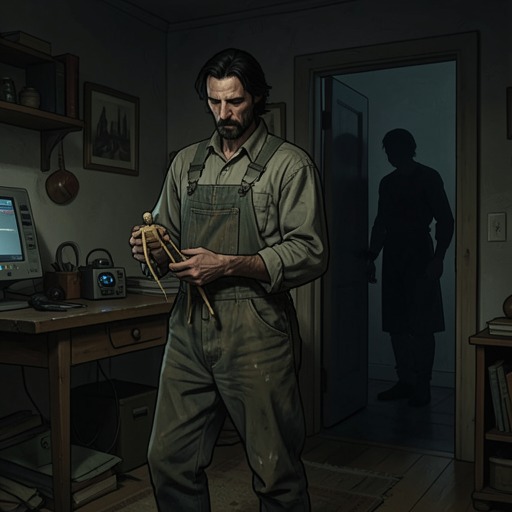
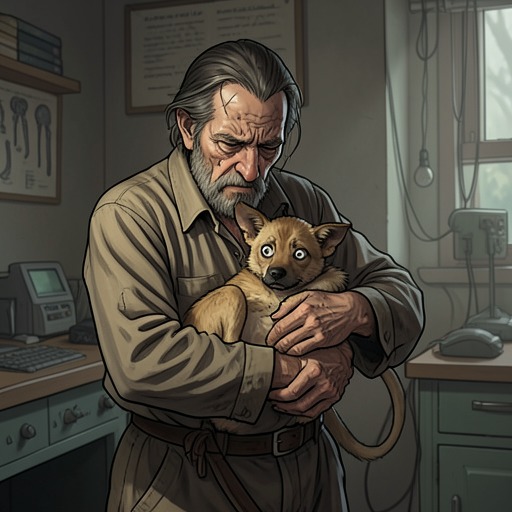
Pinocchio Saves Arlecchino in Mangiafoco’s Puppet Troupe
Pinocchio (Tania Zamorsky Edition)Pinocchio Saves Arlecchino in Mangiafoco’s Puppet Troupe is a pivotal rescue scene in which Pinocchio answers the threatened death of a fellow puppet with an offer to die in his place. The danger begins when Mangiafoco, needing firewood to finish roasting his dinner, orders Arlecchino brought to the kitchen for fuel. Pinocchio’s intervention transforms the scene: the puppet master who had spared him relents again, and the threatened sacrifice becomes an act of solidarity that saves Arlecchino as well as Pinocchio.
From celebration to danger
Pinocchio enters the puppet theater while a comedy is already in progress. The puppets recognize him as a brother and greet him with an exuberant celebration, turning his appearance into an uproar in the theater. But the welcome cannot protect him from the theater’s owner. The episode’s opening reversal is sharp: a place where Pinocchio is recognized and welcomed becomes the setting in which he is nearly killed.
After the performance, Mangiafoco goes to the kitchen, where a fine mutton turns slowly on a spit. He lacks enough wood to finish cooking and browning it, so he orders Arlecchino and Pulcinella to bring him the puppet hanging from a nail. Mangiafoco treats Pinocchio’s wooden body as a convenient fuel supply, describing the dry wood as suitable for making a strong flame. The domestic need to finish a meal thus becomes an immediate threat to Pinocchio’s life.
Pinocchio is marked for the fire
Arlecchino and Pulcinella hesitate at first, but an intimidating look from their master makes them obey. They return carrying Pinocchio in their arms. He struggles violently, compared to an eel out of water, and cries for his father, Geppetto, to save him. His appeal makes the threat concrete: he is not simply being punished or detained but is being carried toward the fire as a substitute log.
Mangiafoco’s frightening appearance initially seems consistent with his order. His long black beard covers his chest and legs like an apron, and his authority is enforced by two wooden gendarmes, tall and thin, wearing lantern-shaped hats and holding drawn swords. Yet Mangiafoco is not entirely hard-hearted. Seeing Pinocchio struggle and cry, he becomes moved and finally sneezes loudly. Arlecchino, who had been bent over in distress, brightens; he understands the sneeze as evidence that Mangiafoco has taken pity and that Pinocchio is safe. The first reprieve, however, does not end the danger for long.
The threatened substitution
Mangiafoco orders the gendarmes to seize Arlecchino, bind him securely, and throw him onto the fire so that the mutton will roast properly. Arlecchino is so frightened that his legs fold beneath him and he falls face down. Pinocchio responds not by treating his own escape as the end of the matter, but by throwing himself at Mangiafoco’s feet and pleading for Arlecchino’s life. Mangiafoco refuses the appeal: since he has already spared Pinocchio, he insists that Arlecchino must take his place as fuel.
At that point Pinocchio rises and offers himself instead. He removes his cap, addresses the wooden gendarmes, and asks them to bind and throw him into the flames. His reason is explicitly friendship: Arlecchino is his true friend, and Pinocchio considers it unjust for that friend to die on his behalf. The act changes the stakes of the scene. Pinocchio had first been a helpless victim asking his father for rescue; now, faced with another puppet’s danger, he willingly makes himself the substitute victim.
Mercy and the scene’s outcome
Pinocchio’s offer moves the assembled puppets to tears, and even the wooden gendarmes weep. Mangiafoco at first remains rigid, but gradually softens and sneezes four or five times. He then opens his arms affectionately, praises Pinocchio’s courage, and invites him close. Pinocchio runs to him and climbs up his beard like a squirrel to kiss the tip of his nose. The physical gesture marks the reversal in their relationship: the same imposing master who ordered Pinocchio carried to the fire now receives him with affection.
Mangiafoco grants Arlecchino a reprieve too. He sighs and shakes his head as he accepts that, for that evening, the mutton will have to be eaten half-raw; he warns that no one should interfere next time. The consequence is immediate and communal: the puppets return to the stage, light the lamps and chandeliers as for a gala evening, and dance until dawn. The scene does not erase Mangiafoco’s power or his earlier threat, but it shows that Pinocchio’s willingness to bear the cost for a friend can alter how that power is used.
Reward and departure
Mangiafoco gives Pinocchio five gold coins to take to Geppetto. This gift extends the consequences beyond the theater: Pinocchio is entrusted with money intended for his father. Yet the episode’s ending places that generous resolution beside a new danger. Instead of continuing on his way to Geppetto, Pinocchio allows the Fox and the Cat to deceive him and goes off with them. His courageous choice for Arlecchino therefore does not mark a lasting escape from poor judgment. The scene establishes a real capacity for self-sacrifice, while its aftermath shows that this capacity can coexist with vulnerability to another kind of threat.