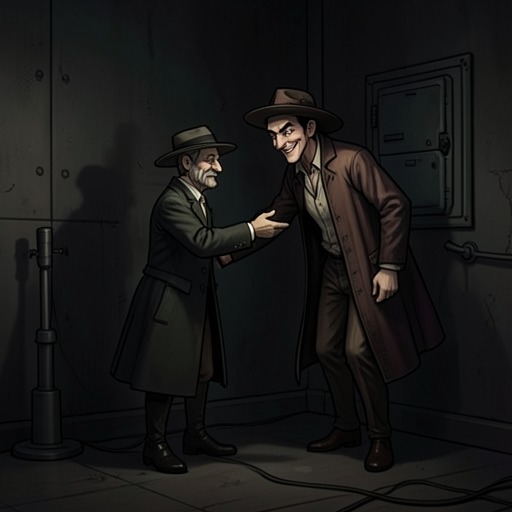
Hunger Is No Excuse for Stealing Someone Else’s Property
Pinocchio (Tania Zamorsky Edition)Hunger Is No Excuse for Stealing Someone Else’s Property is a moral rule stated during Pinocchio’s encounter with a field’s owner. It distinguishes the pressure of need from the right to take another person’s belongings: hunger may explain why a theft happened, but it does not make the property one’s own or excuse taking it.
The Rule and Its Reasoning
The rule is put as a direct challenge to Pinocchio’s conduct. When he explains that he entered the field to pick grapes, the other speaker asks whether the grapes belonged to him. Pinocchio says they did not. The follow-up asks who taught him to take other people’s things, making ownership—not the size of the theft or the intensity of his appetite—the decisive issue.
Pinocchio then offers hunger as his reason. The response explicitly rejects that defense: being hungry is not a good reason to appropriate what is not yours. The rule thus separates an understandable circumstance from a morally acceptable action. Need is acknowledged, but it does not cancel another person’s claim to their property.
Pinocchio’s Encounter with the Rule
The principle arises from a concrete act rather than an abstract lesson. Pinocchio has entered the field to take two bunches of muscat grapes and is caught with his legs trapped in the iron jaws of a trap. When challenged about ownership, he concedes that the grapes are not his and that hunger prompted him to take them.
His response to the rebuke is immediate: he cries, agrees that the judgment is right, and promises not to do it again. The scene therefore shows recognition and stated remorse, not proof of lasting reform. The distinction matters: the rule is made clear, while Pinocchio’s promise records his response at that moment rather than establishing what he will do in the future.
The Scene’s Moral Emphasis
The exchange proceeds through questions that narrow the issue from Pinocchio’s predicament to his responsibility. He is first seen in distress, with his legs caught; the conversation then turns to why he entered the field and whose grapes he intended to take. His hunger explains the choice, but the admission that the grapes belonged to someone else leaves the central wrong intact.
A small noise of approaching footsteps interrupts the dialogue. The field’s owner is coming quietly to see whether one of the weasels that have been eating the chickens has been caught in the trap. This arrival places Pinocchio’s theft within the owner’s working field and makes the rule’s concern with another person’s property part of the immediate scene. Pinocchio’s promise closes the exchange, but the interruption leaves its consequences in the hands of the approaching owner.