Pinocchio Exposes the Weasels in the Henhouse and Is Freed
Pinocchio (Tania Zamorsky Edition)Pinocchio’s capture of the weasels turns an imposed punishment into the means of his release. Forced to serve as a guard dog, he is offered food in exchange for helping thieves; instead, he uses the job’s duties against them, secures their capture, and earns back his freedom through a choice that contrasts with his earlier idleness and submission to bad companions.
Circumstances and Stakes
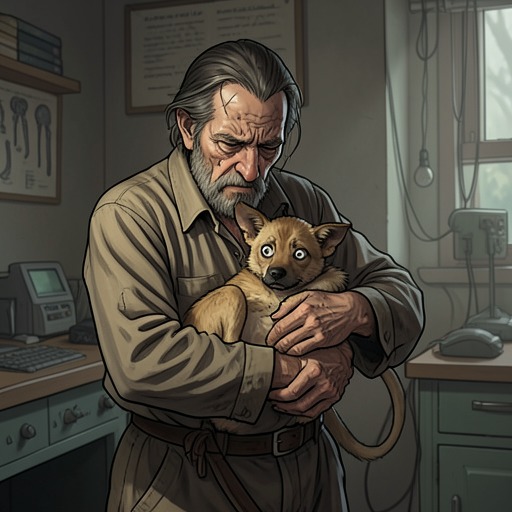
The incident follows Pinocchio’s conviction that his misfortunes are the consequence of his own conduct. Cold, hungry, and afraid, he has been left crouching in the farmyard after the farmer shuts the house door. The collar tight around his throat makes his new role as a watchdog both humiliating and physically oppressive. In his private lament, he blames his laziness and wandering, his willingness to follow bad companions, and his failure to remain at home with Geppetto. He imagines that studying and working, or staying beside his father, might have kept him from this fate.
After this outburst, Pinocchio goes into the kennel and falls asleep. More than two hours later, near midnight, strange whispers and murmurs wake him. Peering out through the kennel opening, he sees four dark-furred animals gathered in the yard. They look like cats, but are weasels, meat-eating animals especially fond of eggs and young hens. Their arrival brings a test of the very responsibility that has been forced upon him: whether he will protect the henhouse, or treat his punishment as an excuse to take what he can get.
The Offer and the Earlier Arrangement
One weasel approaches the kennel and addresses Pinocchio as Melampo, the name of the dead watchdog who preceded him. Pinocchio corrects the mistake. When the weasel learns that he has been made to guard the henhouse, it proposes the same bargain it says it had with Melampo. The offer makes clear that the thefts were not a one-time raid: the weasels intend to visit once a week, as they had before.
The proposed division is precise. The weasels would carry off eight hens, eat seven among themselves, and leave one for Pinocchio, provided he pretended to be asleep and never barked or woke the farmer. They present this arrangement as an established accommodation, even asking Pinocchio to trust that the meal will be waiting for him before he leaves the farm. The temptation is adapted to his immediate condition: hungry and under a dog’s collar, he is promised food in return for betraying the duty that has been imposed on him.
Pinocchio asks whether Melampo really behaved this way. The weasel confirms that he did and claims that the former guard and the thieves always got along. Pinocchio gives no open refusal at once. He lets the animals believe that their proposal has been accepted, but his warning manner signals that he has another response in mind. The pause matters: instead of challenging four intruders while they remain outside, he allows them to enter the henhouse, where he can prevent their escape.
The Trap
The weasels go to the nearby henhouse and force its small wooden entrance open with their teeth and claws. As they slip inside one after another, Pinocchio springs into action. He slams the door shut and braces it with a large stone. The improvised barrier turns the thieves’ own passage into a trap: all four are enclosed together, unable to leave before the farmer arrives.
Pinocchio then barks like a watchdog, repeating the sound until the farmer wakes. The bark is more than an imitation of the role assigned to him; it is the alarm the weasels had tried to prevent him from raising. The farmer gets out of bed, takes his gun, and calls from the window to ask what has happened. Pinocchio directs him to the henhouse. The sequence is brisk and practical: secure the door, make the alarm, identify where help is needed.
Capture and Release
The farmer hurries downstairs and into the henhouse. He catches the four weasels and shuts them in a sack. His response makes the consequence of their failed bargain unmistakable: rather than receive a hen, Pinocchio has helped ensure that the thieves face punishment. The farmer says he could punish them himself but will instead take them to an inn in a neighboring town, where they will be skinned and cooked as hare stew.
The farmer then approaches Pinocchio and strokes him, pleased with his conduct. Asked whether he had been awake when the weasels arrived, Pinocchio explains that their whispering woke him and that one came to the kennel to offer him a plucked hen for keeping quiet. He presents the proposal as an insult and declares his refusal to stand by dishonest people. His account identifies both the danger and the bargain: the threat was not simply that the hens might be stolen, but that he might be recruited into the theft.
Pinocchio does not disclose everything he has learned about the earlier arrangement. He could have reported the pact between the weasels and Melampo, but thinks that accusing the dead serves no purpose and that the dead should be left in peace. The omission distinguishes his report of the present offer from a wider accusation against the previous watchdog. The farmer praises Pinocchio’s sentiments and, to show his satisfaction, releases him at once. He removes the dog collar, ending the visible sign of Pinocchio’s forced service.
Significance and Aftermath
The episode reverses Pinocchio’s position without erasing the punishment that led to it. At first he is a frightened captive, bound to the kennel by hunger, cold, and a collar; by the end, he has acted as a guard by choice in the crucial moment and is free to leave. His success depends on practical judgment rather than strength: he waits until the weasels are inside, blocks the entrance with a stone, and uses the bark expected of a watchdog to summon the farmer.
His release also gives concrete form to the self-reproach that precedes the raid. Pinocchio had lamented that laziness and bad companions brought him to the farm; now he refuses a fresh invitation to profit from dishonesty. The one hen offered as a reward would have answered his hunger immediately, but accepting it would have repeated the pattern he condemns. Instead, his loyalty to the task earns a different reward: freedom. As soon as the collar is gone, he runs across the fields to the main road leading toward the Blue-Haired Fairy’s House, leaving the henhouse behind and resuming his journey.