Pinocchio Kills the Talking Cricket
Pinocchio (Tania Zamorsky Edition)Pinocchio’s killing of the Talking Cricket is the violent culmination of his first rejection of parental and moral guidance. The Cricket warns him that abandoning home and refusing correction will bring misery, but Pinocchio answers with anger rather than reflection. The blow silences the adviser at the very moment his warnings begin to shape the dangers ahead, making the scene both a literal death and an early measure of Pinocchio’s stubbornness.
Return to an Empty Home
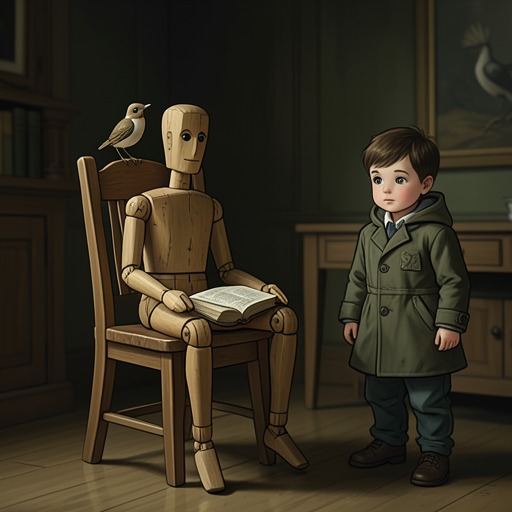
The confrontation follows Pinocchio’s release by the Carabinieri and Geppetto’s imprisonment in his place. As Geppetto is led away, he laments that he had worked so hard to make Pinocchio a good puppet. Pinocchio, meanwhile, runs home across fields, leaping high banks, thorn hedges, and water-filled ditches. He finds the street door ajar, enters, fastens the latch, and sits on the floor with a sigh of relief. His comfort lasts only briefly: someone in the room speaks, and the homecoming becomes a confrontation.
The chapter’s framing gives the encounter a pointed moral context. The narrator introduces the Talking Cricket’s story as one showing how badly children dislike being corrected by those who know more than they do. That lesson arrives while Geppetto is still suffering for Pinocchio’s earlier escape, placing the child’s freedom beside the cost borne by his father.
Warning and Rejection
The Talking Cricket refuses to leave before telling Pinocchio an important truth. He warns that children who rebel against their parents and capriciously leave their family home will never fare well and will sooner or later bitterly regret it. Pinocchio tells him to hurry up, showing impatience even before the warning is complete.
When Pinocchio explains that he intends to leave at dawn, he makes his reasons plain: staying would mean being sent to school and made to study, while he would rather chase butterflies and climb trees to take young birds from their nests. The Cricket answers that this way of life will make him a fine donkey when he grows up, a figure of ridicule to others. The exchange sets correction against immediate pleasure, and Pinocchio openly chooses pleasure over study and restraint.
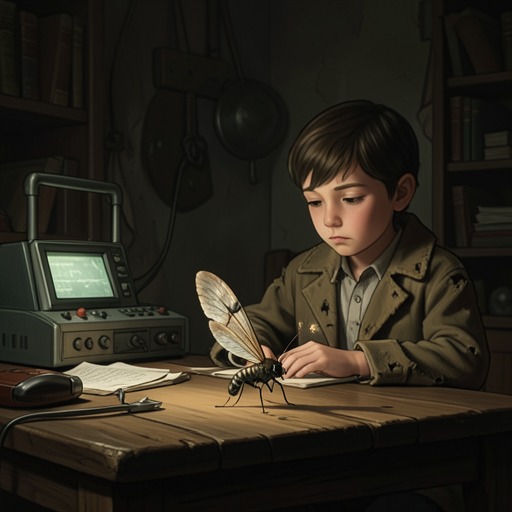
The quarrel sharpens when the Cricket pities him for being a puppet and, worse, having a wooden head. Pinocchio leaps up in fury, takes a wooden hammer from the bench, and throws it at the Cricket. The narration allows that he may not even have believed he would hit him, but the hammer strikes the Cricket in the head. The Cricket manages only a brief chirping sound before lying dead, stuck against the wall. The small household object turns an argument into an irreversible act.
Immediate Rupture and Later Warnings
The death ends the Cricket’s attempt to correct Pinocchio in person, but it does not end the story’s pattern of warning and refusal. Later, after the Cricket has cautioned him against going out at night, Pinocchio dismisses the danger of meeting assassins as a scare story invented by parents. He even imagines himself standing up to them, then concedes that if they would not run away, he would run instead. The episode makes the earlier killing part of a larger sequence: advice is presented, rejected, and followed by danger.
That pattern recurs when the Blue-Haired Fairy tells Pinocchio that the next day he will cease to be a wooden puppet and become a good boy. She prepares a celebration for his school friends, with two hundred cups of coffee and milk and four hundred rolls buttered on both sides. Yet the promised transformation is interrupted when Pinocchio secretly leaves with Lucignolo for Toyland. The later choice echoes the Cricket’s warning about forsaking instruction, while the elaborate preparations make the lost opportunity concrete.
Narrative Significance
The scene’s force comes from the gap between the modest scale of the dispute and the finality of its outcome. The Talking Cricket offers a warning; Pinocchio, unwilling to endure correction, answers with a hammer. The narrator’s direct moral framing makes the act an explicit example of a child’s hostility to advice, while the surrounding action gives that lesson consequences within the family: Geppetto is imprisoned, and Pinocchio returns to a home where the voice urging him toward better conduct is now silent.
The episode also establishes a recurring tension in Pinocchio’s story. He is repeatedly offered a chance to listen before acting, yet immediate desire carries him away from school, home, and safety. The Cricket’s death is therefore not merely an isolated burst of violence: it marks the beginning of a cycle in which rejected counsel remains legible in the dangers that follow.