Pinocchio Reaches the Island of the Industrious Bees and Reunites with the Fairy
Pinocchio (Tania Zamorsky Edition)Pinocchio Reaches the Island of the Industrious Bees and Reunites with the Fairy is an arrival-and-recognition episode that joins physical rescue to moral renewal. Pinocchio reaches land after a storm-tossed night of swimming, but survival is only the beginning: in a town where everyone works, hunger makes his refusal of labor untenable. His reunion with the Blue-Haired Fairy then gives that practical crisis a personal stake. She offers the possibility of becoming a real boy, but makes it depend on the conduct Pinocchio has repeatedly promised and failed to sustain.
Arrival After the Storm
Pinocchio’s journey to the island begins under pressure to help his father, Geppetto. He swims through the night, driven by the hope of reaching him in time. The weather turns the crossing into an ordeal: rain pours down, hail falls, thunder breaks, and lightning makes the darkness seem briefly like day. At dawn Pinocchio sees a strip of land offshore. He tries to reach its beach, but the waves toss him about like a scrap of straw until a powerful breaker throws him onto the shore. The landing is forceful enough to make his joints and ribs crackle. The island is not a destination reached by steady progress so much as a refuge delivered by the sea.
After an encounter with a dolphin, Pinocchio hurries inland, still afraid that the Great Shark may be pursuing him. He keeps turning at the smallest sound to look behind him. Half an hour later he reaches the small town called the Island of the Industrious Bees. Its streets are full of people going about their tasks; everyone seems occupied, and there is not an idle person or vagabond to be found. The contrast is immediate. Pinocchio says to himself that the town is not made for him because he was not born to work, while his hunger has become urgent: he has gone twenty-four hours without food, not even a dish of vetches.
Hunger Meets the Town’s Work Ethic
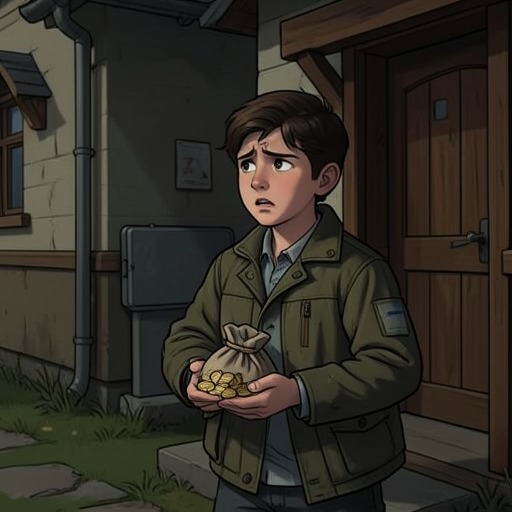
The episode makes Pinocchio’s need concrete rather than abstract. He sees only two ways to get food: ask for work or beg for a coin or a piece of bread. He is ashamed to beg, in part because Geppetto had taught him that alms are properly sought by the old and sick, who cannot earn their bread through their own labor. Those who are able to work, his father had insisted, are obliged to do so; if they refuse and suffer hunger, that is their consequence. The town’s ceaseless activity thus puts a lesson from home into practice at the moment Pinocchio is least able to evade it.
A man passing by is sweating and out of breath as he struggles to pull two coal-filled carts. Pinocchio asks him for a coin, but the man cannot stop to help: he is carrying the coal to someone who needs it and has to get it delivered. He offers Pinocchio a chance to pull one of the carts instead. Pinocchio refuses, preferring to ask for food from someone else rather than take on that work. The refusal does not resolve his hunger. Eventually a woman offers him bread in exchange for carrying a jug of water home. He hesitates, then accepts; because the jug is too heavy for him to carry in his hands, he resigns himself to balancing it on his head.
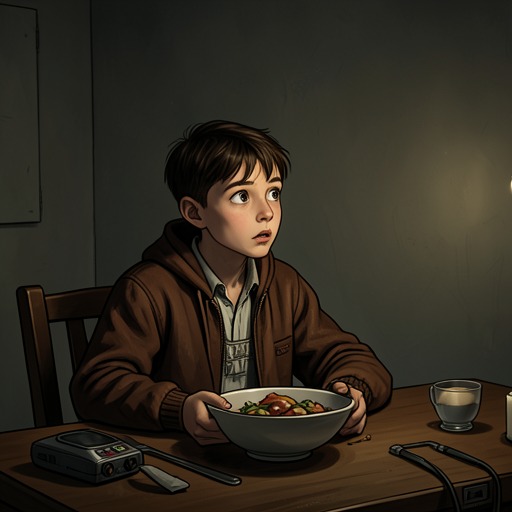
At the woman’s home, food is set before him: bread, cauliflower dressed with oil and vinegar, and a sweet. Pinocchio eats with such desperate appetite that the narration compares his stomach to an empty, deserted district. The sequence turns a moral expectation into a bodily experience: he has to perform a task before he can eat, and the labor directly secures the meal that his hunger demands. Work is not presented as an abstract virtue here; it is the immediate condition of being fed.
Recognition and Reunion
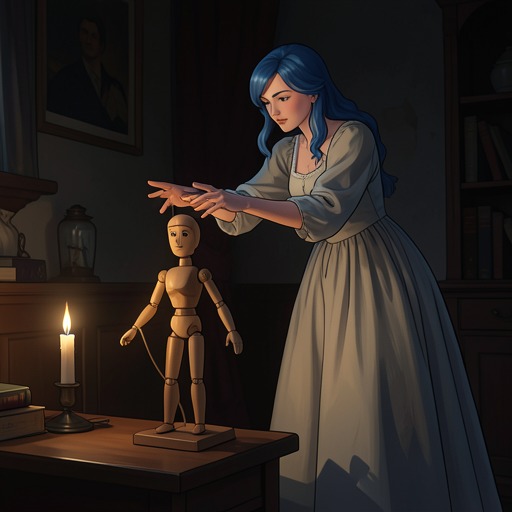
Once his hunger has eased, Pinocchio looks up to thank his benefactress and recognizes the Blue-Haired Fairy. Her voice, eyes, and blue hair recall the Fairy he knows. He is so astonished that he remains fixed in place with his fork raised and food still in his mouth, then throws himself to his knees and embraces her knees, weeping as he recalls how much he has suffered. Recognition arrives through familiar features, but the force of the scene lies in the history attached to them: the woman who has fed him is not merely a kindly stranger but the Fairy whose loss has mattered to him.
At first she says that she is not the little Blue-Haired Fairy. Seeing that Pinocchio has discovered her, she stops prolonging the deception and admits who she is. He explains that his affection for her made him recognize her. The reunion therefore reverses the apparent separation without erasing its cost: Pinocchio says he has cried and suffered, and his tears and embrace make that claim part of the action rather than a detached account of his distress. The Fairy’s return restores a protective relationship, but it also leads directly to a question about what Pinocchio must become.
A Promise With Conditions
Pinocchio is tired of remaining a puppet and wants to become a human being. The Fairy says that he can do so if he proves deserving, describing the requirement as learning to be a well-behaved boy. Her standard is practical: good boys obey and willingly go to school, whereas Pinocchio has resisted both. He admits that school makes him feel physically ill, but declares that from now on he wants to change his life. He also says he wants to become a comfort to his father and wonders where Geppetto is at that moment. His proposed reform is therefore tied both to his own wish to become human and to his concern for his father.
The Fairy also confronts his reluctance to work. When he explains that work seems tiring, she warns that those who think that way often end up in prison or the hospital. Everyone, rich or poor, must do something and occupy themselves; idleness is a harmful sickness that should be cured in childhood, before it becomes harder to overcome in adulthood. Pinocchio responds with a broad pledge to study, work, and do whatever she tells him, because he is tired of life as a puppet and wants to become a boy at any cost. The Fairy confirms that she has promised this possibility, but leaves its fulfillment in his hands.
The episode’s structure makes that condition legible. Pinocchio first reaches safety through a wave he cannot command; in the town, however, food comes only after he accepts a task. The Fairy’s promise offers a more consequential transformation, yet it is likewise not granted automatically. The meeting reconnects him with the person he loves and gives him a clear objective, while the island’s working streets and his own hunger expose the habits he must change. His declaration closes the encounter on hope, but the Fairy’s final emphasis keeps the promise open: becoming a real boy depends on what Pinocchio does next.