Pinocchio Supports Geppetto Through His Labor
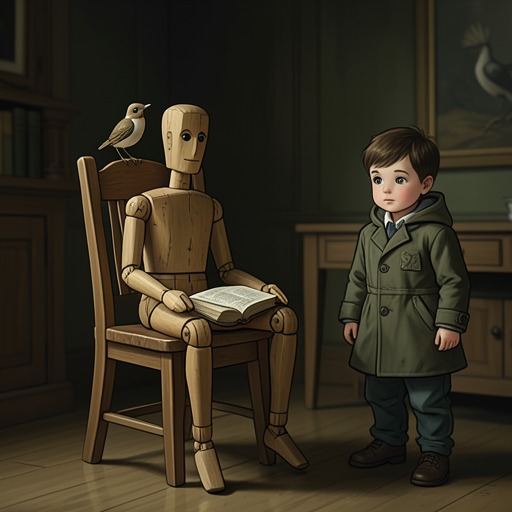
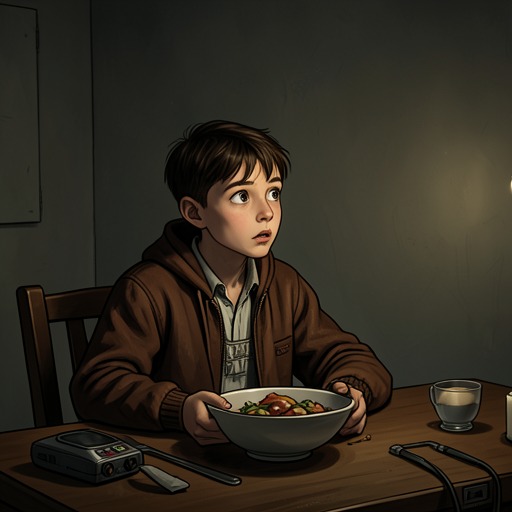
Pinocchio (Tania Zamorsky Edition)Pinocchio’s support of Geppetto begins with a need as immediate as a glass of milk and grows into a sustained pattern of work and care. Unable to pay for what his sick father needs, he earns it by operating a water-lifting wheel, then continues working before dawn, making baskets, and managing household expenses. The episode marks a decisive change in his conduct: care is no longer only an emotion but a daily responsibility carried out through labor.
The Need for Milk
After learning that the woman he had recognized was his dear Fairy, Pinocchio weeps, dries his eyes, and makes a straw bed for Geppetto. He asks the Talking Cricket where he can find milk for his father. The answer points him to Giangio, a farmer with cows, three fields away. Pinocchio asks for one full glass; Giangio sets its price at one soldo and requires payment first. Pinocchio has not even a cent, and the farmer says he has no milk to spare without money.
Pinocchio accepts the refusal without protest and starts to leave. Giangio then offers a different arrangement: Pinocchio can turn the bindolo, a wooden device for drawing water from a cistern to irrigate the vegetables. The exchange makes the need for Geppetto’s care tangible. Milk is not given as charity; Pinocchio must supply work in return. His father’s illness thus redirects him from asking for help to finding a way to provide value himself.
A Day’s Work for a Glass
Giangio explains the device and offers a glass of milk in return for one hundred buckets of water. Pinocchio agrees. In the garden, Giangio shows him how to operate the wheel, and Pinocchio begins at once. Before he has drawn all one hundred buckets, sweat is running from head to foot. The narrator emphasizes that he has never endured such hard work before, making the physical cost of this first payment explicit.
Giangio reveals that he normally has his donkey do the work, but the animal is now near death. Pinocchio asks to see it, and recognizes it as a schoolmate. Giangio laughs at the idea that Pinocchio had donkeys for classmates and mocks the quality of his schooling. Mortified, Pinocchio does not answer; he takes the nearly warm glass of milk and returns to the hut. The scene joins provision with humiliation: the work earns what Geppetto needs, but Pinocchio must also bear the farmer’s ridicule without abandoning his purpose.
Work Becomes a Routine
The one-day exchange becomes a commitment lasting more than five months. From that day onward, Pinocchio rises every morning before dawn to turn the bindolo and earn the glass of milk, which benefits Geppetto’s poor health. The repeated early rising changes the scale of the action: what begins as an urgent response to a single need becomes dependable care, renewed day after day.
Pinocchio also uses his spare time to make rush baskets and hampers. The money from this work goes toward the household’s daily expenses, which he provides for with great good sense. His contribution is therefore not limited to the milk or to the strenuous task in Giangio’s garden; he takes on a broader role in maintaining the household. The narrative presents that change through concrete work and practical provision rather than through a declaration of good intentions.
Care, Learning, and Saving
Pinocchio’s care includes attention to Geppetto’s comfort as well as his immediate needs. He makes a neat little cart himself so that, on fine days, he can take his father out for a breath of air. The cart extends the episode’s pattern of self-provision: with limited resources, Pinocchio uses his own labor and skill to make something that serves Geppetto.
Evenings remain devoted to learning. Pinocchio practices reading and writing using a large book bought in a nearby village for a few cents, though it has neither a title page nor an index. For writing, he sharpens a twig into a pen and dips it into a small bottle of blackberry and cherry juice because he has neither an inkwell nor ink. These details place study alongside work, not in opposition to it: after providing for his father during the day, he continues to educate himself with improvised materials.
Through his willingness to devise ways to work and support himself, Pinocchio manages to maintain Geppetto, who remains continually unwell, in almost comfortable circumstances. He also saves forty soldi to buy himself new clothes. The savings show that his labor supports both his father’s daily life and a modest personal aim, without undoing the care that has shaped his routine. The episode’s significance lies in this accumulated change: the boy who once depended on others now earns, makes, provides, studies, and saves, with Geppetto’s well-being at the center of his effort.