The Blue Fairy's Illness and Poverty
Pinocchio (Tania Zamorsky Edition)The Blue Fairy's illness and poverty are revealed not through a scene at her bedside but through a message delivered to Pinocchio: she is gravely ill in a hospital and has no money left to buy bread. The news transforms his anxious questions about whether she still loves and forgives him into an immediate commitment to help. Though her condition is only briefly reported, it becomes the test of Pinocchio's changed character and the occasion for a decisive act of care.
The Report of Her Condition
Pinocchio learns of the Fairy's circumstances from the Snail, whom he asks where she has gone, what has happened to her, whether she has forgiven him, and whether she still loves him. His questions come in a rush, before he can catch his breath. The Snail answers with her customary slowness: the Fairy is lying in a hospital bed. She has suffered a thousand misfortunes, fallen seriously ill, and can no longer afford even a piece of bread.
The account makes illness and poverty inseparable in the news Pinocchio receives. The Fairy is not simply sick; her hardship has left her without the means to meet a basic need. Yet the narrative supplies no medical explanation, details of treatment, or account of how she came to be poor. Her condition remains a reported fact rather than an observed experience, and the story's attention turns at once to what Pinocchio will do when he hears it.
From Anxiety to Assistance
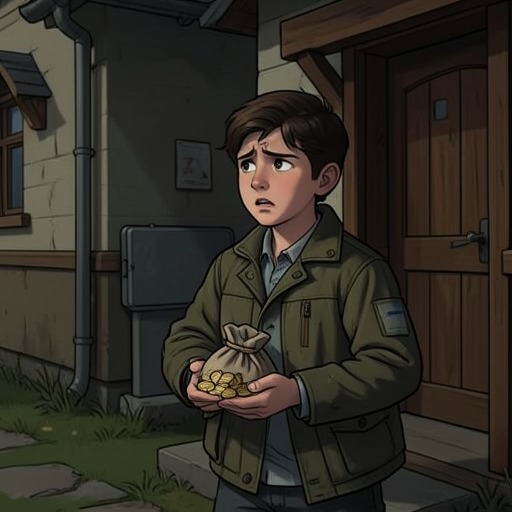
Before learning the news, Pinocchio's concern is expressed as a series of questions about their relationship: whether the Fairy remembers him, still loves him, and might be visited. The Snail's report changes the direction of the exchange. Pinocchio responds with grief and calls her his good Fairy; then he offers the forty soldi he has with him, money he had meant to spend on a new outfit. The coins are modest against the scale of the Fairy's need, but they are the help he can give immediately.
The choice matters because Pinocchio does not wait to learn whether the money will solve her difficulties or whether he will receive anything in return. He entrusts the coins to the Snail and urges her to take them to the Fairy at once. When the Snail asks about his new clothes, Pinocchio says he would sell even the rags he is wearing to help. The contrast between clothing and bread makes the sacrifice concrete: he gives up a planned improvement in his own appearance to address another person's immediate need.
Sustained Work and Filial Care
Pinocchio's promise goes beyond the one-time gift. He tells the Snail to return in two days, when he hopes to have more money to give. Until then, he has been working to support his father, Geppetto; from now on, he says, he will work five additional hours to support the Fairy as well. His language calls her his good mother, expressing a maternal bond without making her his literal parent. The promise places her need alongside his father's and turns affection into continuing labor.
The Snail's response supplies a small, striking measure of urgency: contrary to her usual manner, she runs away as fast as a lizard under the great August sun. That unusual haste follows Pinocchio's insistence that she deliver the money promptly. Later that evening, he stays awake until midnight instead of ten and makes sixteen wicker baskets rather than eight. The additional work gives visible form to his promise: assistance is not only a feeling or an offer, but time and effort taken from his own rest.
Forgiveness and the Limits of the Resolution
That night Pinocchio dreams that the Fairy appears beautiful and smiling, kisses him, and forgives his past mischief because of his kind heart. In the dream, she praises children who lovingly care for parents amid poverty and illness, even when their earlier conduct has not made them models of obedience. She also tells him to use better judgment in the future. The message connects Pinocchio's response to the Fairy's distress with a broader moral emphasis on caring action, while preserving a distinction between compassion and a record of consistently good behavior.
The dream answers the question that had troubled Pinocchio before the Snail spoke: the Fairy forgives him. It does not, however, report that she has recovered, left the hospital, or escaped poverty. Her condition is the pressure that calls forth Pinocchio's generosity, not a difficulty the passage shows resolved. When he wakes, he is no longer a wooden puppet but a boy like other boys. The sequence gives his care for the Fairy a decisive place in his transformation, while leaving her physical and financial circumstances unstated beyond the news that first prompted it.