
Sport and Moral Character
Player Manager: A Sports Progression FantasyThis thread traces the novel’s argument that football exposes character while also giving people opportunities to change it.
increasing Bearing strength in each event
 decreasing
Bearing strength in each eventdecreasingThe Theory

The Theory
Max tells Emma that football reveals how people behave when skill, pressure, and public judgment collide.
The Creative Leak
A boring worker may become inventive on the pitch, while a gentle person may reveal aggression.
A Tentative Claim
Max treats football as evidence without pretending that the evidence is scientific.
The Injury Test

The Injury Test
A serious injury reveals how quickly a group can prioritize the continuation of a game over a person’s welfare.
Max’s Alarm
He calls an ambulance while others initially insist the player is fine.
Ethical Shock
The incident changes Max’s understanding of competition’s capacity for cruelty.
The Parent Test

The Parent Test
The youth match becomes an examination of adults who confuse support with control.
Projection
Parents use their children to settle their own fears about status and belonging.
Consequence
The children perform worse when their identities are subordinated to parental instruction.
The Faith Test

The Faith Test
James evaluates football through a religious vocabulary of virtue, sin, patience, and self-control.
Max’s Defense
Max distinguishes ordinary gamesmanship from genuine moral corruption.
Respect Without Agreement
Their discussion becomes meaningful because Max accepts that James may be right for himself.
The Changeable Self
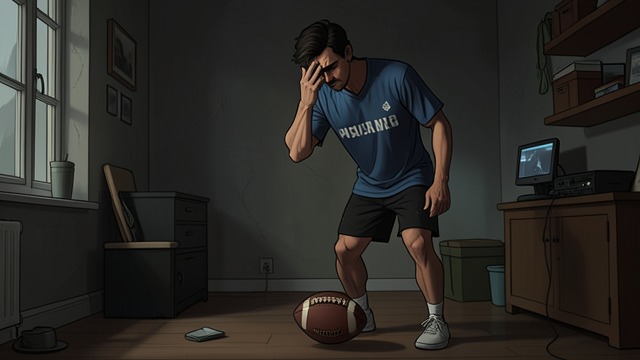
The Changeable Self
The novel refuses to define Max as either a good man or a bad one.
Contradictions
He is generous and manipulative, perceptive and prejudiced, brave and vain.
Development
Football does not reveal a fixed character; it gives him repeated chances to choose what kind of person he will be.
conversation with Emma
Simon’s leg injury
Broughton Under-14s
James’s family lunch
near the ending
