Max's football physical at Chester FC
Player Manager: A Sports Progression FantasyMax Best’s football medical at Chester FC is presented as both a practical club procedure and a crisis of explanation. Arriving injured and dependent on crutches, Max expects his damaged ankle to expose him as an unsuitable footballer. Instead, the examination repeatedly identifies exceptional physical capacity, converting what should be a gatekeeping ritual before a contract into evidence that his transformation extends beyond football knowledge and management instincts.
A Club Ritual and a Damaged Body
A football medical is defined as the set of tests clubs conduct before signing players, placing Max inside a professional process normally associated with established footballers. The event is therefore a boundary-crossing moment: he is no longer merely watching matches, scouting players, or presenting himself as an agent. He is being assessed as an athletic body whose fitness may have contractual consequences. The contrast is sharp because his right ankle is visibly out of action, and he has no change of clothes or shower available for strenuous exercise. He can only pedal one-legged for a short time, resting the injured foot on the centre of the bike to get his blood moving.
The medical staff adapt the examination to the injury rather than simply abandoning it. The doctor proposes doing as much of the medical as the ankle allows, noting that the club would pay roughly the same cost either way. She listens to Max’s chest with a stethoscope, asks him to breathe normally, palpates parts of his body, pays particular attention to his calves, and examines his torso. The procedure combines ordinary clinical care with the institutional demand for usable information: even a damaged limb cannot prevent the club from investigating the rest of the player.
Tests That Refuse to Explain Him
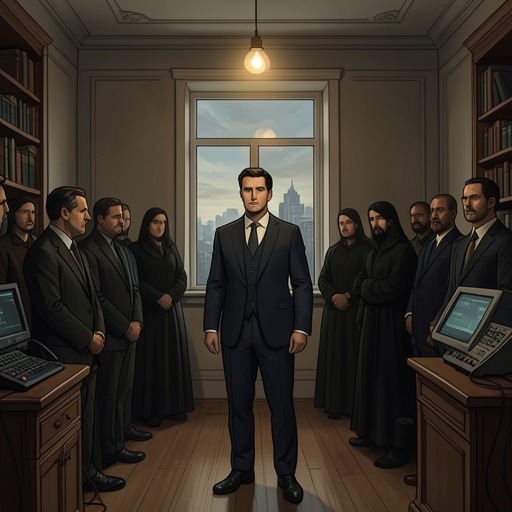
The most revealing test takes place on a Biodex machine, an elaborate chair connected to a computer by wires, levers, and multiple restraints. The device measures muscle-group strength in a way considered useful for sportspeople. Once strapped in, Max repeatedly kicks out with his healthy leg and pulls it back, increasing the resistance as the machine beeps and the doctor studies the screen. The four separate seatbelts make the scene theatrical and uncomfortable, but the staff’s sudden concentration gives it a more serious undertone: the data appears to be producing a problem rather than resolving one.
The doctor explains that an isokinetic dynamometer normally shows whether joint torque favours eccentric or concentric muscle action, or, more simply, whether a player’s hamstrings are weaker than his quadriceps. Max’s figures are not merely high. They are “not only sky high but in perfect balance.” The doctor is so surprised that she wants to photograph the result. Her reaction makes the measurement function as a form of professional astonishment. A machine designed to quantify athletic limitation instead records an ideal equilibrium that Max cannot account for.
The next examination concerns joint mobility. The staff grade joints from one to seven: one represents a condition such as occlusive effusion in the knee joint, while seven signifies perfect musculoskeletal capacity. Although the right ankle cannot be fully tested, the doctor and Livia assess the other ankle, the knees, and the hips through twisting and palpation. Max guesses the outcome before they say it: seven. Their response confirms that his body is being read as virtually perfect, even while his actual injury remains undeniable.
The strength test deepens the contradiction. Livia initially describes ninety kilograms as a baseline, a figure that sounds absurd to Max because he has never lifted weights. He asks to begin with forty kilograms. Even without using his right foot for leverage, he moves it with ease, then asks for sixty. Bench-pressing sixty kilograms, in addition to the bar, is “as easy as flipping a pillow on a Sunday morning.” He stops not because the load challenges him but because he does not want to aggravate the injury. The damaged ankle limits the conditions of the test, yet the remaining body performs with effortless strength.
The Medical as Evidence of the Curse
The medical unsettles Max because the results are too coherent to dismiss as luck. Jackie Reaper has been urging him to display his abilities and would, if given his way, skip a trial and proceed directly to contract signing. The doctors’ language goes further still: they speak as though Max might be ready for the Olympics. Their confidence clashes with his own account of a life spent without serious athletic training. The obvious explanation is not ordinary development but the football curse that has already supplied him with powers and privileges.
The examination makes Max reconsider the apparent direction of those powers. He had wanted to understand football as figures such as Jürgen Klopp and Pep Guardiola understood it, and the earlier abilities had seemed designed to make him a better football manager. The medical reveals another layer. The curse is not only improving his capacity to interpret football; it may be constructing him as the kind of body football institutions recognise and reward. The perfect muscle balance, joint score, and unexpected bench-pressing strength turn his body into a visible counterpart to the player information he can perceive.
This is why the event matters beyond its immediate clinical findings. The medical offers institutional confirmation of a transformation Max has been trying to treat as a private anomaly. A club’s specialists, machines, scores, and procedures independently validate what he cannot explain. The result is not reassurance. It is a threat to his tidy understanding of the curse, because every astonishing number suggests that his identity is being rewritten from spectator and would-be manager into footballer.
Professional Entry and the Limits of Qualification
The medical belongs to a wider sequence in which Max tries to enter football’s closed professional world. Jackie teaches him that agents and scouts do not pay to attend matches: they contact a club, identify the player they want to watch, and receive tickets at the turnstile. Max’s failure to know this exposes him as an outsider even while he claims the role of agent. At the Yalley family home, however, he performs that role more convincingly. He presents himself as a football agent, offers to sign James Yalley and Kisi Yalley, proposes a ten-percent industry-standard rate with no upfront or hidden fees, and describes his long-term responsibility as balancing their financial and footballing needs while securing the training needed to develop their potential.
The medical reverses that pattern of performance. With the Yalley family, Max has to persuade others that he belongs in the profession. At Chester FC, the body under examination persuades the professionals before Max can. Yet institutional entry still depends on credentials as well as ability. Later, when Max attempts to take on a formal football role, he realises that he has neither a Football Association number nor his licence; the absence of that documentation could bring the Football Association down on the club. Physical excellence cannot substitute for administrative recognition.
Mike Dean’s later proposal captures the same institutional dilemma. He tells Max that there is a Gordian knot: Max cannot gain experience until someone hires him, but Mike cannot immediately appoint him to a meaningful senior role. Mike therefore suggests starting small, expanding Max’s scouting duties, and gradually involving him in youth recruitment while the club tests whether his apparent success was more than dumb luck. The medical supplies powerful evidence of athletic capacity, but professional belonging must still be assembled through tickets, reports, licences, experience, trust, and negotiated responsibilities.
Significance
The football medical is a compact scene of bodily revelation and professional contradiction. Max’s injury should make him vulnerable, yet it becomes the condition under which the staff discover extraordinary strength, perfect muscular balance, and a joint-mobility score of seven. The machines provide a language more authoritative than Max’s own disbelief, while the incomplete examination keeps the physical mystery open: even the VO2 Max test is skipped because of the ankle, and the doctors proceed cautiously to the orthopaedic and movement screen.
Its deeper significance lies in the collision between medical objectivity and supernatural design. Max’s body appears to satisfy the ideal demanded by elite football precisely when his conscious identity has not caught up with it. The event therefore foreshadows his struggle to reconcile several roles: agent, scout, coach, manager, and potential player. The curse has made him legible to football’s experts, but it has not made him legally qualified, socially experienced, or psychologically ready. The medical confirms that he possesses the body of a footballer before he knows what becoming one will cost.