
Atonement Versus Vengeance
PleasureThis flow compares Sanctuary’s ideal of repentance with the retaliatory violence that threatens to overwhelm it.
increasing Bearing strength in each event
 decreasing
Bearing strength in each eventdecreasingA Priest’s Work
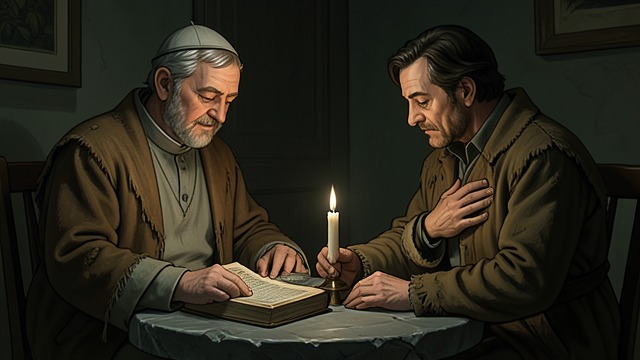
A Priest’s Work
Confession and Judgment
Sagan’s priestly role requires him to hear sins and determine whether a person can repent or must face final judgment.
Moral Weight
The work asks him to distinguish wrongdoing, remorse, and danger rather than treat every offense as identical.
A Relationship Called Sin

A Relationship Called Sin
Broken Rule
Sagan admits that his relationship with Valera violates priestly rules.
Moral Disagreement
He rejects the claim that love itself is sinful, forcing Magnus to consider whether law and moral judgment always align.
Acadian’s Opportunity

Acadian’s Opportunity
Offered Repentance
Magnus gives Acadian the chance to acknowledge her crimes and accept penance.
Test of Sincerity
Her refusal shows that repentance cannot be reduced to a convenient claim of regret.
Final Judgment

Final Judgment
Refusal Confirmed
Acadian admits that she would return to killing Daenaira if given the chance, exposing her claimed remorse as false.
Justice and Revenge
Magnus kills her, balancing his duty to judge a sinner against his personal grief over the loss of the child.
The Limits of Vengeance

The Limits of Vengeance
Grief Persists
Acadian’s death cannot restore the child or erase the harm done to Daenaira and Magnus.
Moral Remainder
The survivors must continue living with loss, showing that punishment may end a threat without making its victims whole.
Before the events at Valera’s cabin
After Sagan returns from Valera’s cabin
During the final confrontation in Acadian’s house
At the climax, after Acadian answers truthfully
After Acadian’s death
