
Power and Consent
PleasureThis flow examines the difference between protection that honors another person’s choices and control that uses safety as justification.
increasing Bearing strength in each event
 decreasing
Bearing strength in each eventdecreasingProtection as Duty

Protection as Duty
Constant Vigilance
Guin’s role requires him to anticipate danger and often to place himself between Malaya and harm.
Personal Cost
His devotion can obscure his own needs and make it difficult for him to distinguish care from self-erasure.
Malaya Claims Authority

Malaya Claims Authority
Political Agency
Malaya resists the Senate’s attempt to decide whom she should marry, even while negotiating a reform compromise.
Private Agency
Her insistence on choosing for herself also applies to whether and how she enters a relationship with Guin.
Protection Becomes Control

Protection Becomes Control
Conflicted Return
Guin worries that Malaya’s pursuit means she expects him to return to his old duty without addressing his pain.
Need for Consent
Their conflict requires him to state what he wants and her to choose him with awareness rather than assume his devotion will always be available.
Trust Under Attack
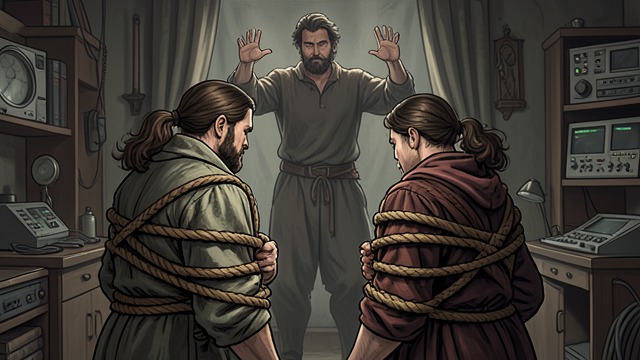
Trust Under Attack
Physical Powerlessness
Both Malaya and Guin are restrained while Acadian tries to force one to sacrifice the other.
Chosen Loyalty
Their love is tested by a coercive bargain, revealing the difference between freely risking oneself and being forced to do so.
Public Partnership

Public Partnership
Shared Decision
Malaya names Guin as her fiancé after he has disclosed his fears and she has openly chosen him.
Mutual Standing
Their relationship becomes a public partnership, not a duty assigned by rank or a private arrangement imposed by danger.
Across Malaya and Guin’s years together
During the Senate debate over her marriage
After Guin leaves and Malaya follows him
When Acadian imprisons the couple
At the Senate engagement announcement
