
The Relatives Who Protect Gordon
Point BlankGordon’s family moves from open hostility to unified concealment, revealing how kinship can both prevent a personal tragedy and obstruct public accountability.
increasing Bearing strength in each event
 decreasing
Bearing strength in each eventdecreasingThe Brothers’ Old War
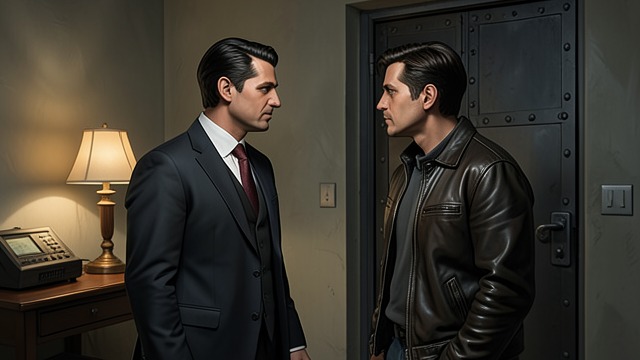
The Brothers’ Old War
Two competing identities
Chapman is a wealthy banker and local power, while Gordon is a celebrated musician and school director. Each resents what the other represents.
Conflict as performance
Their arguments are constant and theatrical, with insults that make it difficult to distinguish real hostility from familiar play. Dixon has watched the pattern for years.
A hidden common bond
Despite their conflict, they remain brothers. The investigation eventually reveals that family loyalty can outweigh their public antagonism.
Gordon’s World Collapses
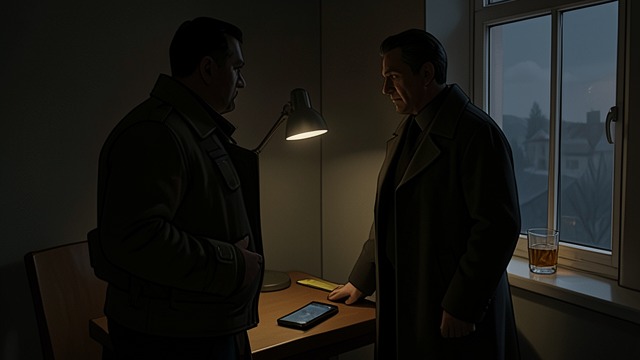
Gordon’s World Collapses
Loss of his confidante
Gordon learns that Helen hired the men who killed Erin. He is devastated by the betrayal and by the possibility that her actions will become public.
A threatened identity
The scandal endangers his career, reputation, and place at Stanislaus. Gordon describes himself as having nothing left if the truth becomes known.
An opening for escape
His despair worries Chapman, who does not want his brother to die in prison or by suicide. The same care that might save Gordon also gives him a route out of accountability.
A Family Closes Ranks
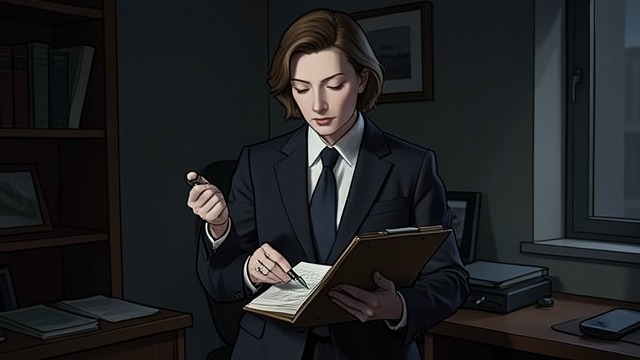
A Family Closes Ranks
Questions go unanswered
Dixon asks Tony, Cynthia, and Chapman where Gordon has gone. They offer little and do not help reconstruct his route.
Money transferred
Gordon’s accounts have been closed, and Tony accepts responsibility for helping him access his own funds. The family frames its support as a legal choice.
A new alliance
The relatives who often attack one another now stand together against the sheriff. Their temporary unity protects the family member they believe the authorities cannot prove guilty.
Chapman’s Admission
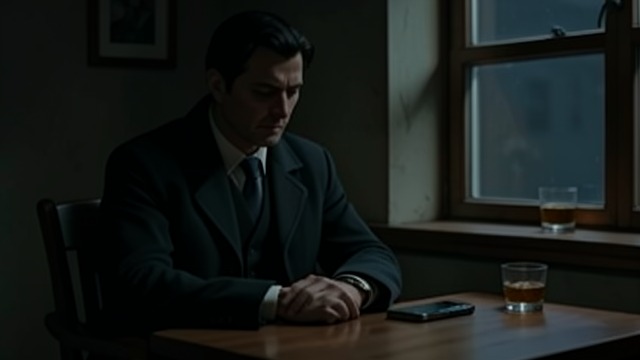
Chapman’s Admission
Concern hidden by humor
Chapman initially jokes that he has no idea where Gordon is. When Ruth asks directly, he admits that he did not want his brother to kill himself.
Loyalty made explicit
Chapman refuses to let Gordon spend his remaining years in prison without proof. His motive is not affection without judgment but a decision that family protection comes first.
A reluctant understanding
Dixon recognizes why Chapman helped, even as he disapproves of the obstruction. He asks to bring the boys back to Tara, keeping the family connection alive despite the conflict.
Consequences Left Open
Consequences Left Open
No arrest follows
Gordon remains a fugitive, and Chapman’s admission does not reveal his location. The legal case remains weaker than the investigators’ moral certainty.
Kinship survives the conflict
Dixon continues to address Chapman as family and plans to bring the boys to visit. Their connection is not erased by Chapman’s decision.
Loyalty has a cost
The family’s action protects Gordon from immediate ruin but denies victims and the community a public reckoning. The novel leaves the consequence unresolved rather than pretending that affection makes the decision harmless.
Before the murders, across the brothers’ adult lives
Sunday evening, after Helen is identified as Erin’s employer
Monday morning, after Gordon vanishes
Monday morning, during the conversation at Tara
After the family meeting, before the epilogue
