
Violence and the Meaning of Protection
Point BlankThe book contrasts genuine care with the possessive or institutional claims to protection that conceal coercion, manipulation, and harm.
increasing Bearing strength in each event
 decreasing
Bearing strength in each eventdecreasingDixon’s Practical Care
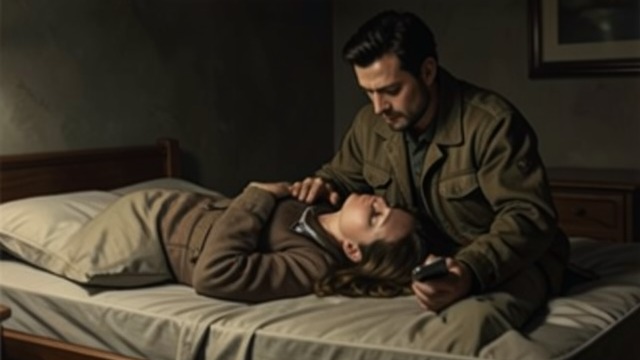
Dixon’s Practical Care
Safety before answers
Dixon responds to an unconscious stranger by calling emergency services, warming her, and finding a place for her to recover. He does not require her to explain herself first.
A household offers support
Rob and Rafer bring tea and conversation, making care a shared act. Ruth’s temporary place in the family begins through ordinary gestures rather than promises.
Protection with respect
Dixon’s caution during the later attack sometimes frustrates Ruth, but it is directed toward immediate safety. Unlike Moses’s possessiveness, his care does not demand ownership of her choices.
Moses’s Version of Protection

Moses’s Version of Protection
A child seeks safety
Claudia approaches Moses after witnessing his violence and believes he can protect her. Her choice is made after her mother’s death leaves her isolated.
Protection becomes control
Moses’s affection is possessive and entangled with coercion. He decides when Claudia can act and reacts violently when she disobeys.
The cost to others
The relationship draws Claudia into kidnapping, murder, and threats. What first appeared to be shelter becomes a partnership that endangers everyone around them.
Savich’s Protective Instinct

Savich’s Protective Instinct
A dangerous call
Sherlock speaks directly with Claudia and provokes her into revealing useful information. Savich worries that she has made herself a target.
Love as a reason to intervene
Savich’s anger comes from the possibility that Claudia might harm Sherlock. Yet his language slips toward command, raising the question of when care becomes control.
Partnership demands balance
Sherlock insists that she is an agent and an equal partner. Their argument shows that protecting someone does not automatically give a loved one the right to overrule them.
Protection Through Concealment

Protection Through Concealment
Chapman’s intervention
Chapman helps Gordon disappear because he fears his brother may kill himself or spend his last years in prison. His motive includes genuine concern.
The victims excluded
The protection he offers Gordon also obstructs the investigation into Helen’s death. Family loyalty takes precedence over accountability to the people harmed.
A morally incomplete rescue
Chapman may save his brother from a personal catastrophe, but he cannot undo the crimes or give the town answers. The story distinguishes compassion from justice without making them easy to reconcile.
Survival Without Simple Justice
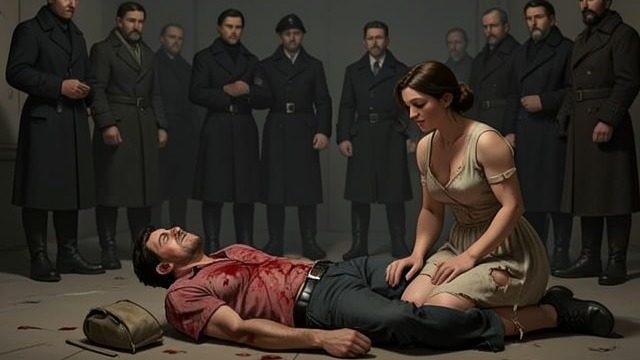
Survival Without Simple Justice
A threat ended
Moses and Claudia can no longer attack Savich, Sherlock, or their associates. The immediate danger is removed through a violent operation.
Survivors carry the consequences
Sherlock is injured, Connie has been shot, and Pinky, Erin, Helen, Walt, and others are dead. Ending the pursuit cannot reverse what happened.
Justice remains uneven
Some danger is stopped, while Gordon escapes and Christie’s disappearance remains unresolved. The book presents safety as necessary but not identical to complete justice.
Friday night, when Ruth is found
After Claudia runs away, before the present killings
Thursday evening, after Claudia calls Sherlock
After Gordon’s departure from Maestro
After Moses and Claudia die
