Christie Noble’s unresolved disappearance
Point BlankChristie Noble’s unresolved disappearance is an absence that never becomes a settled loss: nearly three years after she vanished, her husband, Dixon Noble, believes she is dead but still has no evidence of what happened to her. The missing explanation shapes the family’s grief, the sons’ hopes, and Dix’s difficult effort to make room for a future without treating Christie as someone who chose to leave.
Disappearance and Investigation
Christie disappeared one day, leaving no clue or lead. Dix describes the ensuing search as a major criminal investigation in which the family did everything possible; he also hired a private detective he had heard about in Chicago. The effort produced nothing. Nearly three years passed without a discovery that could establish where Christie went, whether she was alive, or how she had disappeared.
That absence of evidence makes the distinction between disappearance and death central to the family’s experience. Christie has not been found, and her fate has not been confirmed. The family has no account of what happened to her, no clue to follow, and no definitive event around which to bring its grief to a close.
The Erin Bushnell Connection
The discovery of Erin Bushnell’s body makes Christie’s disappearance newly alarming to Dix. He recognizes that, without Ruth Warnecki’s intervention, Erin might have vanished without a trace, leaving others to wonder whether she had simply left, gone away with someone, or been taken. The possibility changes how he understands Christie’s unexplained absence: from the moment Ruth found Erin, he has wondered whether something similar happened to his wife.
The parallel is a fear, not a solution. The evidence does not establish a connection between Christie and Erin’s murder, and Dillon Savich considers such a link highly unlikely. But the case gives Dix a concrete reason to imagine how a person might disappear without leaving an answer behind. Ruth, thinking about Christie later, believes that if Christie was like her, she would not have willingly abandoned Dix or the boys. She concludes that something very bad must have happened, while the circumstances remain unknown.
Grief Within the Family
Dix and Christie’s sons, Rob Noble and Rafe Noble, have not accepted that their mother may be dead. They have heard rumors that she might have had cancer or run away with a man she met at a gym; Rafe also reports a teammate’s claim that Christie left with someone. The boys’ questions and speculation show how the lack of facts allows incompatible possibilities to persist, including the hope that she might return.
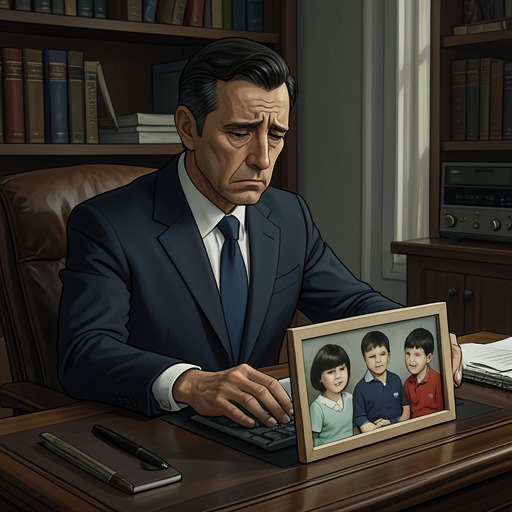
Dix understands their denial because he has experienced it himself. In the days after Christie disappeared, he was overwhelmed by pain and focused on finding her, leaving little room to help the boys talk through their loss. Later, he tried to be honest with them and understood that they needed one another, but he also kept his own pain buried rather than pressing the family to face what he believed. Their unspoken arrangement begins to break when Dix kisses Ruth and Rob says that the issue is their mother. The new relationship has brought the unresolved absence into the open again.
Belief Without Closure
Dix tells his sons that Christie would not have left them, and that no illness would have made her go without a word. He states plainly that he believes she is dead, yet insists that he will never stop trying to discover what happened. His conviction does not arise from a recovered body or a decisive clue: he has searched repeatedly and found none. The search continues because knowing the truth matters to all of them, even though he cannot promise that it will be found.
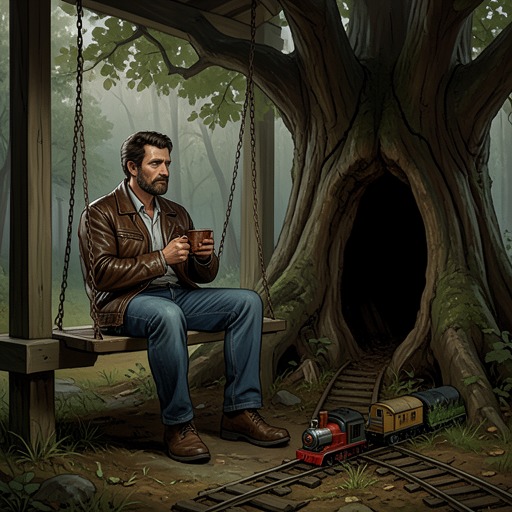
He also describes carrying Christie’s love into his care for the boys and feeling her close at times. This spiritual sense of her continuing presence coexists with his acknowledgment of her death and with his continued search for evidence. Meanwhile, Ruth has lived with Dix and his sons for a week, and their home has begun to feel increasingly natural to her. She wants to speak with Dix about Christie, but recognizes that the moment has not yet come. The disappearance therefore remains both a private grief and a condition of the family’s present: Dix tries to move forward with Ruth while refusing to call Christie’s unexplained absence a voluntary departure or to abandon the search for an answer.