Dane Carver
Point BlankDane Carver is an FBI agent whose work with Dillon Savich places him at the center of the effort to protect Pinky Womack from Moses Grace and Claudia. During a freezing overnight operation at Hooter’s Motel, Carver helps maintain surveillance, assesses the kidnappers from what he can hear, and joins Savich in entering their room when gunfire and a groan make waiting too dangerous. The attempt does not prevent Pinky’s death, and Carver remains part of the investigation as it follows the danger from the motel to Arlington National Cemetery.
Identity and Introduction
The evidence establishes Carver through his professional role rather than through personal history: he is an FBI agent working with Savich, Lacey Sherlock, and Connie Ashley. He is present when they coordinate with Chief Tumi and local deputies outside Hooter’s Motel, where Moses Grace and Claudia have already brought Pinky Womack. The operation places Carver among the agents responsible for keeping Pinky alive while avoiding a premature confrontation with his captors.
Carver’s exchanges with Savich show both practical cooperation and a willingness to think aloud about what the evidence suggests. He contributes observations, accepts the risks of the plan, and acts when the situation changes. The narrative does not provide a biography or a separate personal objective for him; it presents him as a working member of the investigative team, defined by the judgments and actions required in the field.
Surveillance at Hooter’s Motel
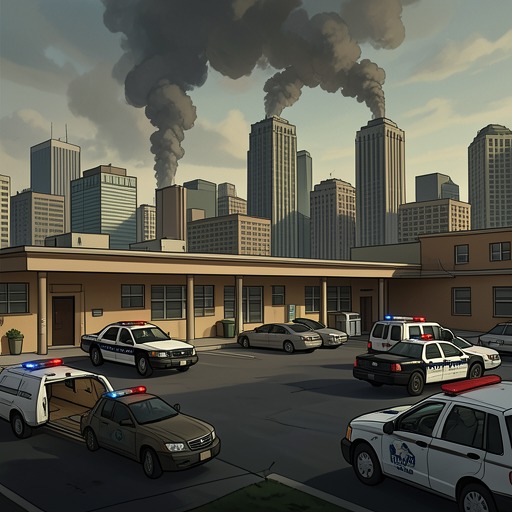
The motel operation begins after the team has given instructions to Chief Tumi and his deputies. Raymond Dykes’s account has already established that the kidnappers took Pinky upstairs with bags of McDonald’s food, claiming he was a sick brother. By the time the FBI agents settle into their positions, the motel’s other occupants have been evacuated. Carver and the others must watch room 212 without giving Moses Grace or Claudia a reason to kill Pinky.
As the hours pass, the directional receiver carries the kidnappers’ remarks to the agents. Claudia speaks casually about hurting Pinky, while Moses Grace later describes another threat. The team cannot treat the sounds of yawning and apparent sleep as proof that the room is safe. Carver’s assessment distinguishes the two voices: he describes Moses Grace as sounding tired and ill, while Claudia seems very young and speaks rapidly. He also questions what could connect her to the older man. These are observations rather than answers, and they leave the agents with a sharper sense of the kidnappers’ volatility but no settled explanation of their relationship.
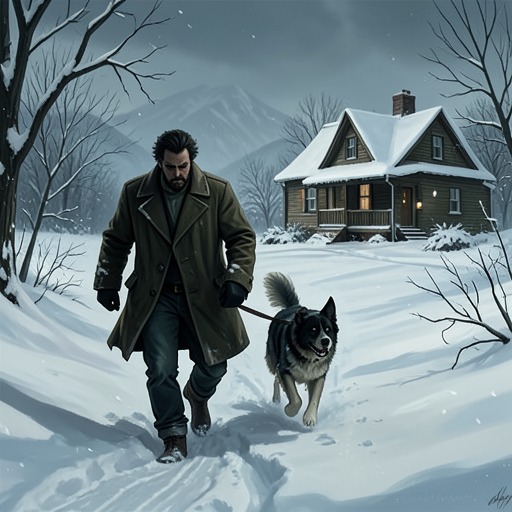
Carver remains on watch through the cold. He is positioned behind a trash can about six feet from the woods, close enough to observe the motel while staying out of its window’s line of sight. Savich notices that Carver does not move, interpreting his stillness as professional discipline: a visible shift could alert the people in the room and put Pinky at immediate risk. When a single gunshot sounds, Carver and Savich draw their weapons, but the receiver yields no clear reaction. The silence leaves them unable to know whether Pinky has been shot.
The Decision to Enter
A second gunshot, followed by a groan transmitted through the receiver, changes the operation from surveillance to intervention. Savich tells Carver they are going in and instructs Chief Tumi to hold position. The two agents run toward the motel’s exposed second-level walkway, their faces covered with black wool scarves. They know they may be walking into a trap, but the new sounds make further delay untenable.
Carver enters with a SIG-Sauer in one hand and his old Colt .45 in the other. The room is a small end unit, with a narrow bathroom window too high and too small to offer an easy escape. The details of the approach matter: the agents have to cross open ground, move beneath the window, and confront an uncertain scene inside, while other officers remain positioned around the building. Carver’s role is not simply to endorse Savich’s decision; he takes the same immediate physical risk in carrying it out.
The available evidence does not give Carver a separate account of what he finds inside, but the later events establish that Pinky has not been brought safely out of the crisis. At Arlington National Cemetery, Savich sees freshly disturbed black earth beneath wilted red roses and expresses regret that he could not save him. The agents present understand that Pinky is buried there. Carver’s participation in the motel operation therefore belongs to a failed rescue, not a clean victory: the decisive intervention comes only after the kidnappers have already acted.
Confrontation and Continuing Danger
After the motel is destroyed by fire, Carver approaches Dykes, who is visibly shaken by the loss of his business. Carver speaks in a deliberately nonthreatening manner and recognizes the apparent contradiction between Dykes’s shock and the likelihood that the kidnappers had deceived him with money. By then, Savich has concluded that Moses Grace double-crossed Dykes and used the motel as part of a setup intended to kill Dykes and as many officers as possible. Carver’s questioning brings that conclusion into direct conversation with the motel owner, pressing him to account for his part without treating his distress as proof of innocence.
The investigation does not become safe once the motel has burned. At the cemetery, Carver keeps his attention on the disturbed ground and asks whether Moses Grace and Claudia might still be watching the agents. Savich agrees that the expansive grounds—filled with trees, memorials, buildings, and monuments—offer too many hiding places to assume otherwise. The exchange shows Carver continuing to assess the threat after the immediate operation has ended. The grave is a discovery, but it is not closure: the perpetrators may remain nearby, and the agents respond by planning a much wider search.
Narrative Role
Carver functions as a field partner whose restraint and alertness make the team’s decisions legible. His stillness during the stakeout represents the discipline required to preserve Pinky’s chance of survival; his movement with Savich after the second shot marks the point at which restraint must give way to action. The contrast between those phases gives his role its shape: observation is essential, but it cannot become an excuse for inaction once the danger changes.
His contributions also help keep the investigation grounded in uncertainty. He does not claim to know why Claudia is with Moses Grace, whether Pinky is alive after the first shot, or whether the killers can still see the agents at the cemetery. Instead, he identifies what can be observed and asks what remains unresolved. The story gives him no personal resolution or biography beyond this work, but through the motel and cemetery sequences it presents him as a careful, committed agent operating amid incomplete information and consequences he cannot undo.