Stanislaus School of Music
Point BlankStanislaus School of Music is a music university set apart from Maestro in a wooded landscape, yet closely woven into the town’s public life. Its roughly four hundred students, year-round musical activity, and prominent faculty make it a source of local distinction; the discovery that student Erin Bushnell has been murdered gives the institution a sudden, painful connection to the novel’s central investigation.
Setting and institutional character
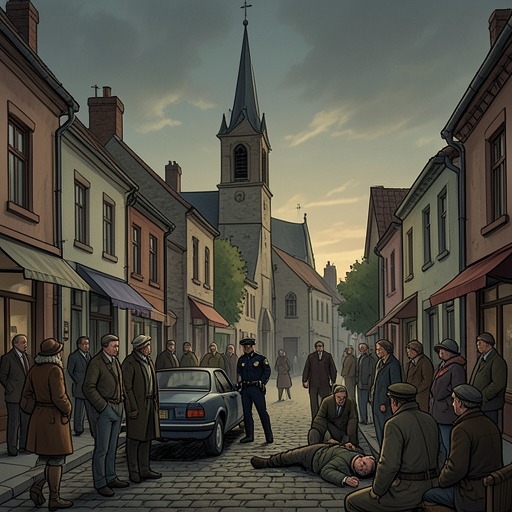
The school lies about four miles east of Maestro, within its own private wilderness. Mountains rise to the north, their lower slopes covered in oak, maple, and pine. Nearer the campus, low hills thick with blackberry bushes give way toward the east to a broad, flat valley. In winter, snow settles over the valley and weighs down the trees around the school’s red-brick buildings. The main buildings cluster around a large quadrangle, and the walkways are kept shoveled. The campus’s separation from town is real, but it is not a retreat from ordinary civic attention: the school brings visitors from elsewhere, and its presence is part of what makes the otherwise low-crime rural area busier for the local sheriff’s department.
The campus’s identity is conveyed not only through its buildings but through sound. During the investigators’ Monday-afternoon visit, a Bach Brandenburg Concerto can be heard from Van Cliburn Hall, the main auditorium. The hall takes its name from the famed pianist, whose trust gave the school a large grant fifteen years earlier. This detail ties the institution’s present-day setting to a history of outside patronage, while the music carries the school’s work beyond its walls. The local sheriff describes the sound of singing and instruments near campus as a defining feature of the place and compares the school’s standing to Juilliard’s in the South.
Music, leadership, and faculty
The school has about four hundred students in attendance for nearly the entire year. Its director is Dr. Gordon Holcombe, a flautist and pianist who has led the institution for ten years. Before taking that role, he toured, primarily in Europe, and lived in Paris for a couple of years. He is also a working musician and teacher: when investigators ask about Bushnell, he describes her playing as exceptionally talented and recalls working with her on control and spontaneity. His account presents the school as a place where disciplined practice is expected to produce performance that feels immediate and newly discovered.
Dr. Marian Gillespie, Holcombe’s daughter, teaches at the school and plays viola. The account of her abilities comes from Dix Noble, who says his late wife Christie considered her less gifted than her father and less capable in dealing with people or administration. The school’s faculty also includes Gloria Brichoux Stanford, a highly accomplished and flamboyant musician with a sharp tongue. She has performed at Carnegie Hall, made recordings, and played with orchestras around the world. Bushnell has studied with her since the beginning of the fall term, spending at least two hours a day with her. Gordon Holcombe identifies Stanford as the faculty member who may know Bushnell best.
The institution’s leadership and its personal connections overlap. Gordon Holcombe is the younger brother of Chappy Holcombe, and Dix Noble knows both the school and its community through family ties. Such connections provide investigators with points of access, but they also mean that the inquiry enters a close-knit social world rather than an impersonal campus bureaucracy.
Erin Bushnell and the investigation
Bushnell is a fourth-year student who is due to graduate with a bachelor of music in May. Gordon Holcombe believes she may remain at the school to pursue a master’s degree. He praises her violin performance, particularly her work on Bartók’s Sonata for Solo Violin, and describes her as a promising young musician. His initial reaction to the investigators’ questions is concern that she may have had a car accident; he also says he knows of no serious drug use beyond some marijuana on campus. These details establish Bushnell as a student with ambitions and an artistic reputation, not merely as the victim whose case brings investigators to the school.
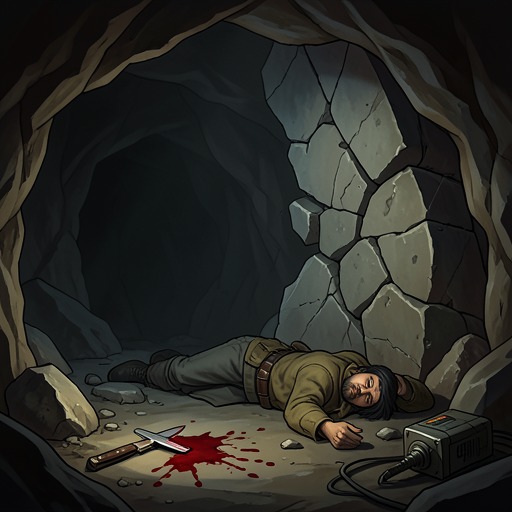
Dix Noble tells Holcombe that Bushnell is dead and that her body was found in a chamber in Winkel’s Cave. The exits to the chamber had been covered, leading investigators to believe that someone intended to keep her from being found. Holcombe is visibly shaken by the news and struggles to accept that one of his students has been murdered. His first response also turns toward what the death may mean for the school and its funding, and toward the possibility that another student could be responsible. That concern does not establish who committed the crime; it shows how quickly the discovery threatens the institution’s self-image as a place devoted to music rather than violence.
The school becomes an investigative resource as well as the setting of a community crisis. Ruth Warnecki asks Holcombe for information about Bushnell’s friends, instructors, romantic interests, habits, and whereabouts on Friday. Holcombe directs attention to Gloria Brichoux Stanford, whose sustained daily instruction could make her especially well placed to describe Bushnell’s life at the school. Investigators also visit Ginger Stanford, Gloria’s daughter, in town to ask what she knows. The inquiry thus moves through both formal faculty relationships and the family and social ties surrounding them.
Institutional tensions and narrative significance
Information gathered at the school complicates the first impression of Bushnell’s life there. Ginger Stanford says that when Bushnell became interested in men, Dr. Gordon Holcombe was the person who attracted her attention. Ginger does not know whether Holcombe returned those feelings and points investigators toward Helen Rafferty, his personal assistant, as someone who might know. Ginger reports a rumor that Rafferty and Holcombe had been involved years earlier and that he ended the relationship, after which Rafferty stayed on as his assistant. These are reported claims, not confirmed findings, but they give the investigation a possible personal dimension within the school’s leadership circle. Dix and Ruth therefore leave the conversation asking whether Bushnell’s feelings were unreciprocated, rather than treating the rumor as a settled explanation of her death.
Stanislaus School of Music carries two roles in the story. Its music, landscaped campus, and notable teachers establish an enclave shaped by artistic discipline and reputation; its student and staff relationships become essential lines of inquiry after Bushnell’s death. The contrast is not that the school is proven to conceal the crime, but that a place presented as devoted to artistic achievement must confront a violent death among its students. Its quiet, orderly campus cannot answer what happened to Bushnell. Instead, investigators must listen to the people who taught, worked with, and knew her, while the institution confronts the loss and the scrutiny that follow.