The blast-blocked passage in Winkel's Cave
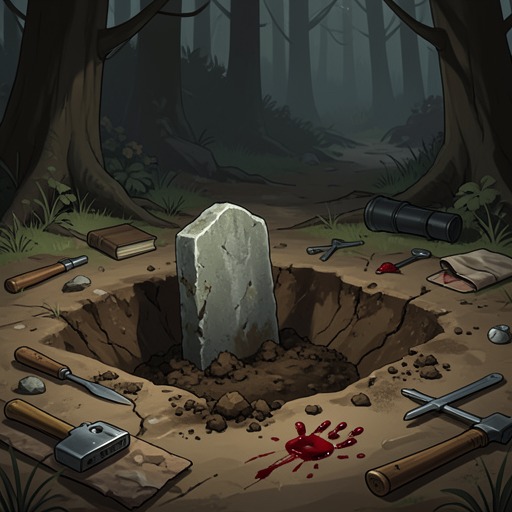
Point BlankThe blast-blocked passage in Winkel’s Cave is part of a cave whose hidden access points connect a present-day search to a story of concealed Civil War gold. When a search party uncovers an entrance on the hillside, brush and packed rocks reveal that the cave has been deliberately covered; the scene makes concealment tangible, while leaving the mechanics of the passage’s blast-related blockage unexplained in the available account.
Historical Context
The search is prompted by a map Ruth Warnecki found the previous month in a thin songbook among a collection of old books purchased at an estate sale in Manassas. The map identifies Winkel’s Cave as the hiding place of gold bars supposedly stolen by Confederate soldiers tasked with escorting them from Manassas Junction to General Lee in Richmond. Ruth connects the theft to the confusion of the First Battle of Bull Run on July 21, 1861, and to reports that more than a hundred pounds of gold had gone missing from Harpers Ferry.
In Ruth’s reconstruction, the soldiers hid the bars in a niche in the cave and drew a map so they could retrieve them after the war. She suspects the map may have been the only one made, left in the songbook for safekeeping; its apparent age and period-appropriate handwriting make it seem plausible to her. The treasure story gives the cave’s hidden spaces a specific historical promise, but the account does not establish that the gold is actually there.
Concealment and Recovery
The hillside entrance is hard to recognize until the brush is cleared and the ground examined closely. Lacey Sherlock observes that the opening is effectively invisible until someone brushes away the covering and looks carefully. The rocks appear to have been packed into place to hide the entrance, and Sherlock suggests that someone may have tried to cover the cave from both ends.
Dix Noble tests the obstruction with a shovel, wedging it beneath the lowest rocks and pushing down. After several minutes of effort, Sherlock removes the last stone. The newly exposed opening is about four feet high and three feet wide; beyond it is blackness. The passage from hidden obstruction to visible opening is therefore physical and immediate, but uncovering the entrance does not dispel the cave’s darkness or resolve what lies inside.
Significance and Limits of the Account
The blocked access turns the cave into more than a location on Ruth’s map: it is a place whose concealment must be overcome before its history can be investigated. The packed rocks and easily overlooked brush make hiding an active human choice, while the narrow opening and darkness keep the space threatening even after the searchers reach it. The gold legend supplies a reason to seek entry; the hidden entrance supplies a concrete barrier.
The account of this hillside opening does not describe an explosion or explain how the passage acquired its blast-related blockage. It establishes the rocks, brush, labor of clearing them, and the dark opening revealed beneath them, but not whether this particular obstruction was produced by a blast. That distinction matters: the scene confirms deliberate covering of a cave entrance without resolving the physical history implied by the passage’s designation.