Tony Holcombe
Point BlankTony Holcombe is Chappy Holcombe’s son, Cynthia Holcombe’s husband, and the manager of the local Holcombe bank. His appearances place him inside the family tensions surrounding Erin Bushnell’s murder and Ruth Warnecki’s investigation: he voices grief for Erin, but his descriptions of her relationship with Cynthia Holcombe conflict with other accounts, and his role in closing Gordon Holcombe’s accounts draws Dix Noble’s attention.
Identity and Introduction
Tony first appears on a slushy Wednesday morning in Maestro, where Dix Noble and Ruth Warnecki wait beside a Range Rover. Focused on Dix as he crosses Main Street, Tony pays so little attention to the ground that a driver in an old Ford Fairlane has to swerve to avoid hitting him and a parking meter. The near accident introduces him through his single-minded approach toward Dix, before he has explained why he has come.
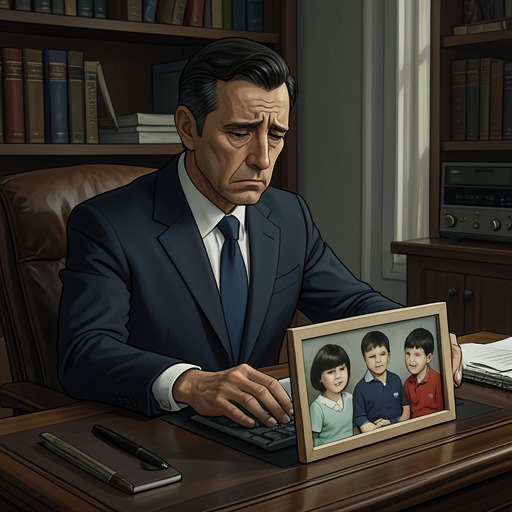
Ruth observes a tall, fit man who looks to be in his early forties, dressed like a fashion plate and wearing thick, light-brown hair styled to shine in the morning sun. His appearance is described as carefully composed; elsewhere, Ruth notices his well-manicured nails, direct eye contact, and firm handshake. The contrast between that polished presentation and his awkward walk makes his first impression more particular than simple elegance.
At the sheriff’s office, Dix formally identifies Tony to Ruth as his brother-in-law, Chappy’s son, and the person who runs the local Holcombe bank. Tony, in turn, asks Ruth why she is still in Maestro. She answers that she is trying to find who attempted to kill her and that the same person appears to have killed Erin. The exchange locates Tony at the intersection of the investigation and a family already personally affected by Erin’s death.
Appearance and Family Position
Tony has what the narration calls the Holcombe physique: long bones, little extra flesh, and a strong jaw. His dark eyes contrast with his light hair. He looks remarkably like his father, Chappy Holcombe, but lacks Chappy’s graceful movement. Chappy is likened to a dancer; Tony’s arms and legs seem to move in different rhythms. His awkwardness is described as curiously charming, a small counterpoint to his formal grooming and the authority of his position at the bank.
That position sits within a family hierarchy that Cynthia describes as constraining. She tells Dix that Tony folds when Chappy so much as frowns and cannot imagine losing his place at the bank, although she regards such a loss as unlikely. This is Cynthia’s characterization, not an independent account of Tony’s conduct, but it frames his work as bound up with his father’s influence. Her complaint also contrasts with Tony’s outwardly self-possessed manner when he meets Ruth and answers questions about the investigation.
Erin Bushnell and Conflicting Accounts
When Tony approaches Dix, he says he has heard about Erin from his father and cannot believe she is dead. He describes her as sweet, harmless, and devoted to playing the violin, with music as the most important thing in her life. His words establish the grief he expresses and the image of Erin he presents: a young musician whose attention was fixed on her art.
Tony also tells Dix that Cynthia is deeply upset and that she and Erin were like sisters. Dix finds this claim difficult to reconcile with his knowledge of Cynthia’s habitual dislike of other women, including members of her own family and her sister-in-law, Christie Noble. The gap matters because Tony speaks as if Cynthia and Erin’s closeness were settled, while Dix has reason to doubt that account. The narrative does not resolve the contradiction at this point; it makes Tony’s understanding, or presentation, of the marriage and friendship part of the questioning.
Cynthia later offers a different version. She says that she and Erin got along until Erin began showing interest in Tony, and that she still grieves for her because they had once been close. Tony denies that Erin ever came on to him. Cynthia cites a cocktail party Gloria Stanford held the previous Tuesday, saying she saw Erin pull Tony into the moonlight. Tony says he does not remember the incident and counters that Cynthia was flirting with Gordon Holcombe. The exchange leaves their interpretations opposed: Cynthia presents a witnessed moment as evidence, while Tony disputes its meaning and redirects attention to her conduct. Nothing in the account confirms an affair.
Marriage, Chappy, and the Friday Night Account
Cynthia’s comments also describe a marriage lived under Chappy’s scrutiny. Recalling the Friday evening when Ruth was found, she says Tony had been at the bank during the day, left for a couple of hours after dinner without saying where he was going, and returned with champagne and a smile. He wanted to be with her, she says, and they went upstairs. At about eleven, Chappy knocked on their bedroom door and demanded to know what she was doing to his son. Cynthia says she had locked the door and that this was not the first time Chappy had done so.
The account gives Tony’s movements a limited but consequential shape: he was away for a couple of hours, did not explain his destination to Cynthia, and returned with champagne. It does not say where he went. Cynthia supposes that he may have returned to the bank, adding that he tries to be wherever his father is not, but this remains her interpretation rather than Tony’s explanation. Her recollection of an earlier fight with her mother and her exhaustion after arguing with Chappy further places the episode within a tense household, without clarifying Tony’s absence.
The Bank Accounts and Narrative Role
Later, when the family is discussing Gordon’s flight, Dix points out that Gordon is not an accomplished criminal and has left tracks. He then addresses Tony with a specific question: why did Tony fail to mention that all of Gordon’s accounts had been closed, and did he help close them? Tony answers that it is not against the law to give a man his own money. His response defends the legality of access to Gordon’s funds, but does not directly explain why he withheld the account information from Dix or whether he personally helped close the accounts.
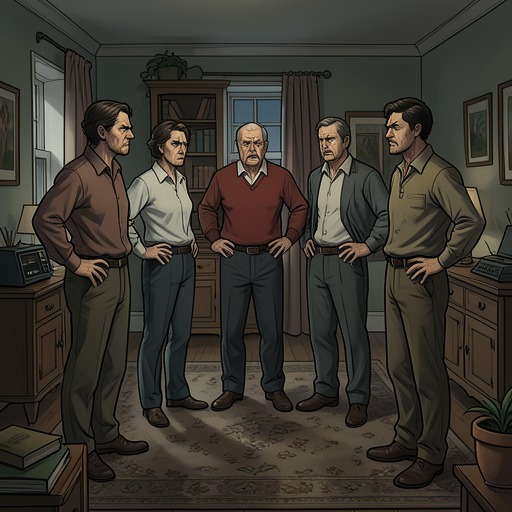
Dix cannot imagine Chappy arranging the closings and doubts that Gordon had the knowledge or ability to plan the larger crimes. Around this exchange, the family members fall silent and do not meet Dix’s eyes; Dix observes that they are, at last, together on something rather than set against one another. The passage marks Tony’s bank role as a concrete point of investigative interest, while stopping short of establishing what he knew about Gordon’s actions or any murder. Across his appearances, Tony is defined by that unresolved space between family loyalty, financial access, and the questions his statements leave open.