Gym prestige and defense-slot rule
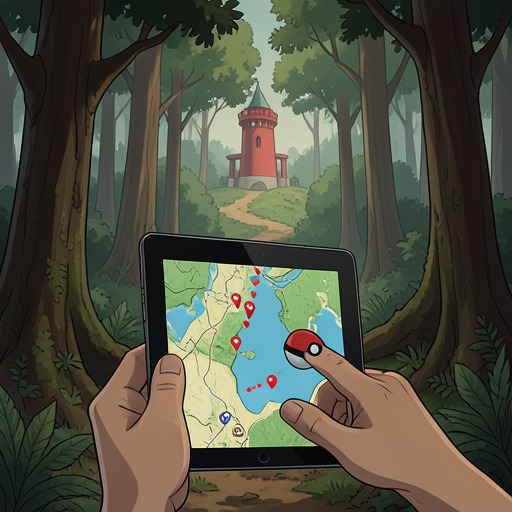
Pokemon Go: The Ultimate Beginner's Guide For Kindle Book Tips And Trick How to Become The Best Pokemon Trainer: This Kindle Book Will Answer Your Unsolved QuestionsGym prestige and defense-slot rule is the central system by which a Pokémon Gym’s control becomes measurable and contestable. A Gym is a real-world location represented on the map by a floating marker with platforms: the number of platforms indicates the Gym level, and the Gym level indicates how many defending Pokémon may be placed there. The rule links a team’s repeated actions to a changing structure, so control is not merely declared but accumulated, tested, weakened, and eventually transferred.
Definition and Structure
A Pokémon Gym’s power is determined by prestige. Higher prestige makes the Gym harder for an opposing team to conquer, while lower prestige brings it closer to becoming available to another team. Gym level is not an isolated visual label: it determines the number of potential defenders and rises alongside the Gym’s maximum prestige. In this way, the platforms shown on the map translate an invisible numerical condition into a readable sign of defensive depth.
The rule also distinguishes between friendly and opposing activity. Pokémon can be trained at a friendly Gym, increasing both its prestige and its level. Battles against an opposing team have the reverse effect: defeating the defenders lowers the Gym’s prestige and level. The same location can therefore function as a place of reinforcement for one team and attrition for another, depending on who enters it and which side controls it.
Raising Prestige and Expanding Defense
Friendly training is the principal method of strengthening a Gym from within. When team members battle friendly Pokémon, successful training awards Trainer XP and increases the prestige of the friendly Gym. As prestige rises, additional defense slots open, allowing more members of the same team to assign Pokémon to protect the location. Each participant may assign only one Pokémon, so the growing Gym capacity represents both a numerical increase in defense and a broader opportunity for team members to participate.
The relationship between level and capacity is explicit. A Level 6 Gym can hold six defending Pokémon, while a Level 10 Gym can hold ten. Each level increase also raises the maximum prestige the Gym can contain. A Level 1 Gym has a maximum prestige of 2,000, whereas a Level 3 Gym has a maximum prestige of 8,000. The system thus rewards sustained friendly activity twice: it creates more room for defenders and gives the location a larger prestige reserve that an attacking team must overcome.
Losing Control and Opening the Gym
Opposing battles reduce prestige rather than simply producing a single winner and ending the contest. Winning battles at an opposing Gym awards Trainer XP to the victor while decreasing the opposing Gym’s prestige. Repeated losses can push that prestige downward until the Gym reaches 0. At that point, the location opens and may be claimed by any team.
The consequence is a staged transfer of power. A defending team does not lose control after one abstract defeat; its position is progressively dismantled through multiple lost battles. The prestige value acts as a buffer between ordinary contest and complete takeover, while the zero point marks the decisive reversal from occupied Gym to available site. The rule therefore makes conquest cumulative and gives defensive strength a clear threshold rather than treating control as permanent.
Battle-Based Operation
The prestige system operates through two corresponding Gym activities: Training at a friendly Gym and Challenging a Gym controlled by an opposing team. After a player chooses a Pokémon team, the battle is fought against a defending Pokémon controlled by artificial intelligence rather than by an active player. Victory requires reducing the opponent’s HP to 0 by using the attacking Pokémon’s moves.
The battle mechanics support the prestige economy. Combat Power determines how much damage a Pokémon can deal, while Fast Moves build the Stamina bar and Charge Moves release stronger attacks capable of removing large portions of an opponent’s HP. Winning friendly training battles produces Trainer XP and raises prestige; winning opposing Gym battles produces Trainer XP while lowering the enemy Gym’s prestige. Individual combat is therefore embedded in a larger territorial rule: the immediate objective is to defeat a Pokémon, but the accumulated consequence is to strengthen or weaken the structure that Pokémon is defending.
Strategic and Social Significance
The rule turns Pokémon GO’s real-world map into a changing network of team-held locations. The game already joins GPS, augmented reality, internet access, and physical movement, requiring the player’s avatar to move when the player moves in real life. Within that mapped environment, Gyms become shared sites where different players’ actions leave durable consequences for a team’s prestige, level, and available defense positions.
This design also connects individual progression with collective participation. The player receives experience for successful training or attacking, while the Gym records the result as a change in prestige and capacity. Later gameplay allows players who have reached level five to join one of three teams and fight on behalf of a team at other players’ Gyms. The prestige-and-slot rule gives that team choice practical meaning: belonging determines which locations can be reinforced, which must be challenged, and who may occupy the defense positions that expanding prestige makes available.
As a game rule, the system converts the broad activities of catching, training, and battling into an ordered cycle of accumulation and contest. Friendly players gather at a location, train Pokémon, increase prestige, raise the Gym level, and open more slots; opponents attack, earn experience, reduce prestige, and may eventually bring the value to 0. The result is a clear procedural model of control in which numerical growth becomes visible defensive architecture and repeated play can change who owns a real-world point on the map.