Experience points
Pokemon Go: The Ultimate Beginner's Guide For Kindle Book Tips And Trick How to Become The Best Pokemon Trainer: This Kindle Book Will Answer Your Unsolved QuestionsExperience points, commonly called XP, are the progression measure that turns activity in Pokémon GO into advancement. They are awarded for catching Pokémon, visiting important game locations, winning battles, and completing other actions, then fill the Trainer’s level bar. Because the game connects movement in the real world with the Avatar’s movement through a GPS-based map, XP gives ordinary exploration a measurable in-game consequence: walking, discovering PokéStops, collecting Pokémon, and competing at Gyms all become steps toward a higher level.
Definition and Role
Experience points appear as part of the Avatar information shown in the lower-left corner of the game screen. That area displays the player’s current level and the XP bar needed to reach the next one. The account information also records achievements and other progress, making XP part of a larger profile of development rather than an isolated reward. The game’s basic loop—catching Pokémon, battling at Gyms, using items, and evolving creatures—therefore has a common measure of advancement in XP.
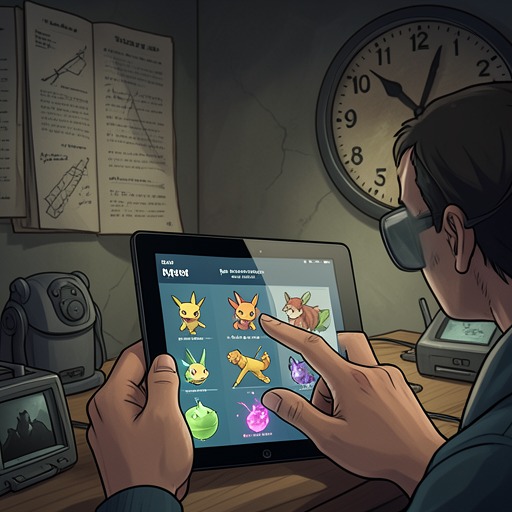
The system also makes novelty valuable. Catching a Pokémon normally gives 100 XP, while catching a species that is new to the player gives 500 XP. The manner of the throw can add another 10 to 50 XP, so the reward is affected not only by the result but also by the execution. The guide further describes newly caught Pokémon early in the game as yielding more than 600 XP, presenting the opening phase as an especially fertile period for rapid advancement.
Rewards from Play
Catching a Pokémon produces several rewards at once. Alongside 100 Stardust and three Candies for the caught Pokémon, the player receives 100 XP, or 500 XP when the Pokémon is new. This combination links XP to the game’s other resources: Stardust supports development, Candy supports evolution, and XP raises the Trainer’s level. A single encounter thus advances several systems simultaneously, but XP is the reward that most directly changes the player’s status.
Experience is not limited to captures. Training battles at a friendly Pokémon Gym award Trainer XP while increasing that Gym’s Prestige. Battles against an opposing team also award Trainer XP, even as they reduce the opposing Gym’s Prestige. The same progression currency therefore connects collection, friendly practice, and competitive conflict. Medals for achievements such as catching a number of Pokémon of one type or walking a set distance provide additional recognition, although the guide says that their practical benefits are limited compared with the broader advancement represented by XP.
Multiplication and Optimization
The guide treats XP as a resource to be deliberately optimized rather than merely received. Its principal strategy combines a Lucky Egg with Incense. Incense attracts Pokémon around the player for thirty minutes, while a Lucky Egg doubles the experience gained not only from catches but from everything else that awards XP. The guide recommends adding a Lure Module at a PokéStop, since the module attracts Pokémon around that location and can also benefit other players.
The timing of this combination matters. Before activating the items, the player is advised to gather as many Pokémon as possible, transfer them to obtain Candy, and save that Candy for evolution. Evolving a Pokémon gives 1,000 XP if the evolved form is being seen for the first time and 500 XP if it has already been encountered. The recommended sequence is to catch Pokémon while the bonus is active and evolve as many as possible during the final five minutes of the Lucky Egg’s duration. The strategy converts stored Pokémon and Candy into a concentrated burst of XP, making preparation as important as the catches themselves.
The book also presents paid access as one possible accelerator. Players who can afford to buy Coins with real money can use them to purchase Lucky Eggs, which the guide says can provide a substantial experience boost and enable rapid leveling. In this account, XP is not simply a record of time spent playing. It is a system shaped by stockpiling, limited-duration items, careful sequencing, and, potentially, expenditure.
Exploration, Competition, and Progression
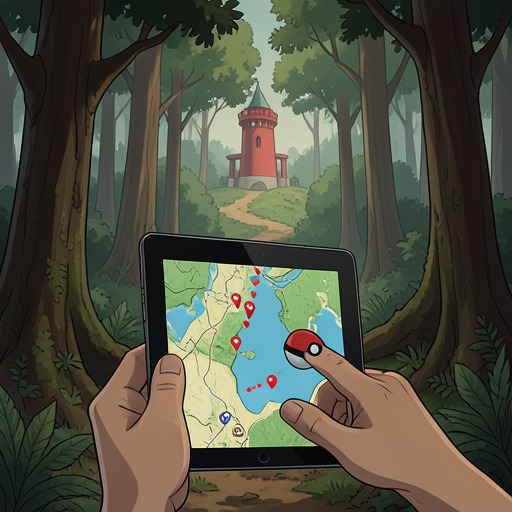
XP gives Pokémon GO its distinctive relationship between physical movement and digital advancement. The game requires an internet connection and an enabled location service because the Avatar follows the player’s real-world position. As players move through streets, encounter Pokémon, and spin the photo discs at real-world monuments represented as PokéStops, their surroundings become a field of possible progression. The guide emphasizes that the pleasure lies not only in catching Pokémon or battling but in exploring with friends, laughing at historical monuments disguised as PokéStops, and making connections with other people in the neighborhood.
Competition becomes available only after the player reaches level five. At that threshold, the player may join one of three teams and fight on behalf of that team at other Trainers’ Gyms. XP therefore marks more than numerical improvement: it controls access to a new social and competitive layer of the game. Gym participation can then generate more XP, creating a progression loop in which leveling unlocks competition and competition supplies further advancement.
The same logic extends to Pokémon eggs. A player places a Pokémon egg in an Egg Incubator and walks in real life with the game open until the required distance is completed. Eggs require two, five, or ten kilometers, with the ten-kilometer egg described as rarer and more rewarding. Hatching grants substantial experience and Stardust, and the longer-distance eggs provide better rewards and better Pokémon. XP thus rewards not only discrete actions such as a successful throw or battle, but sustained bodily effort across measured distance.
Significance in the Game’s Design
Experience points organize Pokémon GO’s transformation of the real world into a playable progression system. GPS determines where the Avatar is, the phone supplies the interface, PokéStops and Pokémon populate actual locations, and Gyms turn places into contested territory. XP translates these encounters into an accumulating record of competence. The player’s walk becomes distance toward an egg, a monument becomes an item source, a capture becomes Candy and Stardust, and each of these can also become progress toward the next level.
The guide’s advice reveals the persuasive force of this design. Players are encouraged to keep moving, seek out places where Pokémon appear, collect resources, return to the game repeatedly, and coordinate temporary bonuses for maximum effect. XP makes those behaviors legible and comparable, while the level threshold promises access to new forms of play. Its decisive significance is therefore both mechanical and motivational: it is the measure that binds exploration, collection, preparation, spending, social connection, and battle into one continuous loop of advancement.