Aditha Karikalan and Nandhini’s relationship
Ponniyin SelvanAditha Karikalan and Nandhini’s relationship is a childhood attachment broken by enforced separation and transformed, when they meet again at Kadambur, by the revelation that they are siblings. The truth explains why their friendship was opposed, but it does not repair the past: Karikalan seeks a way to forgive and begin again, while Nandhini insists that one present betrayal remains beyond forgiveness.
Childhood Attachment and Separation
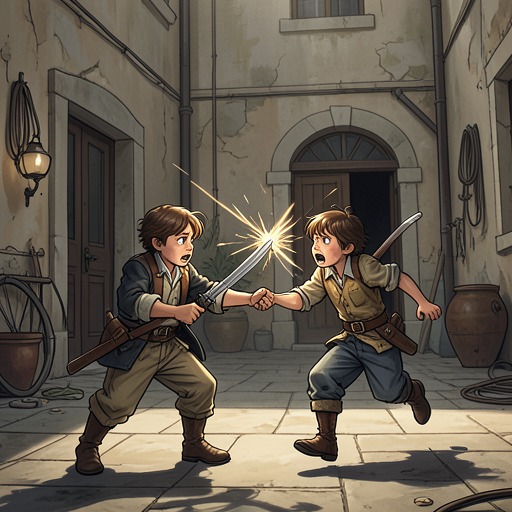
Before either understands their parentage, Karikalan and Nandhini share a friendship that matters deeply to both. Karikalan later recalls that Sembian Maadevi repeatedly tried to keep them apart. As a boy, he resented her interference and could not understand its purpose; Nandhini, too, remembers his loyalty. She recalls him quarrelling even with his own sister, Kundhavai, on her behalf. In her account, his protectiveness was not a distant courtesy but a familiar part of their childhood bond.
The separation left a lasting uncertainty between them. Karikalan remembers a veil between their lives, but neither he nor Nandhini was then given an explanation. When they meet again as adults, the absence of that explanation becomes part of the injury: the childhood friendship was not simply allowed to fade but was deliberately obstructed by those who knew, or suspected, more than the children did. Karikalan later considers that Sembian Maadevi might have been trying to avert a catastrophe, while also condemning her silence as an injustice to Nandhini and an evil done to him.
A Hidden Family History
The relationship’s meaning changes through a truth concealed for years: Nandhini is Sundara Chozhar’s daughter. Before marrying Karikalan’s mother, Sundara Chozhar fell in love with Mandhakini on an island off the coast of Ilankai and entered a Gandharva bond with her. Karikalan explains that Nandhini was born of that union and is therefore his sister. The disclosure turns a friendship once blocked without explanation into a close blood relationship whose existence had been kept from both of them.
The family secret had emerged only indirectly before Karikalan named it. Kundhavai had wondered whether Nandhini might be the daughter of the mute karaiyar woman, prompted by their striking resemblance and by what she had heard about Mandhakini. Aniruddha had confirmed that Mandhakini survived her leap into the sea at Kodikkarai: he saw her rescued by a fisherman, bribed him to take her to Ilankai, and falsely reported her death to Sundara Chozhar. Aniruddha later learned that Mandhakini had given birth to twins in Sembian Maadevi’s royal garden and abandoned them. These fragments made kinship imaginable, but Karikalan’s statement at Kadambur supplies the decisive identification of Nandhini as the emperor’s daughter.
To explain why he recognizes her lineage, Karikalan recalls seeing her from the time she was five and being struck by her beauty without understanding its source. He invokes the famed beauty of his grandmother Kalyani of the Vaithumbaraayars, then describes Nandhini’s features as the inheritance of that line through Sundara Chozhar. His explanation makes visible resemblance part of his reasoning, but he does not present resemblance alone as proof: he tells her directly that she is his father’s daughter and his sister.
The Invitation and the Return to the Past
Karikalan’s return to Nandhini is driven by her invitation. He tells her that the olai she sent through Kandamaaran was his only reason for coming to Kadambur. Their reunion immediately exposes how little time has diminished their attachment. Karikalan had hoped that the invitation meant she had put the past behind her; Nandhini asks whether he has forgotten it, and he admits that he has not. He recalls a moment when she stood before him with tears in her eyes and asked him for a boon. He did not grant her wish, overcome, as he remembers it, by a terrible lust for blood. The account identifies a defining wound between them but does not disclose the boon itself.
The old intimacy is evident even within the confrontation. Karikalan’s body trembles when he addresses her, and he calls her by the name that belongs to their shared past. Before their private meeting, he confesses to Vandhiyathevan that the prospect of speaking with her alone fills him with blind panic. By then he knows that she is his sister and that she has sworn, alongside the Pandiya plotters, to destroy his clan. The fear is not merely political: he has to face someone he once loved as a friend, someone whose remembered plea remains bound to his own remorse.
Siblings, Recognition, and Forgiveness
After Karikalan calls Nandhini his sister, she resists the claim. She points out that he is married to another and destined for kingship, questioning how she could regard him as a brother. He clarifies that he means this literally: she is the daughter of an emperor, and he is her brother. Nandhini then challenges the idea through her own appearance, asking whether she looks like a Chakravarthy’s daughter. Karikalan answers by tracing the beauty he sees in her to their shared paternal line. Her reaction shifts from disbelief toward a dawning understanding, though recognition does not bring reconciliation.
Karikalan attempts to separate their present from the injustice of the past. He acknowledges that Sembian Maadevi’s efforts to keep them apart may have saved them from an appalling catastrophe, yet says that withholding the truth wronged Nandhini and harmed him. He proposes that they forgive what they cannot forget. The proposal is significant because it holds two judgments together: the separation may have prevented disaster, and the concealment still inflicted pain. Nandhini does not answer with acceptance. Instead, she turns to the human brutality she has witnessed and refuses to treat forgiveness as a reason to overlook what has happened.
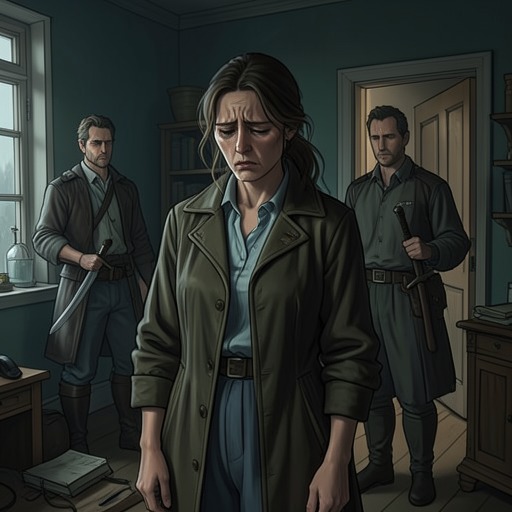
She draws a sharp boundary around that refusal. Nandhini says she might pardon and even forget every earlier injustice, crime, and betrayal at Karikalan’s hands, but not the treachery of that day. Karikalan protests that he has done nothing against his conscience and asks what she means. Nandhini offers to explain by directing his attention to a rogue approaching them. The supplied scene ends before that accusation is clarified, leaving the immediate cause of her final charge unresolved.
Significance of the Relationship
Their relationship binds private memory to the Chozha family’s concealed genealogy. The childhood bond was interrupted before either could understand why; the later revelation recasts that interference as protection from a relationship whose true familial nature had been hidden. Yet Karikalan’s explanation cannot simply restore what was lost. His new knowledge gives him the language of brotherhood, while Nandhini’s history of separation and betrayal keeps her from accepting that language as a settlement.
The contrast between them is not that one remembers and the other forgets: both insist that the past remains present. Karikalan’s memories lead him toward a proposed pact of forgiveness, whereas Nandhini distinguishes accumulated wrongs from the particular act she says occurred that day. The scene therefore ends not with the discovery of kinship resolving their conflict, but with kinship intensifying its stakes. They are brother and sister, yet the old friendship, the ungranted boon, the hidden truth, and Nandhini’s unwithdrawn accusation all remain active between them.