Adithan
Ponniyin SelvanAdithan is the Chozha crown prince whose reputation for battlefield ferocity is inseparable from private remorse. His journey to Kadambur brings him face to face with the woman whose plea he once rejected, and with a family truth that neither of them had understood: Pazhuvoor Ilaiya Rani is his sister. The revelation makes his intended apology more than a gesture of personal repair; it exposes the hidden kinship at the heart of their conflict.
Identity and Public Image
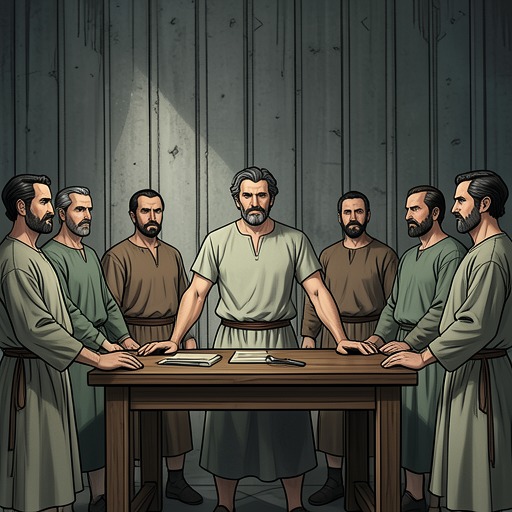
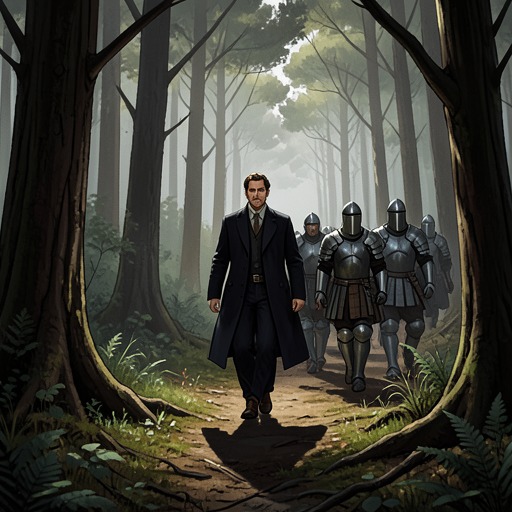
When Adithan’s procession reaches the flooded Kedilam River in Aippasi, the crowds hear a succession of titles announcing the prince. He is celebrated as the warrior who entered the battlefield at Sevur and beheaded Veera Pandiyan, a terror to the forces of Rettai Mandalam and lord of Thondai Mandalam, as well as the son and heir of Sundara Chozhar. The acclaim turns his arrival into a public spectacle: picnickers leave the riverbanks to catch sight of him, while the procession’s escorts clear a path across the crossing.
The scene establishes the scale of his public authority before showing its personal limits. At the ferry, Adithan sits on horseback at the river’s edge and looks toward the eighty-year-old Thirukkovilur Malayaman, who has arrived in a chariot beneath an Arasu tree. The following conversation, framed by their grandfather-and-grandson relationship, shifts from royal ceremony to the burden of Adithan’s past.
Remorse and the Intended Apology
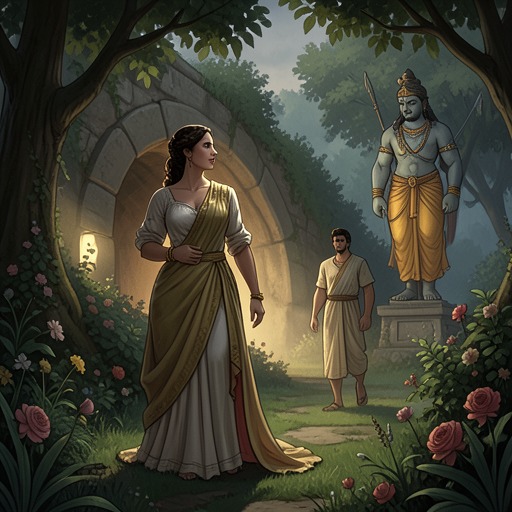
Adithan tells his grandfather that he means to reveal the truth to a woman he once grievously harmed, make amends, and ask her pardon. Malayaman recoils at the thought of a warrior prince apologizing to a woman. Adithan does not answer immediately. With his head bowed, he considers what to say, then recounts the pursuit of Veera Pandiyan three years earlier: he tracked him to a secret lair, where Pazhuvoor Ilaiya Rani frantically pleaded for his life. Adithan rejected her plea in anger and beheaded Veera Pandiyan.
He describes the killing not as a settled triumph but as an incident he has never been able to erase from memory. Remorse, despair, and sorrow have continued to weigh on him, and he believes that he cannot find peace without asking her forgiveness. He also thinks she is prepared to leave the past behind and has invited him to Kadambur in earnest, hoping to dispel the kingdom’s confusion. That belief shapes his immediate intentions: he promises to fulfil his obligations, return to Kanchi, and then seek his missing brother by ship. His resolve to make amends and his concern for his brother coexist with the public duties of the heir.
Friendship and Political Expectations at Kadambur
Adithan’s arrival at Kadambur also reveals how differently his presence affects those around him. When Vallavarayan Vandhiyathevan and Azhwarkkadiyaan Nambi ride up unexpectedly, Adithan leaps from his stallion and embraces Vallavarayan with unrestrained joy. The warmth of this reunion is conspicuous to the prince’s companions: Kandamaran and Parthibendran Pallava resent the favour shown to Vallavarayan, though they contain their hostility and ride ahead. Adithan’s instinctive welcome makes clear that he regards Vallavarayan as a close and valued friend, even amid the rivalries surrounding the royal party.
At Kadambur, the same visit alters Kadambur Sambuvaraiyar’s political calculations. Sambuvaraiyar has ancestral reasons to oppose the descendants of Thirukkovilur Malayaman, and Adithan’s earlier arrogance toward the assembled lords has strengthened his support for Madhuranthaka Thevar’s claim to the throne. But seeing Adithan in the palace changes his outlook. He interprets the prince’s visits to the women’s quarters, lively conversation, and praise of Manimekalai’s vivacity as signs that she may have captured Adithan’s heart. Sambuvaraiyar imagines the possible consequences for his daughter and his house if she were to marry the crown prince. This is his hopeful reading of their apparent rapport, not confirmation that Adithan has chosen to marry her; even so, the episode shows how quickly personal impressions can redirect political allegiance.
Hidden Kinship and the Revelation
The truth about Pazhuvoor Ilaiya Rani’s parentage has already been suspected, but not established, by others. Kundhavai recalls that Vanathi once went to investigate Sundara Chozhar’s lament and fainted after seeing a figure near his bed who closely resembled the young queen. The resemblance led Kundhavai to wonder whether the queen was connected to the mute woman, Mandhakini. At that stage, resemblance and remembered events support a suspicion, not proof.
Aniruddhar later discloses that, twenty-five years earlier, he had reported Mandhakini’s death after she jumped from the lighthouse at Kodikkarai. In fact, a fisherman rescued her; Aniruddhar recognized her, bribed him to take her to Ilankai, and concealed the truth from Sundara Chozhar. Aniruddhar also learned that Mandhakini had stayed in Periya Piratti’s royal garden and given birth to twins, though Sembian Maadevi alone was said to know what became of the children. He suspected that Mandhakini had saved the young Arulmozhi Varman from drowning in the Kaveri River. These revelations supply the concealed family history around the prince, while leaving some details beyond what Adithan himself explains.
When Adithan finally addresses Pazhuvoor Ilaiya Rani’s identity, he says that her striking beauty recalls Kalyani of the Vaithumbaraayars, his paternal grandmother. He then tells her that she was born to Sundara Chozhar and a woman whom Sundara loved on an island off the coast of Ilankai, and that they were joined in a gandharva marriage. Because she is Sundara’s daughter, she is Adithan’s sister. Her stunned silence gives way to a question about when he learned the truth. The disclosure transforms their relationship: the woman he hoped to approach as the injured party in a past wrong is also his sibling, and the old appeal for forgiveness now stands within a newly exposed family bond.
Narrative Role
Adithan’s character is built across a sharp contrast: the procession names him as the slayer of Veera Pandiyan, while his private account dwells on the plea he refused and the grief that followed. His proposed apology makes remorse an active intention, though the evidence here does not show the reconciliation completed. At the same time, his movements through Kadambur draw competing interpretations from friends, rivals, and would-be in-laws, demonstrating how the crown prince’s gestures acquire political meaning beyond his immediate purpose.
The revelation of Pazhuvoor Ilaiya Rani’s parentage deepens that conflict rather than simply resolving it. Adithan approaches her hoping to repair a remembered injury; he discovers that their connection is also one of blood and shared parentage. His story thus joins the personal cost of violence to the concealed lineage shaping the Chozha court, while his unfulfilled plan to search for Arulmozhi Varman keeps family recovery and royal duty in view together.