Battle of Thakkolam
Ponniyin SelvanThe Battle of Thakkolam was a ten-day campaign remembered for the death of Rajadithyar, whose battlefield leadership had sustained the Chozha army against a larger invading force. Thirukkovilur Malayaman recounts it to Aditha Karikalan as a reversal shaped first by delayed plans and then by a deception that turned Rajadithyar’s mercy against him. The defeat did not end the fighting: the Chozha forces rallied, but the enemy remained in the region and held Kanchi for years.
Background and the Halted Invasion
Rajadithyar had been preparing to lead a northern invasion against Rettai Mandalam. His aim was to defeat its ruler, Kannara Thevan, and destroy the famed capital of Manyakhedam. The campaign required an exceptional concentration of troops. The region between the Kedilam River and the Then Pennai River offered a broad space in which to assemble and train them, and armies had gathered across the area under Rajadithyar and other commanders.
The army did not march according to plan. News arrived that hostilities had broken out in Ilankai, and some regiments were sent there. Paranthaka Chakravarthy also hesitated to commit the kingdom’s leading commanders and soldiers to a long northern expedition while danger was growing in the south. He ordered Rajadithyar to wait until victory in Ilankai could be reported. Rajadithyar accepted his father’s decision, though the delay frustrated the campaign he had been preparing.
Kannara Thevan did not wait in turn. While Rettai Mandalam was gathering its own forces, its ruler and his ally Boodhugan advanced south into Chozha territory. Their combined army moved as a vast invading force, and scouts returned with alarming reports of its scale. Paranthaka Chakravarthy nevertheless saw an advantage in meeting the enemy on Chozha ground: the invaders had travelled far, while the defenders knew the territory and could try to surround them. Once the enemy had advanced as far as Vada Pennai River, he authorized the Chozha army to march.
The Armies Meet at Thakkolam
Rajadithyar then set out with an army described as comprising three hundred thousand infantry, fifty thousand cavalry, ten thousand war elephants, two thousand chariots, three hundred and twenty commanders, and thirty-two kings. Thirukkovilur Malayaman was among those who took part. After three days of marching, the Chozha force reached Thakkolam, two kaadhams north of Kanchi, where the armies met.
The invading force was said to be twice the size of the Chozha army: its soldiers were estimated at five hundred thousand and its elephants at thirty thousand. Numerical superiority, however, did not decide the opening course of the battle. For ten days the armies fought, with heavy losses on both sides, and Rajadithyar’s presence helped keep his own troops in action. When a regiment faltered, he went to its aid; seeing their commander on his elephant heartened the soldiers and renewed their resolve. The enemy recognized that this leadership was a decisive advantage and devised a way to remove him.
Boodhugan’s Deception and Rajadithyar’s Death
Boodhugan carried out the plan by presenting himself as a surrendering enemy. He approached Rajadithyar’s elephant with his hands raised and the appearance of seeking mercy. Rajadithyar ordered his personal guards away and signaled for Boodhugan’s elephant to come closer. The gesture reflected the commander’s willingness to consider whether the Ganga king was genuinely breaking with Kannara Thevan, but it also left Rajadithyar exposed to the deception.
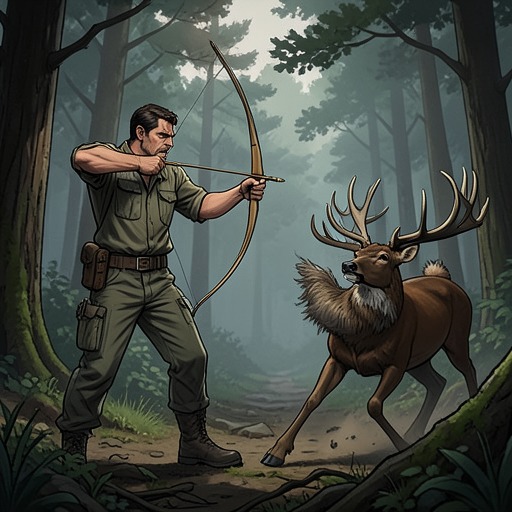
Once beside him, Boodhugan claimed that he had urged Kannara Thevan to surrender and had come over after that advice was rejected. Rajadithyar did not accept the explanation as a reason to excuse Boodhugan’s conduct. He rebuked him and ordered him to return. Boodhugan then drew a concealed bow and shot Rajadithyar with a poisoned arrow. Rajadithyar fell before those nearby understood what had happened; Boodhugan withdrew at once.
The episode turns on a stark contrast between Rajadithyar’s command and his compassion. His visible presence had strengthened the army throughout the battle, but his readiness to hear a plea allowed Boodhugan to approach within striking distance. The story also recalls a warning against enemies who disguise hostility with humble gestures: in this encounter, the display of surrender concealed a deliberate attack.
Retreat, Resistance, and Occupation
News of Rajadithyar’s death spread through the army and overwhelmed its attention to the ongoing battle. Commanders, chieftains, and ordinary soldiers grieved, and the enemy gained the upper hand. The Chozha forces were driven onto the defensive and began retreating. Thirukkovilur Malayaman includes himself among those who fled, describing the retreat not as an orderly continuation of the campaign but as the immediate consequence of the commander’s loss and the army’s collapse in morale.
When the enemy reached the Kedilam River, the Chozha survivors recovered enough to make a last stand and hold it back. Thirukkovilur Malayaman evacuated his family from Thirukkovilur and led them west to a fort in Malai Nadu. There he gathered another army and launched intermittent attacks on enemy forces that remained in the region. Those attacks did not dislodge them from the riverbanks: they stayed for years, and Kanchi also remained in their hands.
The account connects that long aftermath to events within Aditha Karikalan’s own lifetime. Only three years before the conversation, after defeating Veera Pandiyan and marching north, Aditha recovered Kanchi. Thus the battle’s consequences extend well beyond the ten days at Thakkolam: Rajadithyar’s death opened the way for a prolonged occupation, and the recovery of the city became part of the later struggle to restore Chozha control.
The Battle as a Recalled Event
The narrative is framed as Thirukkovilur Malayaman’s recollection in response to Aditha Karikalan’s request to hear about the battle and its outcome. Aditha already knows the broad history and has heard the story before, but remains eager for accounts of Rajadithyar’s feats. The retelling therefore makes the past more than a record of military movements: it explains how the death of a celebrated commander became the hinge between a prepared invasion, a devastating defeat, and years of contested territory.
The battle’s reversal depends on two different forms of strength. Rajadithyar’s authority rallied men across the field, while Boodhugan exploited the trust created by a gesture of surrender. Once Rajadithyar was gone, numerical strength and preparation could not prevent the Chozha army from breaking its line. The memory preserves both his effectiveness as a commander and the cost of the enemy’s ruse, while the later recovery of Kanchi gives the defeat a continuing political consequence.